The Eagle Who Found His Way

Once upon a time, in a distant realm, there was an enchanting forest. The forest, home to evergreen trees, birds of many kinds, animals, and insects, sang with beauty, happiness and mystery in its full splendor.

Tall and ancient sequoias, which had lived for thousands of years and stretched endlessly to the sky, were the eldest guardians of this forest. All the beings in the forest believed their emerald crowns could touch the heavens and sing praises of the Creator. These giants bore the wisdom of ages, having witnessed the first of many creations in the forest. Their massive trunks symbolized strength, their firm roots on Earth showed their humility. These humble giants knew every flower that bloomed, every bird that sang and understood all languages of the animals, insects and birds. All beings in the forest called them “the elders” and revered them with love and admiration.

Among these giant sequoias, Eirene was the forest’s eldest guardian. At over 4000 years old, Eirene stood tallest and wisest. On full moon nights, the whole forest gathered at her feet, where Eirene would sing songs of creation, of love, and of divine purpose.

On one such night, Eirene sang – her voice soft as rustling leaves, while all the beings listened with reverence and open hearts.

Listening to Eirene’s deep and soothing voice, Reya felt peace settle in his heart. Gratefully, he touched his chest with his wings, a tear dropping from his eyes. Majestic and watchful, he perched on Eirene’s ancient branches, his yellow beak shining like shimmering gold. His sharp yet gentle eyes gazed at his family nest, where his young chicks slept peacefully.

Reya had immense gratitude for the forest.  In the shelter of Eirene’s roots lay the beginning of Reya’s story – an egg tossed by a mighty storm, found and protected by the entire forest. Eirene felt motherly towards this egg and whispered to her forest friends, who kept the precious egg warm and safe. When the chick hatched, Eirene named him Reya, and the forest became his first teacher.

The forest creatures became Reya’s family, each teaching him in their own way. The sparrows shared their joy of flight, the lion taught him courage in silence, and Eirene, with her ancient wisdom, became more than a teacher – she became the mother his heart needed.

As seasons passed and Reya watched his own chicks grow, a quiet sadness became to stir his heart. Each night, as the forest settled into darkness, questions about his past surfaced. Even surrounded by so much love, there was a gentle ache he couldn’t quite name – especially when he watched his little ones nestled close to their mother.

One day, Reya sat quietly on his branch, deep in thought.

Eirene noticed the sadness in Reya’s eyes and asked:

With his eyes lowered, Reya said:  

Reya paused.

Eirene said gently,

Reya looked away.

She paused before continuing,

Eireen smiled and closed her eyes for a moment in a heartfelt prayer. When she opened them, the sun was setting, painting the sky in blazing orange and soft pink. The birds chirped joyfully as they returned to their nests, bringing a sense of calm to the forest.

Eireen looked at Reya with gentle kindness and said,

Eirene closed her eyes and continued,

Reya with tears in his eyes and a heart full of gratitude, said,

With that, Reya closed his eyes and touched his heart with his wings and sat in deep silence.

Days passed, and Reya meditated each morning and evening. Slowly a gentle peace began to settle with him.

One morning, while flying far from his nest to gather food for his chicks, Reya felt something in his heart – a quiet but clear voice urging him to return home. Without hesitation, he turned back immediately.

As he approached the forest, he saw smoke rising above the trees. He flew towards the danger and discovered flames spreading through the forest. He found young birds trembling in their nests, unable to fly. Without a second thought, Reya began gathering them on his strong wings, carrying them to safety.

Flight after flight, he returned to the flames, rescuing as many as he could. The heat scorched his feathers, and his wings ached, but Reya kept going. He guided smaller creatures to shelter and refused to rest until every creature he could find was safe.

When the fire finally subsided, Reya sat quietly on Eirene’s branches. His body was tired, but his heart was light and content.

Reya was silent for a moment before answering with deep gratitude,

Eirene, who had stood strong through the fire, spoke softly.

Reya looked at his wife and his sleeping chicks, safe in their nest. He understood now – his story wasn’t just about living but about living with purpose: to serve the Creator and extend love to others.

That night, Reya felt complete. His meditations have prepared him to trust the quiet voice of love within his heart. Reya was finally at peace, knowing his true Parents have been with him all along, residing in his heart.

As all the forest settled into a peaceful evening, Eirene sang in joy:

Naana’s Journey – A Life of Passionate Service and Courage

My father

My body knew before my mind did. A well-known heaviness crept into my chest early this January, planting an unexplained discomfort in my thoughts, a sadness overwhelming me. It wasn’t until much later I realized – my father’s birthday was close. Even now, without memory, grief has its own calendar, its own way of marking time.

For months, I have sidestepped and evaded this difficult writing process. Our subconsciousness has its own way of masking emotions that are too hard to face, too raw to feel. Yet somehow, in the safety of my therapy room, words began to find their way out. Talking about my father’s loss and our dynamic in my therapy sessions was the closest I came towards addressing this grief.

Some memories of my father remain difficult to be put into words – feelings that sit deep. How does one begin to unravel the layers of a relationship shaped by time, growth and unspoken understanding? How do we make sense of the cruelty of a pandemic that stole the chance to say goodbye, leaving so many of us with words and presence denied? I know I may never fully express the depth of what I feel, but I try.

Now, as my mind starts to clear, I realize this heaviness isn’t just grief – it’s my body’s way of remembering, of honoring what was lost.

Naana – that’s what I call my father in my language – often kept his emotions guarded, like there were invisible walls around his heart. Growing up, I often wondered what he was thinking, what worries he carried in silence. Life hadn’t been easy for him. I believe behind the tough exterior he showed others, was a vulnerable man who craved for love, who deeply cared, and who worked tirelessly with perseverance.

Being the eldest son in a joint family, he bore traditional responsibilities, yet transformed what could have been a burden into an act of passionate service. My mother quietly stood by him supporting him through everything.

In his younger years, my parents carefully counted every penny to make ends meet. My father often took on extra shifts to cover unexpected expenses. Yet, as I grew older, I witnessed the result of his hard work – transforming his small clinic into a hospital with multiple patient rooms, an operating theatre, and a diagnostic unit. Even when money was tight, his focus was never on wealth but on how it could be used to provide for his family and serve others.

My father shielded us from the financial hardships he quietly bore. Despite working long hours to support not just our family but also those who depended on him, his relationship with money was guided by compassion.

Naana spent most of his days at the hospital, rarely sleeping at home. From my teenage years, I remember seeing him come home in the early mornings, have a quick breakfast, and leave again for the day. He often slept in a small room at the hospital, feeling deeply responsible as the chief doctor to be close to his in-patients. For many, he wasn’t just their doctor – he was a trusted guide, a man who followed the quiet voice of kindness in his heart.

My father’s medical decisions were driven by integrity, never by profit. He was quick to diagnose and gave patients honest advice, ensuring they didn’t spend unnecessarily. He often sent patients home with whatever medicines he had on hand, knowing it would spare them the immediate burden of buying them. For him, relief couldn’t wait for a prescription to be filled – if he could ease someone’s pain in that moment, he did. My father never turned away patients who couldn’t afford treatment, and over time, he became part of their families – attending their celebrations, sharing their joys, and standing by them in difficult times. For many of his patients, they saw God’s work in his hands.

But beyond his work and financial responsibilities, it was his connection with people that defined him most. His generosity wasn’t impulsive; it was thoughtful and precise. My father had the presence of mind to think ten steps ahead, understanding exactly what kind of help someone needed in a crisis. Whether it was arranging financial aid, offering medical guidance, or leveraging his connections to solve problems, he provided help that was both meaningful and lasting. He managed everything meticulously, carrying a small notebook in his bag where he noted every detail – money transactions, promises made, and help to be given. His memory was remarkable, and he never let anyone down.

This attentiveness extended beyond his profession. In a society often divided by caste and social status, my father broke those barriers with ease. He would sit and share meals with people from all walks of life, savoring food lovingly prepared by them. During important moments in our lives, he encouraged us to seek blessings from those who worked for us – our watchman, our maid – teaching us that respect and love mattered more than status. Watching him live this truth shaped who I am today. I learned to value people not for their wealth or position but for their humanity. This empathy runs deep in all my siblings as well.

He firmly believed that education was the greatest gift one could give. His belief was simple: education could lift entire generations. He quietly sponsored the education of many children – from the children of his employees to others in need – supporting them from school through college. He even helped with marriage expenses and other milestones.

That same attentiveness to people extended to the smallest joys in life, especially food. For Naana, food wasn’t just nourishment – it was another way to connect, comfort, and care. He understood that healing wasn’t just about medicine – it was about comfort. For patients who stayed longer at his hospital and missed home-cooked meals, he would sometimes bring them food from home, knowing how much comfort familiar flavors could bring. It wasn’t just about feeding the body; it was about nourishing their spirit. If a patient offered him homemade food, he graciously accepted it, asking about the recipe and trying to recreate it at home.

Naana loved good food, and he could be exacting when it came to taste. I often joked that he would have made an excellent taste tester. He had an incredible ability to detect even the slightest flaw in a dish, and when something didn’t meet his standards, his disappointment was hard to miss. But he didn’t just critique – he took charge. He loved experimenting in the kitchen, often making a mess that we were left to clean up. Cooking was more than a hobby; it was his escape, a way to heal from the stresses of his demanding job.

I remember childhood evenings when he gathered us on the terrace under the moonlight. Sitting on the floor with all of us around him, he would passionately mix the food with his hands and feed us large, flavorful portions. We had to finish eating quickly before he circled back to us with another handful. It was impossible to refuse him, and he made sure we ate well. This ritual, often sparked by my mother’s complaints about our picky eating, was his way of teaching us how to savor food – how to mix the right flavors to create the perfect taste. He delighted in feeding us, insisting that good food was its own kind of medicine. “Eat with passion,” he would say, believing that enjoying food with joy and gratitude was more important than any strict diet. Moderation, not restriction, was his way.

Just as he found comfort in the flavors of a well-cooked meal, he found equal joy in music. His love for singing was another expression of how he embraced life.

Though he never had the chance to formally learn music, Naana’s passion for it was undeniable. He could listen to Carnatic music and watch old movies and classic film songs for hours. I remember him calling me to sit with him as he watched old black-and-white Tamil or Telugu films, singing along and quizzing me about the raagas. I often tried to escape to help my mother in the kitchen, but he never stopped trying to share his joy for music.

He began to train in Carnatic music in the last years of his life, often singing the songs he had learned during our calls. I would practice my music lessons as he listened intently, offering feedback with a mix of enthusiasm and encouragement. Those were some of the most meaningful moments with him.

Though his physical presence was commanding – tall, stout, with his ever-present leather pouch – it was in his softer, more playful moments that I felt closest to him. Just as he expressed joy through music, he shared lightheartedness in the simplest, silliest ways. He would make playful cat sounds just to tease me, a habit that seemed trivial at the time but now feels deeply endearing. I catch myself doing the same with my own children – acting silly, laughing freely.

He loved having me close, insisting I sit on his lap to watch movies, even when I was well into my teens. Now, as a mother to teenage boys, I recognize this same quality in myself – the way I instinctively draw my children close, inviting them to sit on my lap, even when they think they’re too old for it. It’s a connection I cherish, one that has subconsciously stayed with me.

Naana’s way of expressing affection wasn’t always through words – it was in the unspoken gestures and quiet understanding we shared. I had a way with him – a particular smile and with just that smile, he’d slip me a little extra pocket money, understanding exactly what I wanted without me having to ask.

Perhaps it was this deep connection to people – expressed in small but meaningful gestures that shaped how he lived his life – that made his final battle with COVID so heartbreakingly ironic. A man who had dedicated his life to being present for others, who found joy in shared meals and conversations, spent his last days in isolation.

The world changed in 2020. By March, we were all working remotely, isolated behind masks, afraid even to pass familiar faces on the street. The pandemic spread rapidly in India, and strict lockdowns were imposed. While most people stayed home, my father chose otherwise. He continued serving on the front lines, treating COVID patients without hesitation. We urged him to stay home, but he firmly refused. His conviction was unshakable – if he were to fall ill while caring for his patients, so be it. His duty came first.

In late May 2021, after caring for family members who had contracted COVID, he fell ill himself. At first, it was just a fever and fatigue, but soon his condition worsened. He messaged me once, admitting he was afraid he might not see me again. That message still haunts me.

Despite our pleas, he stayed in the hospital where he worked, quarantining alone. My sister managed to send him home-cooked meals every day, knowing how much comfort food brought him. Cooking had always been his solace, his way of connecting with others. But within a week, his condition deteriorated. A severe lung infection forced him to be moved to a larger hospital and into the ICU. He was alone.

I often think about how Naana would bring home-cooked meals for patients who had to stay in the hospital for long periods. He knew how much they missed their own families and took it upon himself to ease their longing. To him, food wasn’t just nourishment – it was comfort, connection, and a small reminder of home.

During his own isolation in the hospital, when his condition worsened, he asked for the familiar foods he loved. I wonder if, in those moments, he was reaching for the comfort he had so often given to others. As a doctor, he must have understood the gravity of his condition. When the time came, he bravely obliged to being placed on the ventilator, knowing full well what it meant. It breaks my heart to think of how alone he must have felt, facing those final moments without the comfort of family or the warmth of a human touch. I wish I had been there – to hold his hand, to offer him even a fraction of the solace he had given to so many others.

This helplessness – knowing I couldn’t be there, couldn’t hold his hand, couldn’t say goodbye – was a pain that words can’t capture. Being thousands of miles away in the U.S., unable to travel home because of lockdowns, felt deeply unnatural. The heartbreak of those moments lingers, a wound that time can soften but never truly heal.

Yet, even in his final moments, my father was true to himself – a man who lived with compassion, loved deeply, and stood by his principles. His absence left a silence in our lives, but his values, his generosity, and his unwavering acts of service for people continue to guide me.

Knowing that my father spent his final days in the isolation of an ICU, far from the comfort of home and family, is a pain I still carry. A man who found joy in sharing meals, conversations, and connections was left without those very things that defined him.

I hold on to the hope that, in those quiet moments, he found comfort in reflecting on his life – a life rich with purpose and love. I hope he made peace with what he couldn’t control, finding closure with God, forgiving and seeking forgiveness, and knowing that our love reached him, even from afar.

Though his physical presence is gone, Naana’s spirit lives on – in every quiet act of kindness, in every shared meal. This is how I carry him forward – not just in memory, but in the way I choose to live my life.

The irony of life is that it continues even after we lose our loved ones. We remember our special moments, in the mutual love and respect that binds us, and in the lessons, they left behind. Losing Naana brought me a profound spiritual understanding: to take life as it comes, to celebrate people while they are still here, and to not be overly entangled in their flaws. It taught me to live fully, as though there’s no tomorrow, and to honor my own truth. Through this, I honor him.


The Storyteller in My Life – Celebrating Appa

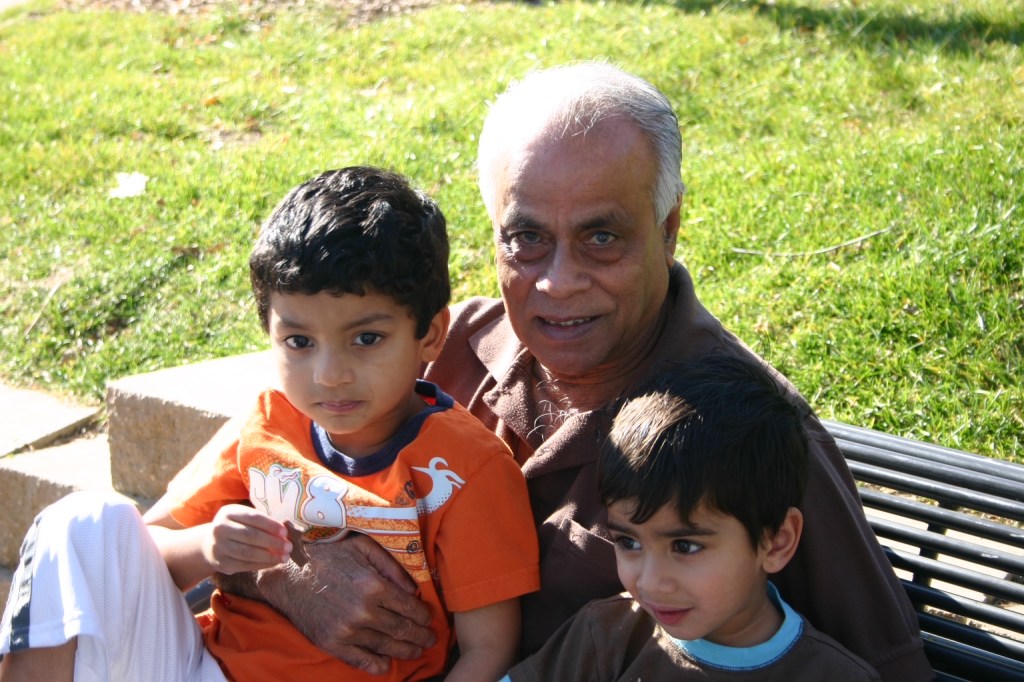
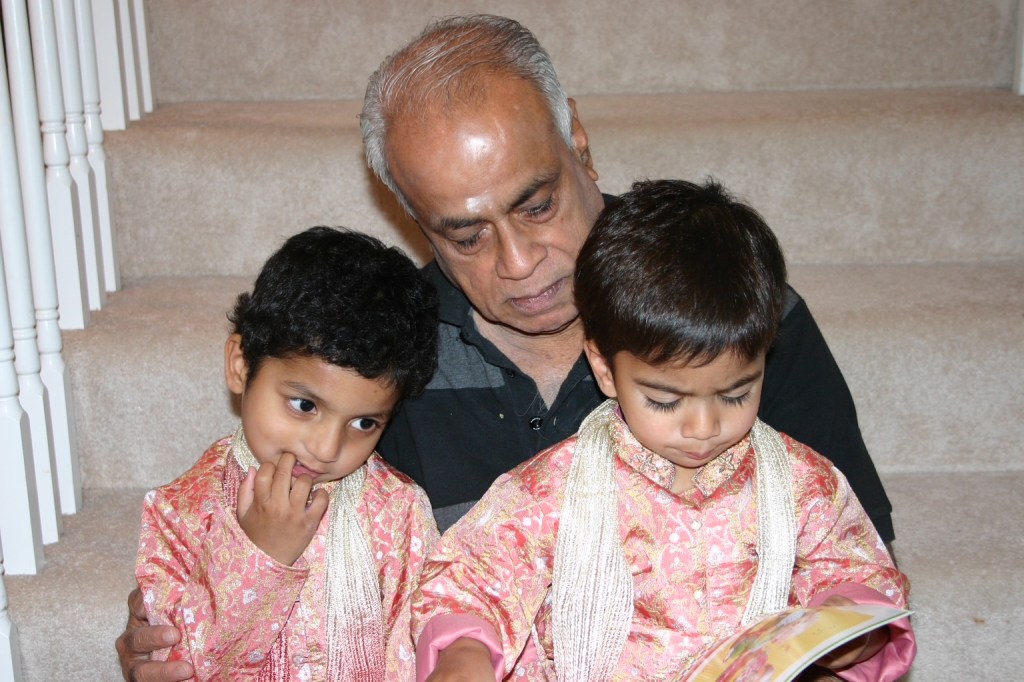
Some people have a natural gift for turning ordinary moments into memorable stories. In Appa, my husband’s father, I discovered a masterful storyteller, a passionate sports enthusiast, and a grandfather whose eyes light up at the sight of his grandchildren.

Our relationship defied traditional labels. In Appa, I found something rare and unexpected – a friendship that transcended conventional family bonds. When I first met Appa, his laughter filled the room, breaking the formalities. Over time, his quiet strength and open-heartedness turned our relationship into something deeper – built on respect and affection.

Appa stands as the pillar of warmth and wisdom in our family. His jovial demeanor and thoughtful ways have been a quiet anchor for our whole family.

As in any relationship, ours has weathered its storms. There have been disagreements and difficult moments – as natural in any family dynamic. Yet what stands out is not the challenges but how we’ve moved through them. The deep respect and love we share has only grown stronger through these tests, showing that true family bonds aren’t about perfect harmony but about choosing to understand and cherish each other despite our differences.

What strikes me most about Appa is how effortlessly he turns ordinary moments into meaningful connections. Whether sharing his written stories, organizing family gatherings, or simply being present, he weaves our family closer with each interaction. His ease in engaging anyone – regardless of age or background – reflects a deep, genuine interest in people that I deeply admire. Here is a man who wears his happiness openly, making every conversation feel like a celebration.

It’s fascinating how some people naturally turn strangers into friends. Wherever he went, Appa’s buoyant personality shone through – his cheerful eye contact and genuine smile greeting others came straight from his heart.

But Appa’s gift for connection wasn’t limited to conversations – it extended into the stories he told. His ability to draw people in, to make them feel part of something bigger, truly shone when he began to weave tales, especially for his grandchildren.

Appa has always been a man of many worlds – a storyteller, a strategist, and a quiet force of energy. Even in his 80s, his mind remains sharp, always searching for the next story to tell or game to play.

Creativity isn’t something Appa switches on and off – it’s simply a part of who he is. Whether through his vivid writing or animated conversations, his stories light up the room, turning simple moments into lively, memorable experiences. Whether it’s a tale from his childhood or a recent family anecdote, Appa has a way of painting pictures with his humor. His stories come alive with carefully chosen details, perfectly timed pauses, and that characteristic twinkle in his eye that signals a humorous turn ahead. Even stories I’ve heard before feel fresh with his skillful delivery – adding a new detail here, a different perspective there, making each retelling an adventure of its own.

Nothing captures Appa’s playful creativity better than his tale of Kaa, the clever crow – a story he told countless times to entertain his grandchildren during dinner. Yet, with every telling, he added new twists, turning it into a fresh adventure each time.

My children’s eyes would widen at each twist, their small hands holding their spoons mimicking the crow’s flight and every now and then be reminded by Appa to take the next bite as he proceeded through the story.

Appa’s voice would dip low as he described Kaa’s thirst and rise with excitement as Kaa discovered the jug and discovering the worms, and break into a triumphant tone for the journey home. My children would lean forward, completely absorbed in his theatrical narration. With his voice modulations, dramatic pauses and facial expressions – he presented a masterclass in keeping his audience engaged.

Just as he crafted stories with flair, Appa approached games and sports with the same creativity and passion. Whether through words or play, he found joy in engaging minds.

Games were never just games with Appa. Whether it was a tense chess match or a lighthearted round of cards, he played with a strategist’s mind and a child’s enthusiasm. In his younger years, he was quick on his feet with badminton, cricket and other sports, and today, he’s just as quick-witted in online chess. His love for play wasn’t just recreation – it was a way of thinking, one that his children and grandchildren carry forward.

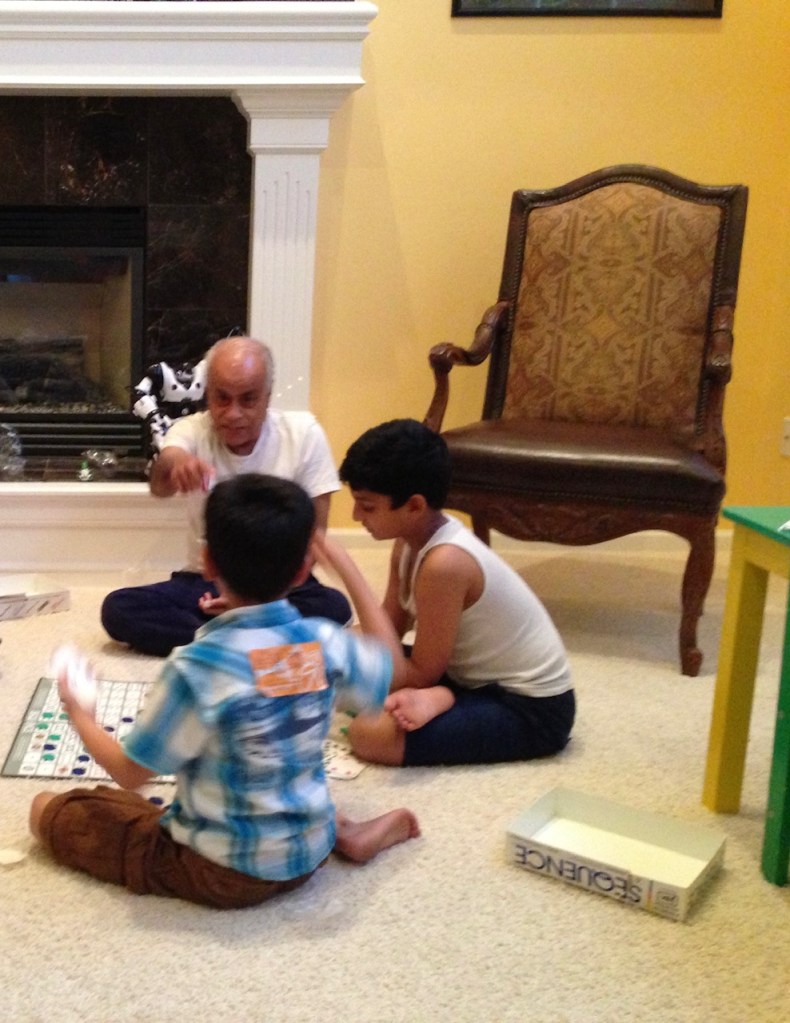
Card games with Appa have always been more than just games – they’re chapters in our family story, blending strategy, laughter, and life lessons. Hours would slip by as cards shuffled and stories unfolded, often stretching from post-lunch into dinner during my early marriage years.

Through countless deals and shuffles, our relationship evolved from formal in-law status to something more genuine and comfortable. His systematic approach to the game – methodically arranging cards, planning moves ahead – reflected his larger approach to life and family.

Our card game sessions are like well-orchestrated performances. Appa deals with practiced precision, his fingers expertly shuffling the deck while he hums softly with a mischievous smile. Between hands, stories flow as naturally as the cards – tales of his youth, wisdom wrapped in wit, and observations that make everyone laugh.

What’s remarkable is how this playful spirit didn’t stop with him. Watching my children plot their next move in a board game or invent whimsical stories, I realize how deeply they’ve inherited Appa’s love for thinking differently and embracing challenges.

What has always left me in awe of Appa is his boundless energy and spontaneous spirit. He embraced life fully, treating every moment as a gift to be savored. Whether offering a heartfelt compliment to young or old or sharing his unfiltered thoughts, Appa has an extraordinary ability to make people feel truly seen. With him, what you saw was exactly who he was—authentic and unapologetically himself.

Even when faced with health challenges, Appa’s mind never rested. He found joy in staying engaged – whether through a game of online chess or penning down his thoughts. His unwavering integrity and commitment to his principles has guided him through life. He wasn’t afraid to speak his mind, and his words always carried weight because they came from a place of honesty and courage.

That same fearless authenticity is what drew me closer to him. It wasn’t just his stories or games that left an impression; it was how he lived – boldly, sincerely, and without pretense. It’s a trait I see reflected in his children: the courage to be themselves and the joy of embracing life fully.

Appa’s life is a vibrant example of living with purpose, staying true to oneself, and finding joy in every chapter. His energy, integrity, and spontaneity continue to inspire me and remind me that life, with all its twists and turns, is best lived with honesty and a full heart.

The Chennai Diaries – The Quiet Strength of Meenatchi Avva

My mother’s aunt, Meenatchi Avva, was the quintessential grandmother figure who inspired me in my childhood formative years. She came to live with us in her 80s, bringing with her a quiet strength and wisdom. Petite and unassuming at first glance, her rounded frame belied how effortlessly light on her feet she actually was. With her stark white hair, porcelain complexion, and a slow, deliberate gait owing to her deeply bowlegged legs, she embodied both grace and resilience. She combed her hair neatly and tied it back into an effortless bun. Her skin bore wrinkles of time, but her smile and mischievous sparkling eyes hinted at a youthful exuberance.

Married at 13 – a common practice then – Avva often reflected her love for learning and how her husband supported her independence. This rare dynamic for their time deepened her belief in personal choice, a value she carried into every aspect of her life. His unwavering support allowed her to pursue passions like Carnatic singing and attending drama shows, deepening her belief in personal freedom. This mutual respect in her marriage shaped her conviction that women should live by their own choices. When she shared about her married life, I could see how passionately she loved her late husband.

What truly set Avva apart was her graceful blend of dignity and humor. She exuded warmth and positivity that was utterly contagious. Her presence brought an aura of calm and purpose. I have never seen her complain or use harsh words or speak ill of others behind their backs. She commanded respect without asserting authority and infused lightheartedness into everyday life through witty songs and faint sarcasm. She often sang songs with playful twists, masking hidden meanings behind a knowing smile. I still remember when she subtly teased a family friend – recently remarried and living with two wives – through a cleverly altered song, leaving my mother and me stifling our laughter once we caught on.

Her quite confidence, strength and humor made it natural for me to gravitate towards her.

For me, as a young teenager, her influence was transformative. I often confided in her, sharing my frustrations about family culture, misogynistic attitudes and what I felt were unfair practices. While I debated with her about feminism and women’s rights, she taught me the wisdom of choosing the right time to express strong emotions. Though I challenged her views on timing my expressions of frustrations, I now see the wisdom in her advice to speak when emotions are calm, and the moment is right.

Yet, our conversations weren’t always serious – we giggled over college stories, and she playfully would ask what kind of man she should find for me. I’d confidently say, ‘Not a doctor, and someone who lives far away.’ She would chuckle, ‘Far? How far?’ and I’d shrug, ‘Just far from home.’ It was my youthful yearning for independence, spoken aloud to someone who understood.

Avva and I slept together in the afternoons in the prayer room on the floor. At times, she would allow me to put my hands and legs on her while sleeping and would gently pat me to sleep. I did not remember having a close relation with either of my parents’ mothers but felt very fortunate for her to fill that role for me.

Avva fit seamlessly into our family, and it was evident she adored living with us. To my mother, she was a guiding hand and a source of empathy. To my father, whose demanding job often kept him away, she became a symbol of the mother he had lost. Their morning coffee conversations were filled with lighthearted exchanges, and Avva even playfully defended my mother in their debates, bringing a balance to our home.

While Avva’s presence brought comfort to our entire family, it was in her personal rituals that her true essence shone brightest. These daily practices weren’t just routines; they were the quiet manifestation of how she moved through life – with purpose, grace, and an unwavering sense of self.

Each morning, she began her day in quiet devotion yet never expected anyone else to follow her routines. Her daily rituals mirrored the balance she maintained between tradition and independence.

Every morning before sunrise, Avva quietly began her day with a bath and personally washed her clothes, refusing help despite the household maid. Using a long wooden stick, she hung them on the ceiling rack in the prayer room. The room, cool with red granite floors and lined with deity images, became her sanctuary. Lighting the oil lamp, she carefully placed fresh garden flowers before the gods. Only after completing her prayers and sharing prasadam would she rejoin the household, grounded and ready to engage with us all.

Though deeply traditional, Avva never imposed her beliefs on anyone. This quiet respect for individual choices mirrored my own discomfort with being pressured to conform. Her presence affirmed that one could stand firm in personal beliefs without expecting others to follow suit. It was a silent lesson in living authentically. Avva’s quiet strength and deep respect for individuality enkindled in me the courage to make my own choices. She taught me that independence isn’t about rejecting tradition but about living truthfully and allowing others the freedom to do the same. Her life was a beautiful balance of devotion and freedom – one I strive to embody every day.

The Chennai Diaries – Bicycle Adventures on Mangesh Street

The warm summer breeze caressed my face as I perched sideways on the front bar of my elder cousin Hari’s bicycle, giggling heartily with each turn of the wheel. Hari, in his late teens, pedaled confidently through the bustling streets of T.Nagar, his wavy hair swaying in the wind. With his chiseled face glowing in the bright sun, his sweet smile and mischievous eyes held a charm that seemed to make every passerby smile back.

Hari’s world was an extraordinary one, and during my summer breaks at my aunt’s house, I had the privilege to be a part of it. Those summers at my aunts were the happiest days of my childhood, free from judgement and filled with endless adventures. The neighborhood buzzed with life, and every evening, kids aged 5 to 25 spilled out of their homes, ready to play.

Hari was the heart of these escapades. He teased me endlessly, pampered me when I least expected it, and even made me play chess with his friends, who deliberately let me win. Though I didn’t understand it then, their lighthearted gestures were meant to cheer me up and make me feel included.

One of my favorite memories was riding on Hari’s bicycle as he expertly navigated the chaos of Mangesh Street. Auto rickshaws swerved through narrow spaces, pedestrians crossed the streets boldly and vehicles moving in their own instinctive patterns. My cousin navigated these streets like a seasoned professional, knowing exactly when to pause, speed up, or make those sharp turns. Every now and then, he mischievously threatened to throw me off the bicycle into a dirty pit.

As we rode, I enjoyed observing the people and their moods and made wonderful stories in my mind, one of my childhood hobbies. Each street was its own living story – the fruit vendor cutting guavas and mangoes into thin long strips became the warrior hero, the vegetable seller neatly arranging tomatoes into perfect pyramids became the spy, the shoe repairman on the corner of the road claiming his own space became the wise elder, and the children playing with marbles became the supporting cast. Even the animals played their part perfectly. The dignified cow near the temple stood like an ancient guardian, while the street dogs provided perfect comic relief to the daily street drama.

In my mind’s theatre, the street’s cast changed daily – today’s protagonist could be tomorrow’s antagonist, each passerby stepping into new roles in my ever-changing story.

While the streets offered their daily theater, our next destination promised a different kind of adventure. We made our first stop at the library.

This library held a special place in my heart. Each visit felt like finding yet another secret passage into an endless adventure. As we entered this quaint dark shop, the narrow wooden stairs and small floors weren’t just physical spaces – they were gateways to different worlds. Each floor held its own genre kingdom – adventures on one level, fairy tales on another, and so on. I found the musty-sweet aroma of the old books mixed with the scent of the wooden shelves both comforting and mysterious. One must literally crawl their way to the books. It felt like a luxury to be here, as a ticket to one of the adventures specially designed for an imagination-thirsty kid.

The store owner, an old man with a long beard, weary eyes, and a kind smiling face, always greeted me as “papa.” He tirelessly helped me find books I would love to read. The helper boy, not much older than me, moved like a quick squirrel among the narrow shelves, knowing exactly where each book lived.

My cousin parked his bicycle here and, after getting some books, we walked to the ice cream shop down the street, right at the intersection of two main roads. They also served fresh juices here. That shop still stands today serving their fresh juices and ice creams.

The ice cream shop was a single room that houses a long wooden bench. A big fan was running non-stop on one side of the wall. They had limited flavors of ice cream and always had my favorites – vanilla and butterscotch. Hari got himself a sugarcane juice, while I got my favorite butterscotch ice cream on a cone. With no place to sit, we stood outside the shop enjoying our treats. It was a race against time and heat, a game I played with the sun. I focused on the serious business of saving each golden drop before it met the floor, my tongue quick to catch any escape attempts. I felt victorious when I had my ice cream in a completely clean manner. My cousin found this hilarious and would often tease me about my efforts with his friends, but I simply didn’t bother.

Back at my aunt’s house, I settled into the sofa surrounded by the books I borrowed from the library. I was ready to read new stories, shaping my imagination further. Soon, the evening would call us out to join our friends – some older, some younger, all part of our colony’s extended family.

Looking back, those summers weren’t just a series of carefree adventures; they were a blessing in finding joy in the ordinary. Hari’s easy charm and mischievous confidence were infectious. He taught me how to embrace the chaos of the world with a smile and how to find joy in the simplest moments. Even now, when I think of Mangesh Street, I remember Hari’s innocent laughter echoing through time, reminding me of a childhood filled with freedom, imagination and love.

Peaks and Papaya: A Tale of Misplaced Confidence

They say marriage is about balance. Our 25th anniversary in Hawaii took that lesson quite literally – from the serene heights of mountain trails to the fiery depths of Thai spice levels.

It wasn’t until halfway up the trail that I made two profound discoveries: I forgot water, and my bladder had excellent timing. Of all the vacation planning list I made, basic survival needs somehow didn’t make the cut. When I declared my discoveries to my dear husband, he humorously suggested I use nature’s own bathroom facility, but it simply met with my city-girl horror – apparently my dignity is far more important than my bladder’s desperate pleas. Of all the anniversary traditions couples collect over the years, I never imagined “discussing bathroom options on a Hawaiian trail” would make it into our top ten memorable moments.

I approached the second hike with questionable confidence, but somehow my determination won over my legs.

This rainforest hike was utterly beautiful. The trail promised us a waterfall at its end. My husband imagined a majestic waterfall worthy of a tourism brochure and I was more than happy enjoying the massive trees. After a while, my inner monologue shifted from “Look at these beautiful trees” to “Why didn’t I train for this?” My stoic eyes were looking down on the rocks and stones we had to walk on. I could feel a tremble in my legs, but I kept going with determined confidence.

As we reached the end of our trail, the imagination of a majestic waterfall fell flat for my husband as he saw something like a nature’s drinking fountain, but I didn’t care. I was just happy I made the end of it and now I just need to go down the hill and I can finally eat something!

My husband turned to me and asked, “What next?”
“What, what next? It’s time to eat! I am having a headache. I am starving. I am physically exhausted.”

Whoever invented the word “hangry” deserves a Nobel Prize. After years of thinking I had a unique talent for turning hunger into an emotional crisis, discovering this word was like finding my tribe. All those childhood moments of food-related meltdowns suddenly had scientific validation. I wasn’t being difficult – I was being hangry before hangry was cool.

I declared we go to a Thai restaurant. My husband, who typically maintains diplomatic neutrality in the face of Thai food suggestions, found himself in an anniversary-induced compromise.

Google Maps played its favorite game of “You have arrived!’ at every wrong location.
After a few failed attempts of going in circles, we made the executive decision to park our car and then simply walk towards the restaurant. Walking worked!

Having conquered two mountain trails, I felt invincible – a dangerous state of mind when you’re both starving and facing a Thai menu. You know how they say anticipation makes everything better? Well, my long-awaited Thai lunch was about to become memorable in ways my spice-loving ego wasn’t quite ready for.

There are moments when our heart speaks, our brain objects, and our stomach gets voting rights. This was one of those moments. There I was, physically exhausted from hiking, sweating in the Hawaiian sun, and what does my brilliant mind conclude? Yes, this is the perfect time for maximum spice on my basil vegetarian fried rice and papaya salad and piping hot water.

The waiter came and when my turn of the order came, I quickly answered “Papaya salad and vegetarian basil fried rice with maximum spice. Hot water please.”

“You mean, Spicy?” the waiter asked, with what I now recognize was a mix of concern and amusement. Like a warrior declaring battle plans, I confidently replied, “Yes, spicy!'”

The waiter’s glance at my husband wasn’t just a look – it was a silent telegram of “Is she sure about this?” My husband, veteran witness to my spice-related overconfidence, simply shrugged with a smile and was earnest to see how it is going to unfold.

First bite: excitement.
Second bite: realization.
Third bite: regret.

The basil fried rice I’d ordered with maximum spice became irrelevant – my taste buds had already gone on strike after the papaya salad assault.

In a plot twist that surprised absolutely no one except past-me, the hot water I’d so proudly ordered became less ‘soothing comfort’ and more ‘adding fuel to the fire’ – “literally”.

My husband, watching this culinary drama unfold, silently offered his ice from his water – a peace offering in my moment of crisis. I kept putting the ice on my hot water in the hope of making it cold to the point it was just barely warm.

Where was the waiter? The one time I needed someone hovering over my table asking, “How is everything?” and the restaurant had suddenly become a masterclass in efficient privacy. The irony of desperately wanting ice water after proudly ordering hot wasn’t lost on me, but dignity takes a backseat when your tongue feels like it’s auditioning for a fire-walking show.

In a final lesson in humility worthy of our anniversary adventure, there I sat – physically exhausted from hiking, defeated by a salad, and still somehow hungry. The scenic morning views had given way to an afternoon of what I can only describe as ‘spicy meditation.’ We ended our day with another 40-minute walk in the peak sun, because apparently, the universe wasn’t quite done with its lessons in humility. And that’s how our romantic anniversary hike turned into a tale of two temperatures – the cool mountain trails and the fire-breathing papaya salad that followed. At least we got our cardio in, even if most of it was from my tongue doing the hot sauce dance.

The Mist Between Worlds

Jasmine

As the laptop screen dims on another workday, Annie feels the familiar call of her evening ritual – that sacred pause between who she needs to be and who she truly is. The shower beckons, promising its daily transformation. She has learnt to trust these shower routines as her daily alchemy, transforming work-worn moments into peace.

Disconnecting from outside chaos, she steps into her bathroom leaving her phone behind. Her bare feet touching the bathroom floor, she is aware of each step. She looks at herself in the mirror, loosens her neck, and takes a deep breath. She brings herself to the moment before turning the shower on.

Steam begins to rise, creating a dreamy veil in the bathroom. A lavender candle flickers in the corner, its gentle aroma mixing with the rising mist. She steps into the shower, letting hot water stream over her like a waterfall of mercy, each drop washing away the digital echoes of the day. The bathroom slowly fills with fog, creating her own peaceful sanctuary.

A variety of soaps wait for her to be picked up, each fragrance in her collection speaks to her differently – lavender whispers calm like a twilight, rose calls for a walk in a lovely garden, jasmine carries echoes of childhood summers when fresh blooms adorned her hair, and citrus sings morning freshness. She holds each bar as if reading a story through her palms, letting the day’s need guide her choice.

Today her hands reach for the rose soap, which melts between her warming palms like a flower opening to morning sun. Each bubble carries memories of garden walks, each fragrant swirl a gentle reminder of beauty in simplicity. She watches the lather trace patterns on her skin, letting the water’s rhythm wash away the digital static of her day.

After the cascading waters release their healing, she envelops her body in a cotton cloud towel, this simple act as a continuation of her evening grace. She walks slowly towards the mirror and meets her reflection with a smile. She opens the drawer and gets a few oils out and carefully places them. She mixes the Vitamin E infused coconut oil with a few drops of lavender oil and rubs them against her palms until warm and gently applies them on her skin passionately feeling every bump. She listens to her skin, her body and what her body tells her. She massages her stomach, legs, hands with oil. Next, she gets her favorite Shea oil and rubs along with a few drops of lavender oil in her palms until warm, and applies on her neck and face in a slow mindful upward circular motion.

Each mindful touch – from trimming nails to brushing teeth – becomes another note in the symphony of self-care. She then gently massages castor oil into her eyebrows and eyelashes.

She pauses and takes a moment to smell the oil from her palms, gazing at herself with gratitude for her body, acknowledging the beauty she is, as she is a child of the Creator Himself.

She wears her sleepwear that her body can breathe in, combs her hair parting sideways, applies her favorite rose scented cologne behind her ears.

Facing the mirror one last time, she sees beyond the reflection to the journey of her evening ritual. The day’s tensions have dissolved like soap bubbles, transformed into something lighter, clearer.

As she winds up in bed to self-reflect with her chamomile tea, she feels restored to herself – not just clean, but renewed. Her gratitude flows as naturally as the evening’s ritual, each word a testament to this daily practice of coming home to herself.

A New Chance Each Dawn

Sunrise

That famous line from the movie, Groundhog Day, has always stayed with me:

I wake up every day, right here, right in Punxsutawney, and it’s always February 2nd, and there’s nothing I can do about it.

It’s funny how a lighthearted movie from 1993 would later help me understand something profound about daily life.

Living in our top-floor condo, I’m blessed to witness each sunrise through the glass walls of our home. These morning moments have been sacred – a time to be present with our Creator, to feel gratitude, and to ask guidance to align my actions with His Will. As I practiced living more from the Heart, these sunrises took on a deeper meaning, gently reminding me to pause and connect with what truly matters.

During a phase when I got caught in some patterns that triggered the negativities within, I felt a fleeting sense of hopelessness about myself. But like many difficult moments, this one led to an unexpected gift of understanding.

One morning, while praying and watching the sun rise, I was reminded of Groundhog Day. In the movie, the protagonist wakes every morning to the same day, initially feeling stuck and frustrated. But as he begins to embrace the repetition, he discovers he can make better choices and live from a more meaningful place. I realized that each day offers us the same opportunity. Each morning is a fresh chance to choose our Creator in everything we do.

I began to see every day as a gift – a single day to walk, talk, eat, drink, listen, and interact from the Heart, for our Creator. This perspective led me to start a nightly journaling practice. At the end of each day, I reflect on moments I’m grateful for and areas where I can grow. Then, in prayer, I surrender all my efforts and desires to our Creator, trusting that His Will is far greater than anything I can imagine or understand.

Over time, this practice became like a lighthearted game I play with myself – taking away any heaviness or stress about “doing it right.” Each sunrise becomes a cheerful “here we go again” moment, like the movie, but with playful enthusiasm for the new opportunity ahead. This sense of play makes it easier to be gentle with myself, to approach each day’s choices with curiosity rather than judgment.

This spirit of playfulness extended into every part of my day. Whether responding to work emails, doing household chores, or scrolling through my phone – each moment became another chance to choose our Creator’s love. Even technology, which often pulls us away from presence, became part of this gentle game of staying heart-centered.

Each sunrise reminds me that our Creator gives us a new day, a new chance to choose love. Just as the sun rises fresh each morning, we too can begin again, carrying this lightness into everything we do – from the biggest decisions to the smallest daily tasks. At day’s end, reflecting in my journal helps me notice these moments – both when I remembered to act from the Heart and when I forgot. This isn’t about judging myself, but about gently observing and learning, always with that playful spirit of “let’s try again tomorrow.”

Each day brings this gentle reminder – that like the protagonist in Groundhog Day, we can choose to see repetition not as being stuck, but as a gift of continuous renewal. In this simple practice of greeting each dawn with gratitude, reflecting each evening with humility, and carrying a playful heart through it all has taught me to make each “same day” new again.

Perhaps you too have found your own way of making each day a fresh beginning. I’d love to hear how you approach this daily journey of the heart.

Angels on the Redbud Tree

Morning Sky

The sky bursts into magnificent shades of orange and red, like flames dancing across the clouds. City buildings stand dark against the brilliant sunrise, their silhouettes sharp and strong. Against this stunning backdrop, Ann stands at her balcony with her precisely made coffee: two specific spoons of instant coffee from different brands, mixed until they create the perfect foam and topped with exactly half a cup of frothed almond milk. These careful rituals have become her anchor in a world that feels increasingly overwhelming.

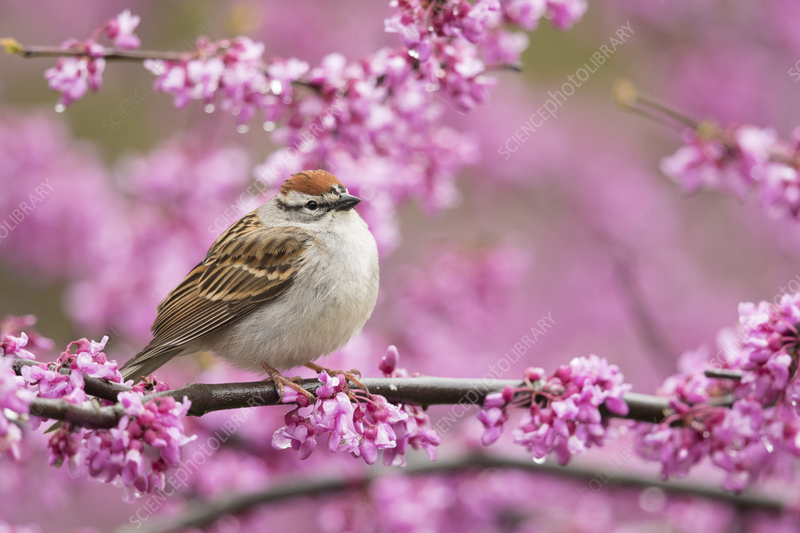
Sparrow on a Redbud tree

On the Eastern Redbud tree overlooking her balcony, four of God’s messengers gather as they do every morning. Their daily ritual of watching over Ann has become their own sacred practice.

“Another beautiful sunrise,” Zeo, the yellow butterfly with blue stripes, whispers as she settles on a branch. “Each new day is a chance to share God’s love.”

“Ann seems more tired today,” Pip the sparrow observes gently, tilting his head. “I’ll sing an extra sweet song this morning – sometimes a single note of joy can lift a heavy heart.”

“We must be patient,” Luna, the grey moth, shares from her quiet corner. “Just as God waited for me to understand that beauty exists in darkness and light, Ann will find her way. Until then, we’ll keep her company in our own ways.”

Rio, the hummingbird, pauses between visiting flowers. “Every bloom I touch is a prayer,” she hums. “Each flower blossoms exactly as God created it – offering its unique gifts with joy, whether it’s color, fragrance, or sweet nectar. They don’t compete or compare; they simply bloom and share God’s love in their own perfect way.”

They watch as Ann puts on her noise-canceling headphones, blocking out their messages of hope. Yet they remain faithful to their purpose, these small angels in nature’s garden. Her golden lab, Tuffy, shares their mission in his own way. During their walks, while Ann hurries along with her headphones firmly in place, Tuffy feels the grass beneath his paws, catches the scent of morning dew, and notices every squirrel and butterfly. He never grows impatient with her hurried pace; he simply keeps offering these moments of joy, trusting she would notice when she’s ready.

Then one morning, halfway through their walk, Ann’s headphones die unexpectedly. The sudden silence feels like a shock. Frustrated, she removes them, and that’s when Pip sees his chance. He flies closer than usual, singing the song he’s been practicing just for her.

“Listen,” he seems to say, “God’s love is in every note.”

For the first time, Ann really hears the chorus of morning songs weaving through the air. She finds herself smiling, surprising herself. She notices the way sunlight filters through leaves, the gentle sway of trees in the morning breeze, the different pitches of birdsong.

The next day, though her headphones are fully charged, she finds herself removing them halfway through her walk, curious to hear the birds again. Walking along the trail, she finds comfort in the gentle presence of trees lining both sides of the path. Beneath their canopy, she feels her shoulders relaxing, her steps becoming lighter. She notices how the morning light filters through the leaves, creating patterns that dance with each breeze. Something about being among these quiet giants brings a peace she hadn’t known she was missing.

Each day, she starts looking forward to these moments of quiet discovery. What begins as a simple week-long experiment slowly changes something deep within her. Walking among the trees, she feels a subtle energy, as if their very presence is nurturing her spirit back to life.

Gradually, Ann’s carefully structured routines begin to soften. Her morning coffee ritual remains, but instead of immediately reaching for her headphones, she finds herself lingering on the balcony, watching the day unfold. From their branch on the Redbud tree, the four divine friends watch her transformation with joy.

“See how she notices the small things now,” Zeo flutters with excitement. “Just as God’s love appears in unexpected moments.”

“She’s learning to be still,” Luna observes. “Like how evening shadows teach us that rest is also part of God’s plan.”

“And look how she takes time with each flower now,” Rio adds, “finding sweetness in the present moment, just as God intended.”

Pip’s morning songs become Ann’s natural soundtrack, more soothing than any musical album. The hummingbird’s focused dance among her flowers shows her how to be present in each moment. Her evening walks with Tuffy change too. She begins to match his unhurried pace, letting him stop to investigate interesting smells, watching how he approaches each moment with fresh curiosity. She begins to appreciate Tuffy’s innocence, unconditional love and finding joy in the simplest moments. The setting sun paints the sky in soft colors, and sometimes Luna flutters past, reminding her that beauty exists in all forms, at all hours.

One morning, as Zeo makes her daily visit, Ann realizes something has shifted within her. The heavy feelings haven’t disappeared entirely – they’re part of her journey – but they no longer feel like walls closing in. Instead, like the butterfly that returns despite rain or wind, she has found a quiet persistence within herself.

“Each flower gives what it has,” she hears a voice deep within her heart. Each flower, each bird, each creature has its own way of sharing love with the world. No one better than another, each one perfect in its own right.

Flower

As days pass, Ann’s awareness deepens. She begins to realize that these creatures are more than just chance encounters – they’re messengers of divine love, each offering their unique gift. Zeo brings reminders of joy’s persistence, Pip shares songs of morning hope, Luna shows the beauty of quiet presence, and Rio demonstrates how to find sweetness in each moment.

She realizes something profound: she has never truly been alone. All along, she’s had these beautiful companions – the trees offering their steady presence, the birds sharing their songs, the flowers blooming faithfully, and even Luna appearing in the evening hours. She can talk to them, share with them, find comfort in their constant presence.

Together, they form a small choir of God’s love, and Ann has finally joined their song. Now, as she sits on her balcony each morning, coffee in hand and heart open to their presence, she hears the divine melody that has always been there, waiting for her to listen.

Grateful for Amma’s Visit

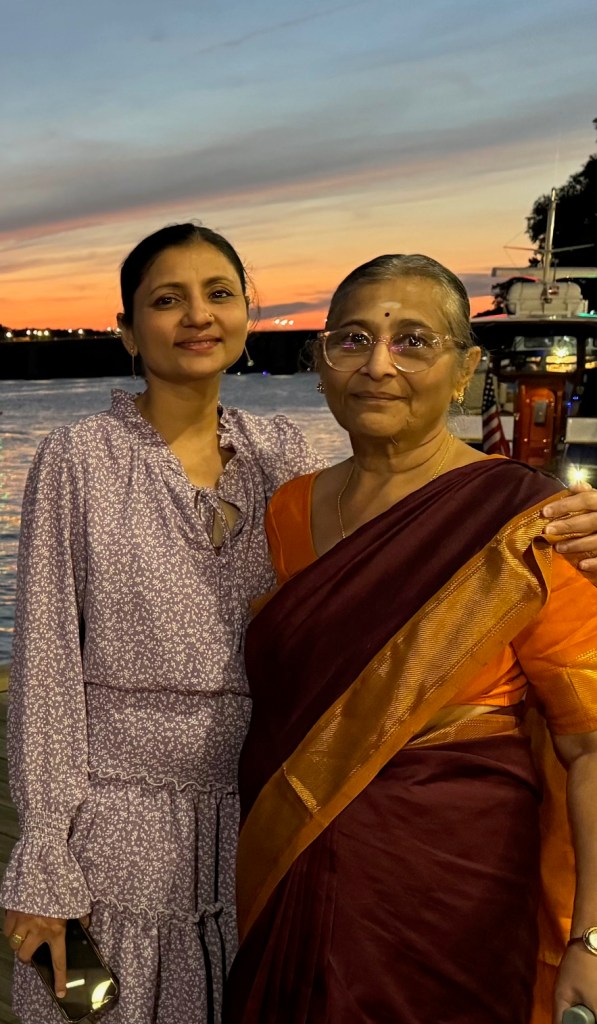
Amma and I

These past few months with Amma have been precious. Living far from India for 25 years, each visit feels like a cherished chapter in our story.

Amma has taught me some of life’s most valuable lessons. During my college years, when I was particularly affected by others’ opinions, her wisdom shaped who I became. She taught me to stay rooted in my convictions and not let others’ comments shake my belief in myself. Her quiet strength and unwavering trust in me became my foundation, making it easy to share everything with her during that time.

What has always amazed me is her capacity to forgive and understand. In my younger years, I watched in awe at how she could forgive so easily and deeply empathize with others. I often wondered, “How could I ever be like her?” Now, to my surprise, I find myself naturally embracing these same qualities. Her way of leading by example has shaped me in ways I’m only now beginning to recognize.

I feel deeply blessed when I think about how she has been there for every important moment in my life—traveling to stay with me during both my pregnancies, helping us when the children were toddlers, and now, despite her own challenges, making the long journey to be with us again. Her love shines through in the simplest of ways: the healthy meals she lovingly prepares, her quiet support, and her calm, reassuring presence.

This visit has been particularly special. Watching her bond with my children grow deeper has been a joy. Their faces light up in her presence as they laugh at her playful commentary during our evening TV shows. I loved seeing her smile, hearing her soft teasing, and even her strong opinions on the little things—it’s all so endearing and uniquely Amma. Working from home allowed us to spend more time together—simple, everyday moments that have become cherished memories. Whether we were laughing over my teasing, sharing meals she made with love, or talking about everything and nothing, these are the moments I’ll treasure forever.

Since my father’s passing, we have each navigated our own grief, but our love for one another has been a constant source of strength. Now, seeing her happiness, hearing her laughter, and watching her shower her grandchildren with the same unconditional love she gave me fills my heart with gratitude.

Living far from home makes these moments even more meaningful. Amma left for India today, and as the house feels quieter, I’m reminded of how precious our time together truly is. Living away has taught me to appreciate my loved ones even more, especially as we grow older and gain perspective. I feel truly blessed for her visit, for her love, and for the time we shared. These moments, though fleeting, leave a lasting warmth in my heart and remind me of what matters most.