Growing up, my early childhood was filled with quarrels and fights that felt extreme. I was around people who weren’t who they seemed to be – who changed depending on the situation. As a child, it was deeply confusing. I carried hurt that wasn’t mine to carry.
What developed for me was this: any kind of disharmony meant panic. If someone had issues with my intentions, I would think that was the end. I could not be close to them anymore.
So, I lived between two extremes. Sometimes I’d give in completely, bending backwards to keep someone happy, losing myself to keep the peace. Other times, when I finally couldn’t take it anymore, I’d have to cut people off completely. Both came from the same fear – that disharmony was something dangerous, something to guard against.
Growing up, I’m realizing something.
I am grateful to have people who love me. Here’s what I realize: everyone is different. We’re bound to clash sometimes, to not see eye to eye. Having disagreements is normal – it’s even healthy to voice them. The love stays despite them. Feeling confident in that – not apologetic or angry about it – changes everything.
When disagreements come up now, I can actually say what I feel. “I see this differently” or “That hurt me.” Being able to say that – being honest like that – feels like a privilege.
I’m also learning to listen – really listen – to their point of view. That feels like honoring the relationship – making room for both our truths.
This extends beyond just disagreements. Any disharmony – tension, misunderstandings, different needs – doesn’t have to send me into panic anymore. I can stay present with it, notice when I’m overthinking, and come back to what’s actually happening. I can navigate it without losing myself or cutting people off.
I can forgive people from the past, and sometimes that forgiveness includes keeping distance – respecting what’s healthy for me. I can have honest conversations with people who can meet me there. I’m no longer swinging between those extremes.
I’m grateful for this shift. I’m learning that disagreement doesn’t have to mean the end. It can be a chance to truly see each other.
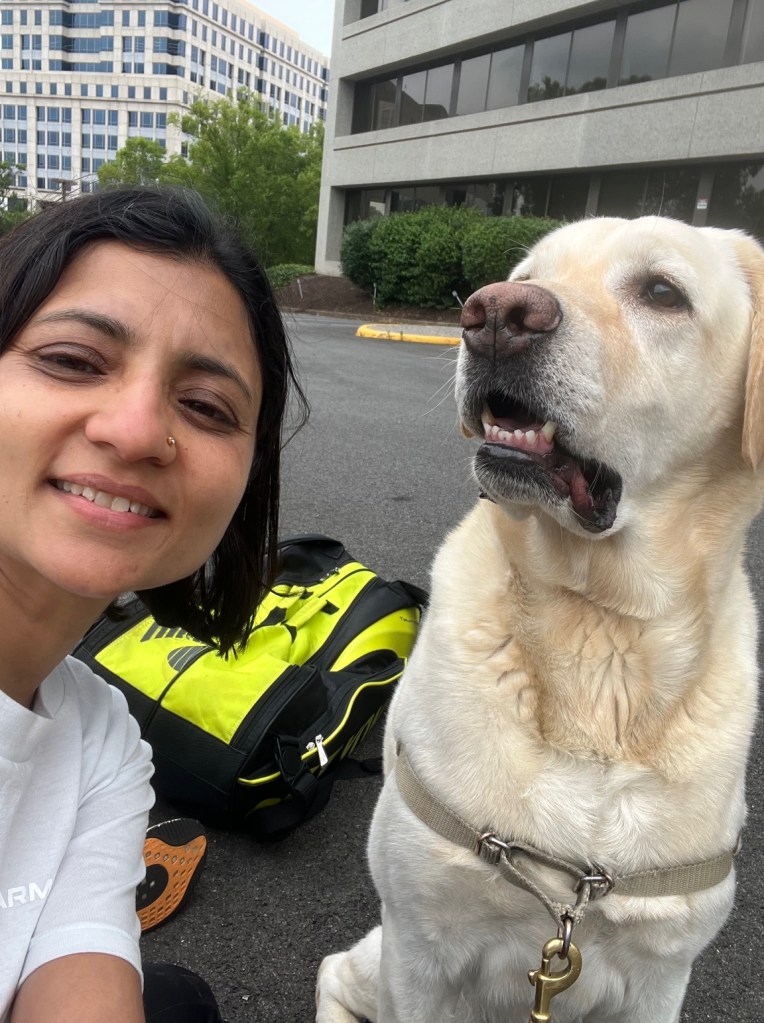
Tuffy, my golden lab, my companion for nine years, taught me something I’m still learning – how to live in the moment, how to love without conditions, how to be childlike without being self-conscious. His recent passing still feels like disbelief. It still feels like he’s gone to daycare while we’re on vacation.
This is what life is teaching us, I feel – to live like dogs do. Fully present, fully joyful, fully here.
With humans, I can’t be that way. I hold back. I perform. I worry about how I’m perceived. But with Tuffy? I could be silly. I could talk in that voice I use only for dogs, sing songs that made no sense, play games that were just ours. I could sit on the floor with him and forget about everything else.
He brought out the childlike part of me I thought I’d lost.
Tuffy didn’t need me the way I needed him. He was content. Emotionally mature. He trusted me. He didn’t need constant affection or reassurance – he just wanted to be near. I was more of a “Velcro” human to him. I’d put his bed wherever I was working, wherever I was doing things. He slept on his bed. I would just feel happy looking at him and calling out to him every now and then. In response, Tuffy would open his eyes or wag his tail, as if to say he loved me too.
And somehow, that was everything for me.
I remember how excited he’d get when I’d take him for walks, how happy he would be to welcome me every time I opened the front door and walked in. He loved bringing his toys to me and to play with him.
And I remember the last time.
Even when he was in pain – on what would be his last visit to the ER, though we didn’t know it then – he waited for me in the garage. My husband was walking with him toward the car, and I had to go back to get something. Tuffy stopped and turned to look at me. He wouldn’t budge. He turned back, waiting for me, looking out for me despite being in pain. I find that so emotional – his love for me, even in that moment. It was a habit he had. He wanted all family members to walk together with him. Not one ahead, not one behind. He found such joy in that togetherness.
What Tuffy taught me goes beyond the grief. He showed me what it means to live in presence – to find joy in simple things, to simply love, to trust without needing proof, to be fully here in each moment.
That’s the lesson. That’s what I carry forward.
Thank you, Tuffy, for teaching me how to live. For showing me what unconditional love looks like. For bringing out the best, most childlike, most joyful parts of me.
You can never be replaced. You will never be replaced.
I’ll honor you through the choices I make from what you’ve taught me. Somehow every time I think of you, I don’t end up feeling sad – rather a smile, a happiness in how you lived, what you taught us, our beautiful times together.
Storm clouds gather in my throat – quiet ache, a cold that won’t move. Each word I choose feels like a step on thin ice. The space between us hums, static, tired, unforgiving.
“Let it be,” says a voice – not the one rooted in peace, but the sly one, the one dressed as kindness, telling me to fill the silence, to soften myself, to keep the peace at any cost.
So, I do. I fill space with words that aren’t necessary. Try hard. Bridge the distance with explanations when all that was needed was quiet truth. Respect that doesn’t need to prove itself.
And even when I speak my truth, I rush to smooth it over – making sure you’re comfortable, that harmony remains. I manage reactions that haven’t happened yet, compensating for pain that could have come from honesty, cushioning my own voice.
And beneath it all – a small ache burns: Why can’t I just be liked?
It’s not pride asking. It’s the child – the one left unseen when the room filled with noise and chaos. The one who learned that safety came from being agreeable. Grief, dressed as gentleness. Anger, hiding behind persuasiveness – because sadness sounds more agreeable, more passive, less threatening.
Then, the weight returns. The knowing: I’ve done it again. Square one. The frustration of the cycle repeating.
And something soft opens – a whisper, this time honest: Help me.
Help me stop gripping. Help me remember – everyone walks their own path. Help me loosen the need to fix, to please, to control.
Right now – this moment – is enough. I can start again.
Let it go. Breathe peace in. Let gentleness find its way back. One more time, I choose calm. I choose presence. Now.
Somewhere in my healing journey, there was this gentle slowing down – a soft withdrawal from my usual urgency to react, to fix. Before, when I felt triggered or when sadness and panic hit, there was always this restlessness, this need to fix something, to move quickly. That place was not comfortable to be in.
What I never expected was that this slowing down was actually nature’s way of teaching me to be present. Through my trauma, I discovered this was a sign in my healing journey – that I was learning to let go and be more accepting.
One day when my best friend was asking me how I was doing, the words just came: “I’m steeping, like a tea bag in hot water.” I was surprised I even said that, because it was exactly how it felt.
Now when I need this time, I grow quieter, naturally gravitating toward solitude – long walks in nature, visits to the spa, or simply sitting on my balcony watching the sky and trees. I write sometimes, or just think, or don’t think at all. During this time, I don’t rush to process or understand. I just let whatever I’m feeling exist.
There’s something profound in this stillness. A calmness emerges that I never found in all my previous rushing toward solutions. Realizations surface naturally, like bubbles rising in still water. And in those moments, I find myself talking to my Creator – not in desperation, but in surrender.
“This is where I am. I need your help.”
It might take a day, sometimes longer, but eventually something shifts. There’s lightness. Clarity. A deeper understanding I couldn’t have forced. And always, always, humility.
I realize now that healing doesn’t happen through panic or the urge for immediate fixes, but through presence. Through simply being with what is, without needing to change it right away.
The most healing happens when I stop trying to heal and just… steep.
This process has taught me that sometimes the answer isn’t to do something about our emotions, but to be with them. To trust that sitting quietly with our experience, creating space for it to exist, allows something natural and necessary to unfold.
I’ve learned I need time alone with whatever I’m going through. And in that solitude, in that steeping, I find not emptiness but fullness. Not avoidance but the deepest kind of presence.
Maybe what we call healing isn’t always about getting better faster. Maybe sometimes it’s about learning to be present with ourselves exactly as we are, trusting that this presence itself transforms us in ways our rushing never could.
In daily life, whatever we do – whether we experience negativity like anger, frustration, jealousy, or hurt – I’ve come to understand that if we look deeper and deeper into our actions, we’re all seeking the same thing: peace, happiness, and contentment.
I think all that negativity is our unconscious way of trying to prove our self-worth through our ego. We demonstrate this in ways we’re not even aware of – through our struggles, our pain, our reaching for something more – all in an attempt to show that we’re worthy of love and recognition.
In my own life journey, I’ve recognized these patterns – wanting to feel seen, feeling inferior, trying to be the best at everything, people-pleasing, being self-critical, or carrying shame. Through my meditation practice and self-awareness, I’ve come a long way in understanding these tendencies. While they still show up every now and then, I can now choose differently when I notice them. We all have our own ways of unconsciously trying to prove we deserve love and happiness.
The truth is, we don’t have to do anything to earn that peace or prove our worth. It’s already within us. Our Creator loves us completely, and we have always had this love. The unconscious ways in which we try to prove our self-worth to ourselves and to others around us is never needed.
Sometimes we go through difficult experiences and learn from them. We realize that certain behaviors, thoughts, or choices aren’t bringing us the happiness we’re seeking. We start to notice that when we look for fulfillment outside ourselves – whether through hurting others, seeking power or even through self-criticism and shame – it doesn’t satisfy us. All these patterns come from the ego trying to find worth and meaning, when we already possess infinite worth simply by being.
When we observe how our life unfolds with these patterns, we can see how they affect the quality of our life and the quality of our mind. We can make different choices and turn inward instead. We can ask ourselves deeper questions about why we do what we do, why we react the way we react.
Many people don’t want to do this inner work because we’re afraid of what we might find about ourselves. We’re afraid of our shadows, our mistakes, our deeper wounds. But those questions, when we’re brave enough to ask them, can lead us deeper into self-awareness and self-discovery. It’s like removing a thorn that got deep within us. Yes, it hurts when the thorn is in, and it hurts even when we try to get it out – but we need to do it to be healed.
This process is beautiful. It’s a way of unbecoming who we think we are to discover who we were always meant to be – how we were originally created. The unbecoming process is like peeling away layers of an onion. As you go deeper, removing each layer of conditioning, fear, and false identity, you get closer to the pure essence that was always there.
This is what remains when everything else falls away – love, peace, and our true nature. We feel at peace knowing we do not have to prove anything to anyone. We feel comfortable knowing we are not perfect, and this makes it easier for us to let down our guard and accept ourselves as we are. This also enables us, as a ripple effect, to be more present and naturally accepting and loving toward others. When we are accepting of our own imperfections and loving toward ourselves, it becomes natural to extend that same acceptance and love to others. The nature of pure love is giving rather than expecting, and this changes our dynamic in relationships.
This understanding doesn’t require any special experiences or practices. It’s available to us in every moment of daily life, in every challenge, in every choice to look within rather than outside ourselves for what we’re truly seeking. Meditation practices help us through this self-awareness journey and help us become comfortable with ourselves. They allow us to see ourselves through a lens of detachment, helping us be more loving and gentler toward ourselves.
The journey inward is the journey home to who we’ve always been.
Some people carry grace like a quiet strength, touching the lives around them through simple, daily acts of love. In my husband’s mother – Amma – I discovered a woman whose beauty runs far deeper than what meets the eye, whose generous heart has shaped not just her family but everyone fortunate enough to witness her way of living.
When I first entered this family as a young bride, I was struck by more than just Amma’s natural beauty. There was something in the way she moved through her world – purposeful, caring, always thinking of others before herself. Over the years, what began as admiration has grown into deep respect and genuine affection.
In her, I found a mentor whose actions spoke louder than any words of advice.
The Art of Grace
There’s something almost magical about walking into Amma’s home. No matter when you arrive – whether it’s been planned for weeks or you’ve shown up unexpectedly – everything is immaculate. Not the cold perfection of a showroom, but the warm, lived-in cleanliness that speaks of care and respect.
In those early years of marriage, I was amazed by this aspect of her life. Despite her workload, despite being tired after long days, she ensured her work was done and, most importantly, that her space reflected the care she felt for her family. Her home wasn’t just clean – it was organized with a thoughtfulness that made everything feel intentional.
Over the years, I’ve come to understand her philosophy about our surroundings. The place around us is the one thing we can have control over, and when we keep it with neatness and care, that’s how we respect our space and ourselves.
I watched her live this philosophy every single day. She kept her things organized not out of obsession, but out of love. What I’ve always admired about Amma is her ability to not procrastinate or push things to a later date – she gets things done because she thinks it’s important. This applies not just to keeping her surroundings clean, but to everything in her life. She always dresses very neatly, presents herself with care, and tackles tasks without delay. This is another quality I can see clearly in my husband – he learned from her that important things shouldn’t be postponed.
Every time I visit India, even now when she and Appa are in their later years, I’m still amazed by how neat and tidy their house remains. Despite their age, their home still reflects that same grace and attention to detail.
What amazes me about Amma is her memory – it’s sharper than mine, and I’m much younger than her. She remembers details about conversations, events, and people that happened years ago. She even remembers exactly where things are placed in the house. She recalls exactly what was said, who was there, what was served. Her incredible memory helps her keep track of everyone she loves.
This became one of my greatest inspirations. Through witnessing her actions – never through words of instruction – I learned how keeping our space clean helps our minds feel clearer, more peaceful. I try to follow this lesson she taught me, though I often fall short of her standard of grace.
A Heart That Overflows
If there’s one thing that defines Amma’s approach to life, it’s abundance – not material abundance, but an abundance of heart. This shows most clearly in her kitchen, where no meal is ever planned for just the right number of people.
“It’s better to have more than for someone to have less,” I’ve come to understand this is her philosophy, and I’ve watched her live by this principle for over two decades. When guests come – whether it’s two people or ten – she always cooks extra. Always. I used to think this was just careful planning, but I came to understand it’s something deeper. It’s her way of showing love through provision, of ensuring that no one who enters her home ever feels there isn’t enough.
What moves me most is how she approaches her own needs. Every single day, Amma eats last. After making sure everyone in the family has had everything they need, after serving seconds and checking that everyone is satisfied, only then does she sit down to her own meal. I’ve tried countless times to negotiate with her about this, to convince her to eat with the rest of us, but I’ve lost every single one of these gentle battles.
This generosity extends beyond food. She gives of herself in countless small ways – remembering exactly how her family members like their coffee, ensuring their favorite dishes are prepared, thinking ahead to what might make their visits more comfortable. Her heart overflows with care for those closest to her.
Kitchen Companions
Some of my happiest memories with Amma happen in the kitchen. There’s something special about working alongside her – the easy rhythm we fall into, the way we can cook together without getting in each other’s way. She became not just my teacher but my companion in creating meals for the family.
In those early years of marriage, her kitchen became my classroom. Not through formal lessons, but through watching, trying, and gradually understanding the subtle art of South Indian cooking. Her cooking has so much taste, so much depth of flavor, and I learned by standing beside her, observing how she balanced spices, how she knew exactly when each dish was ready.
What meant so much to me was how she would encourage me when I cooked something she enjoyed. Coming from someone so experienced in the kitchen, her appreciation gave me confidence to keep trying new dishes and flavors.
But our connection goes beyond cooking techniques. We’re both women who love to enjoy life, who find pleasure in good food and good company. What I discovered about Amma is how beautifully spontaneous she is. Many times, in the middle of an ordinary day, I’d turn to her with a sudden idea.
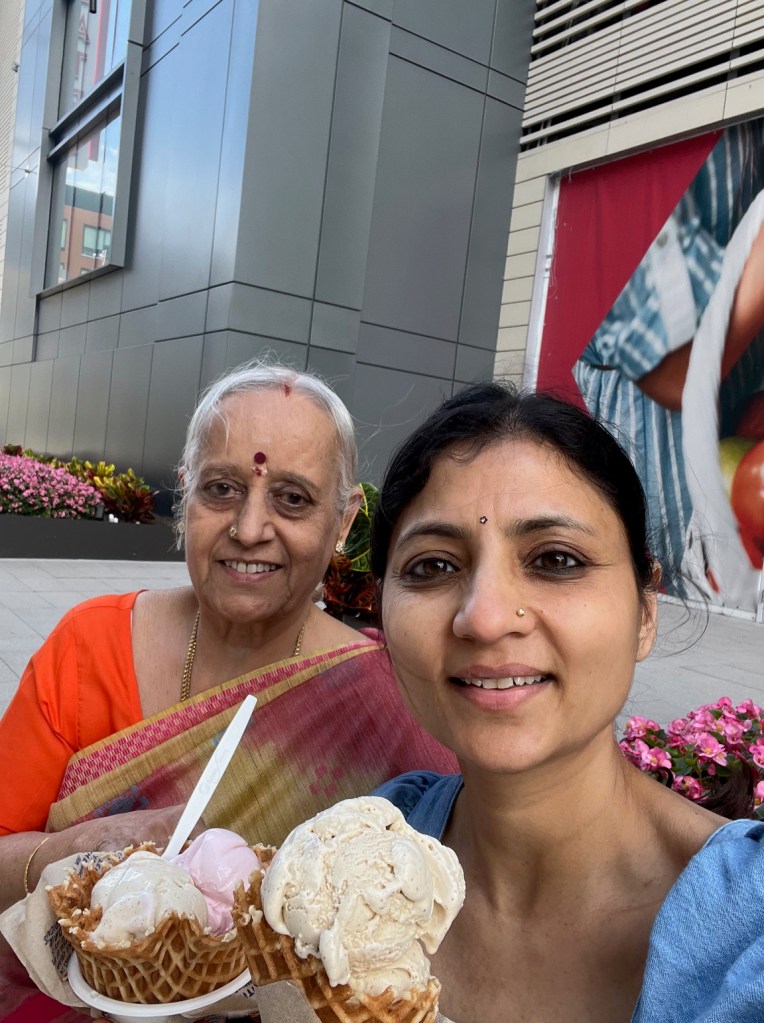
“Would you be interested in going out to eat?” I’d ask, and she would always say yes with such enthusiasm. Off we’d go – two women who shared a love for trying different foods, for the simple pleasure of eating something delicious without having to cook it ourselves.
Amma enjoys chaat – those wonderful North Indian snacks – and South Indian foods with equal enthusiasm. Be it food outings or watching movies together – another common interest we share – these became some of our best bonding moments.
What made our relationship so easy from the beginning was discovering that Amma, despite being from an older generation, wasn’t rigid or overly orthodox in her ways. She was ritualistic, yes, but in a practical way that worked for our family rather than being bound by tradition for tradition’s sake. This was such a blessing for me as a young bride – being someone who also isn’t too rigid or overly ritualistic, I found in her a kindred spirit who valued substance over strict adherence to form.
The Family Keeper
Amma carries the stories of her entire family in her heart. She’s deeply attached not just to her own children, but to the family she married into and her extended family – her brothers and their families. When she speaks of them, which she does often, it’s always with warmth and affection. I’ve never heard her say anything negative about any family member. Instead, she focuses on their positives, their kindness, the ways they’ve touched her life.
Through her stories, I’ve come to know these relatives as real people with beautiful qualities. She remembers all the small things someone has done for her – a thoughtful gesture from decades ago, a moment of kindness during a difficult time. Her gratitude runs deep, and she carries these memories like treasures.
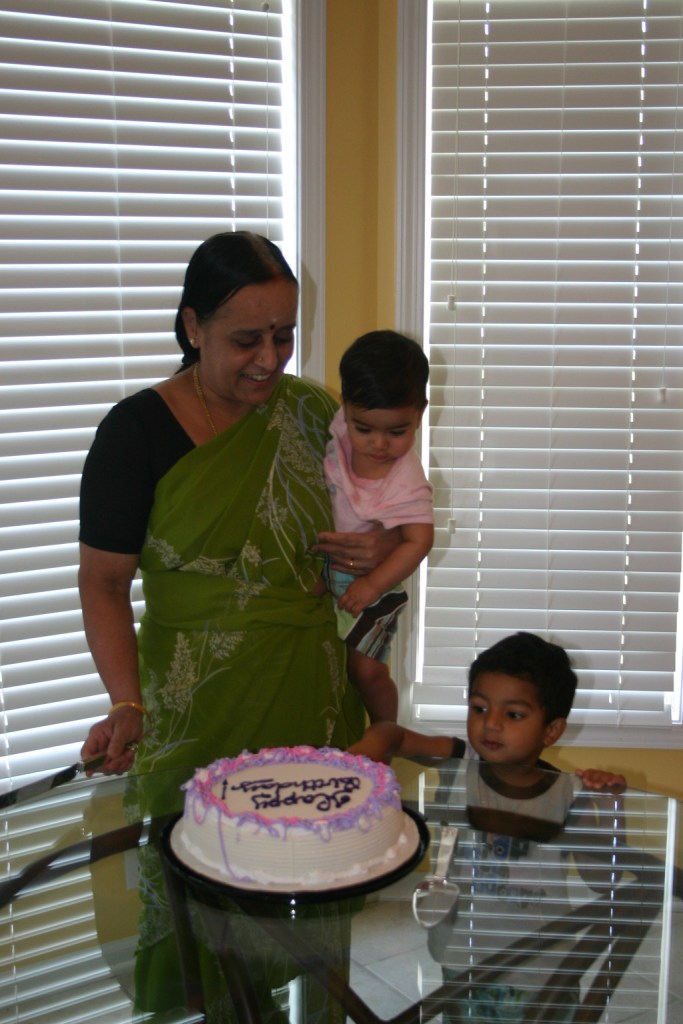
Her love for her grandchildren is something truly special to witness. When my children were young and she and Appa would visit us here, the house would transform with her presence. She didn’t just babysit – she played with them, engaged with them, created a bond that my children still cherish.
I can still picture her playing card games with them, and she brought the same competitive spirit to these games that she had with the adults. She would playfully hide the jokers, keep a perfect poker face, and tease her young opponents with that mischievous glint in her eye. What I loved watching was how she never gave up her competitive edge just because they were children – she played with the same interest and determination, making the games genuinely challenging and exciting for them. She was an expert at card games, and even with her grandchildren, she played to win while making sure everyone had fun.
When they were toddlers, she would spend hours making their favorite pureed foods, taking such care to prepare exactly what they loved. She would sit with them during cartoon time, patiently feeding them spoonful by spoonful, completely absorbed in making sure they were well-nourished and happy and equally enjoying with them their favorite shows. Even now, years later, her first concern when the grandchildren visit is whether they’re hungry. She’ll immediately start thinking of what to cook for them, what would make them feel most loved and cared for.
Her cooking was aromatic, filling the house with wonderful scents. She made sure her grandchildren experienced the tastes and comfort of traditional South Indian foods she grew up with.
Lessons Without Words
The most powerful teachings often come not through lectures or advice, but through quiet examples. Amma taught me about life simply by living hers with such grace and intention.
From her, I learned that cleanliness and organization aren’t about perfection – they’re about creating a peaceful space where love can flourish. I learned that hospitality isn’t about having the fanciest things, but about making people feel genuinely welcomed and cared for.
I can see her influence clearly in my husband – the way he keeps things organized, his natural cleanliness, his attention to neatness. These aren’t traits he consciously learned; they’re simply part of who he is because of the mother who raised him.
Amma has other passions that bring her joy – she loves playing Sudoku and puzzle games, exercising her sharp mind with challenges that keep her engaged. I can see where my husband and children inherited their love for puzzles and mental games.
A Heart Full of Gratitude
As I write this memoir as a birthday gift for Amma, I reflect on the woman she is and the many ways she has touched our family’s life.
What I’ve come to appreciate is how we’ve both grown in our understanding of each other over the years. Family relationships aren’t always simple, but there’s something valuable in learning to honor the good we see in each other.
Amma, as you celebrate another year of life, I want you to know how much your devotion to your children and grandchildren means to all of us. You’ve also been there during my difficult moments, listening with patience and understanding. That quiet support meant more to me than you might know.
I see how lovingly you care for Appa, always making sure he’s comfortable and has everything he needs. I find that very inspiring.
Your son carries your best qualities – your sense of organization, your attention to detail, your love of family. Your grandchildren light up when they remember those card games and the special foods you made just for them.
You’ve shown me what it means to maintain a graceful home, to care deeply for family, and to find joy in simple pleasures like a good meal shared or a challenging game of cards.
On this special day, I celebrate the gift of having witnessed your love for your family over all these years. May this new year bring you continued health, happiness, and many more moments of joy with those you hold most dear.
A Poem for you, Amma
Sweet moments with grandchildren, laughter we share, Your love for adventure takes you everywhere. Amma, you’ve touched our lives in countless ways, A life lived with purpose, a heart full of light.
As you celebrate another year of this beautiful life, We honor the woman, the mother, the wife. May this birthday bring joy, health, and cheer, To someone we cherish and hold very dear.
Have you ever gone to a movie theater by yourself? Bought that big bucket of popcorn, settled into your seat, and watched exactly what you wanted to see – no negotiations, no compromises? Have you ever taken yourself to your favorite restaurant, ordered your go-to dish, and simply enjoyed your own company?
I call it dating yourself. And it’s one of the most liberating things I’ve discovered in my thirties.
It all started when my bestie shared how much she loved going to theaters on her own. Something about that struck a chord in me. Her simple joy in choosing her own movie, her own time, without negotiation or compromise, inspired something in me I hadn’t realized I was missing.
My husband has always been wonderfully loving and surprising – he still is. This isn’t about lacking love in my life; it’s about discovering an additional layer of fulfillment I didn’t know I needed.
When I first tried going to a movie alone, I felt a rush of freedom I hadn’t expected. Just me, my popcorn, and exactly the story I wanted to lose myself in. The same goes for restaurants. Sitting alone at a table, ordering exactly what I’m craving, taking my time – it’s not lonely. It’s intentional. It’s caring for myself in the most direct way possible.
I used to wait for others to make my birthday special, to remember Valentine’s Day, to surprise me with thoughtful gestures. But somewhere along the way, I realized I was placing a heavy burden on the people I love – expecting them to be mind readers, to fulfill needs I hadn’t even clearly expressed.
Now? Every Valentine’s Day and every birthday, I take myself on a proper date. I plan exactly what I want to do, buy things that make me happy, celebrate who I am and who I’m becoming. It’s become my annual tradition – one I genuinely look forward to. And you know what’s beautiful about this shift? When my loved ones do surprise me – with a hug, a smile, a gift, a dinner invitation – it feels like pure joy instead of that craving or wondering within me about what they might do or give. They’ve always given out of love, but now I receive their gestures without the weight of expectation. When I do receive their loving gifts this way – already fulfilled and content – it’s pure bonus joy, free from any sense of need or demand. It makes me truly grateful for all the love I’m receiving, in a way I never was before.
I’ve learned to tell my husband exactly what would make me happy, without the guessing games. “I’d love a surprise,” I’ll say, “It could be anything.” And he delivers, every time, because there’s clarity now instead of pressure.
As I’ve gotten older, I’ve realized how crucial it is to be comfortable with our own company – not just as we age, but throughout our lives. We need to know who we are when no one else is around. We need to enjoy our own thoughts, our own interests, our own dreams.
This isn’t about becoming isolated. It’s about building a strong foundation of self-knowledge and self-care that makes us better partners, parents, and friends. When we’re not constantly running from ourselves or depending on others to fill every emotional need, we can love more freely and authentically.
When we take responsibility for our own happiness, something beautiful happens. The people in our lives can love us without the pressure of being our sole source of joy. Their gestures become gifts instead of obligations. Their presence becomes chosen rather than needed.
And when life inevitably brings changes – when children grow up and need us less, when relationships shift, when we face the natural solitude that comes with aging – we’re ready. We’ve already built a loving relationship with the person who will be with us through it all: ourselves.
I was talking to a friend recently about how much I enjoy spending time with myself, and as I spoke, I realized how transformative this journey has been. Learning to be my own companion hasn’t just made me more independent, it’s brought me a deeper peace. Less expectation, more fulfillment. I’ve become happier because I’m not waiting for others to fill a void; I’m already whole.
When I do need something from others, I simply ask. And I’m grateful that my family is supportive of this approach. There’s clarity now instead of resentment, requests instead of demands.
This is simply my story, my way of finding peace and fulfillment. I wanted to share how this approach has changed my life, how it’s helped me love the people around me more freely, and how it’s brought me to a place of genuine happiness.
When we learn to be our own providers of joy, when we stop placing the burden of our happiness entirely on others’ shoulders, something shifts. The love we receive becomes a beautiful addition to our lives rather than a desperate need.
Dating yourself isn’t about being alone; it’s about being whole. It’s about those solo movie nights, those birthday celebrations you plan with excitement, those honest conversations where you simply ask for what you want. It’s about finding that quiet confidence that comes from truly enjoying who you are.
Sometimes the most important realizations come from the simplest conversations with friends – moments when we suddenly see how much we’ve grown, how much peace we’ve found, and how beautiful it is to just be ourselves.
Every time she shares these childhood memories – even though I’ve heard them countless times – I find myself filled with the same joy and wonder that lights up her face. I have gathered here some of the stories she has shared with me over the years. I never grow tired of listening to these tales. Instead, I am marveled at the innocence and plain adoration she has for her siblings. Watching her describe these incidents with such delight, even now at seventy-two, fills me with gratitude for her, for her upbringing, and for the joy she carries through life.
In a recent video call, my mother narrated her times with her siblings. Even though I listened to many of these stories before, I was delighted and engaged in her stories, smiling at her enthusiastic narrations of her childhood times with her cute expressions.
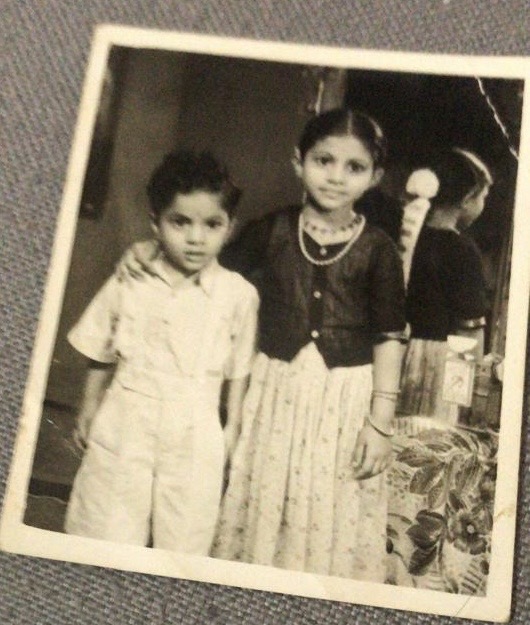
My mother with her younger brother Subi Mama
My mom Lakshmi’s face lights up when she talks about her family. At seventy-two, she still giggles like a child when she mentions Subi Mama, her younger brother and partner in mischief. When she speaks of Vicha Mama (Vishwanathan), her elder brother who was thirteen years older, she transforms into a respectful student, still in awe of his wisdom. And then there’s Balamma, whom we lovingly call Pedhamma (which means “elder mother” in Telugu), who was 15 years older than my mother and whose quiet strength has inspired us all.
When Mom talks about her brothers, her whole face changes. Stories about Subi Mama bring out her playful side – she smiles and laughs with that same childhood mischief in her eyes. But when she speaks of Vicha Mama, she becomes almost reverent – still grateful for her brother’s loving guidance.
My mother’s elder brother Vicha Mama
The Salt Surprise
When my mother was a little girl, she had a sweet tooth that often got her into trouble. Whenever she thought no one was looking, her small hands would sneak into the sugar box. She’d keep watch at the door while quickly scooping sugar into her mouth, enjoying her secret treat.
What she didn’t know was that Vicha Mama, her elder brother who was studying to be a doctor, had noticed her sugar stealing. One day, he quietly switched the sugar and salt containers.
That afternoon, when my mother dipped her fingers into what she thought was sugar, her face twisted in shock as salt filled her mouth.
“You think you had sugar,” Vicha Mama said, suddenly appearing in the doorway with a stern face hiding a hint of a smile. “But now it’s salt. I know what you’ve been doing, all that stealing.”
He made her finish what was in her mouth. “You need to swallow it all,” he said firmly.
Tears filled my mother’s eyes as she swallowed, but the lesson stuck with her forever. It wasn’t meant to be cruel – it was Vicha Mama’s way of teaching her to be honest, even when nobody seemed to be watching.
She is 72 years old now and still sneaks sugar and candies when we’re not looking. I’ll catch her with a sweet in her mouth, and she’ll give me that same guilty smile from her childhood stories.
Sweet Mango Days
Summer meant mangoes – sweet and juicy. Vicha Mama would hand-pick the ripest ones and bring them home for his younger siblings. My mother and Subi Mama would sit together eating mangoes, juice dripping down their chins, giggling as they enjoyed their treat.
“This is the best thing in the world even with the fiber that gets stuck in your teeth, it made it even more fun,” my mother would say, with those naughty eyes. I never understood how she could be so excited about something that left strings between your teeth, but her enthusiasm was infectious.
But one day, my mother got suspicious. She thought her elder brother was keeping the biggest, juiciest mangoes for himself. When no one was looking, she stole a large, perfect-looking mango from his room.
Her excitement quickly turned to disappointment when her first bite revealed it was sour and unripe. Before she could hide the evidence, Vicha Mama found her.
“Why don’t you wait for me to give you the best mango?” he asked, looking disappointed but not angry. “The best mangoes have wrinkles on the skin – that means they’re sweet. The big, smooth ones are usually sour.”
He made her eat the entire mango, teaching her another lesson: patience is virtue.
Learning Order from Chaos
Vicha Mama believed in teaching his siblings how to take care of themselves. On Saturday afternoons, he would empty their cupboards, throwing all the clothes on the floor in what looked like a mess. But he had a plan.
“Watch carefully,” he would say, showing them exactly how to fold each piece of clothing. “By the time I come back, everything needs to be back in the cupboard, neatly organized.”
Even the freshly ironed clothes weren’t spared from this weekly lesson. My mother and Subi Mama would work together, their small hands learning to transform disorder into harmony. These Saturday organizing sessions became a kind of ritual – first the chaos, then the teamwork, and finally the satisfaction of a job well done.
Penmanship and Character
“Your handwriting must be neat and very clear. It must reflect your mind,” Vicha Mama once told my mother, and she took this to heart.
He taught his little sister to leave exactly one little finger’s width between each word. He would watch as she practiced, gently guiding her hand across the page. “Make each letter clear,” he would say.
Today, at seventy-two, my mother’s handwriting is still beautiful – whether she’s writing in English, Telugu, or Tamil. Each letter is carefully formed, each word has its proper space. Her writing isn’t just words on paper – it’s a kind of art that shows how clearly she thinks.
Watching her write even a simple note is like watching someone who has practiced the same careful movements for decades. Her pen moves smoothly, never rushing. I marvel at her patience in enjoying the writing process – something never meant to be done quickly – in our world of quick typing and text messages.
Learning Self-Reliance
When school started each year, my mother and Subi Mama would first ask their house helper to cover their books with brown paper and put on neat labels. When her elder brother found out about this, he decided it was time for another lesson.
“You’re old enough to do this yourselves,” he told them, my mother studying in ninth grade at that time.
Step by step, he showed them how to measure the paper, make clean folds, and secure the corners. “From now on, you’ll do this yourselves,” he said.
This skill stayed with my mother her whole life. Years later, I would watch in amazement as she covered our schoolbooks with the same careful attention, neatly binding them. Those bindings weren’t just neat – they stayed strong and firm throughout the school year, protecting our books through daily wear and countless openings.
Paper Bits in the Breeze
While Vicha Mama was the teacher, my mother found a best friend in her younger brother, Subi Mama. When their parents would go out to see a movie, the siblings would say:
“Oh, you go. We’ll be fine at home” with angelic faces masking the playful schemes already forming in their minds.
Once alone, they would tear paper into tiny pieces, gather them in their hands, and run outside to throw them into the air, watching the bits float like snow. They never got caught for these small adventures, their shared secret bringing them closer together.
In the 50s and 60s, when social media was not part of the world and with many homes not having a television, children found creative ways to spend their time and play. I would say back then there was more quality time spent with each other, and people had a lot more time appreciating the little things in life.
As they grew up, their connection stayed just as strong. Being separated by less than two years in age helped them see each other not just as siblings but as true confidants. They became each other’s trusted friends, protectors, and supporters through life’s journey – their deep bond nurtured by those childhood conspiracies.
Strength Through Silence
My mother with her eldest sister (my mother on left, Pedhamma on the right)
Apart from these childhood adventures was Balamma, my mother’s eldest sister. Married young, as was common then, Pedhamma only appears in my mother’s early memories as a visitor who came home with her young son during vacations. But her influence on our family was deep and lasting.
Pedhamma’s life was filled with heartbreak – a genetic disease in her husband’s family took not only her husband but two of her children as well. As a single mother, she faced these terrible losses and many other hardships with a quiet dignity that touched everyone who knew her.
What made Pedhamma so special wasn’t just that she survived these troubles, but that she never felt sorry for herself or became bitter. She never complained, never acted like a victim, never let her own pain stop her from loving others. She would cry for someone else’s problems before even mentioning her own, facing each new challenge with quiet strength and dignity instead of giving up.
When my mother or her siblings had problems in their own lives, they would think of their eldest sister. Their troubles would suddenly seem smaller compared to what she had been through and how gracefully she handled it all.
Today, Pedhamma’s memory lives on in our family. Her name stands for accepting life’s hardships with dignity – not by giving up, but by acknowledging reality in a way that lets you move forward without being defined by your troubles. She showed them that real strength isn’t about avoiding hard times, but about how you carry yourself through them. Her perseverance, patience and love showed all of us how to accept life’s challenges and act from the place of now.
Stories that Bind Us
My childhood summers were filled with fun and excitement of meeting my cousins and staying at my Mamas’ and Pedhamma’s.
At Vicha Mama’s, I’d bubble with excitement as he’d greet me at Warangal station with that precious flask of vanilla ice cream – a small gesture that made me feel so special.
My time at Pedhamma’s house created another kind of joy – simple, happy times spent playing with neighborhood children, exploring freely in a loving space under the watchful eyes of my mother’s eldest sister. Pedhamma spoke little but loved deeply – strict yet never judgmental. Her quiet way of showing affection created a peaceful haven I looked forward to every school break.
Then there were the magical stays at Subi Mama’s home in Bhimli. His house, surrounded by mango trees in the ashram grounds, became my childhood paradise. The sound of ocean waves in the nights felt soothing and shifted us to a place of calmness. There was nothing like the thrill of climbing those mango trees with my cousins or playing hide-and-seek within that big compound.
Even now, when my mother and Subi Mama get together, the years fall away and they become those children again – the ones who once threw paper bits into the summer breeze. When she tells stories about their mischief, her eyes light up with that same playful sparkle, her laughter as fresh as it must have been back then. And when she talks about Vicha Mama, her voice fills with the same respect and love she’s felt her whole life for the brother who taught her so many important lessons – sometimes strict, always loving, forever shaping the person she became.
In my mother’s life at seventy-two, her relationships with her siblings remain the strongest foundation in her life. Their love for each other, the playfulness, and wisdom continue to influence not just her, but all of us who came after. The reverence we children feel for our Mamas and Pedhamma mirrors what my mother feels for her own siblings – a cycle of love and respect that continues through generations.
The stories she shares now – about sugar turned to salt, about sour and sweet mangoes, about paper pieces floating in the wind – are more than just childhood memories. They form the foundation of who she is. There is a special joy in watching my mother become a child again, her face lighting up as she relives these precious moments from her past.
One fine day, I see saggy eyes, wrinkles on my skin Where were you before? Is it stress, is it my tiredness, is it my depression? That brought you to me. Being noticed not just by me but by family I realize I may be growing older.
Is this how getting old presents itself to me? Witnessing a silver hair Fatigue visiting more often Metabolism slower, body shape unpredictable Seeing younger men and women as my own kids Sometimes a reason for my excuse for stillness.
As time went by, I realize the abuse, neglect and being ungrateful My body has gone through because of me I feel remorseful, sorry, but I cannot change my past She has traveled with me for 46 years non-stop and continues.
I thank you, my divine abode, for providing me the space where my life can live in. You are a gift given by Him You were made just perfect in His eyes I ask for forgiveness from you and promise I will take care of you, To serve you, nurture you in gentleness and humility In gratitude for you as you are His blessing to me.
Thank you for this outer skin you have given me To protect the inner body from heat, germs and things not good for my life in you I promise to be present as my skin is touched with gentleness and love As I bathe and do my skin rituals To ensure my skin feels nourished and happy Not for others to compliment or pass me a second look in wonder But for me to ensure you are happy inside and out.
Thank you for giving me the appetite So I know I must eat so you are nurtured I promise to eat healthy Unprocessed food, greens, vegetables and fruits Plenty of water for hydration Not for me to lose weight or look in a certain way But for you to be happy and healthy, So that my life in you can live a minute more.
Thank you for the bones, muscles and organs That function and that work as magic To carry the life in me forward So I have another moment of living I promise to take care of you Through my walks, jogging, exercise Lifting weights so your muscles do not weaken For me to ensure you feel strong and happy.
Thank you, God, for this beautiful body To choose You through my actions this lifetime Giving me another chance This body being one of the most beautiful miracles created by You.
Dear God, please give me the mind, realizations, intention To only choose You To be grateful, loving to my body and all the gifts You have given me To live each day with purpose and meaning Using this most precious gift given to me by You.
Happily walking towards my mom’s car, Orange leash tethered to my harness. Walking sideways with a wiggle and joy, I hear my mom opening the car with her keys.
“Ready, Tuffy? Jump!”
I finally figured the way in, that is right. Sitting in the rear seat of my mom’s car, A little whine and she understands. Mom lowers the windows just for me.
Cool fresh breeze tickling my whiskers, Smelling Spring’s sweet air. Shedding season it is, but I don’t mind, My scent is strong, Mom reminds me all the time!
Riding on my mom’s car at the back seat, Adventures with her are always unique. The last time she tried the small trunk instead, I tumbled down when the door opened wide. Pressed against the door like jam in a jar, Poor mom felt guilty – that went too far!
My hair floats free in golden clouds, Dancing in sunlight like summer dreams. Mom wrinkles her nose but I don’t know why. The smell of the car mixed with spring’s delight, the feel of breeze caressing my fur, pure joy I cannot hide.
The sounds of vehicles passing by, A rock music to my ears under the spring blue sky. The people who wave at me as we drive along, Their friendly waves make my tail wag with glee. The dogs in other cars catching my eye, Some friendly and some shy as we pass by.
Sometimes I bark at dogs we pass by, Some get a wag, others a fierce “Hi!” Mom laughs at my selective hellos, The way I choose friends, nobody knows. So many humans smile when they see my face, My Labrador joy spreads all over the place.
My nose pressed to the window glass, Taking in scents as landscapes pass. Mom says, “Tuffy, you smell so bad!” I tilt my head – why is she sad? I notice her cracking the window more wide, As I continue enjoying the ride!
At traffic lights, I sit up tall, Gazing at people and places we pass by.
Where are we going? I wonder with glee, Our favorite trails with trees to see? Is it the wooded trail where squirrels play? Or just a simple neighborhood walk today? Perhaps the groomer’s where I happily recline, The brushing and pampering feeling simply divine!
Each place holds joy, each trip a treat, With mom beside me, life is sweet!











 lotusheartgrateful.com