Growing up, my early childhood was filled with quarrels and fights that felt extreme. I was around people who weren’t who they seemed to be – who changed depending on the situation. As a child, it was deeply confusing. I carried hurt that wasn’t mine to carry.
What developed for me was this: any kind of disharmony meant panic. If someone had issues with my intentions, I would think that was the end. I could not be close to them anymore.
So, I lived between two extremes. Sometimes I’d give in completely, bending backwards to keep someone happy, losing myself to keep the peace. Other times, when I finally couldn’t take it anymore, I’d have to cut people off completely. Both came from the same fear – that disharmony was something dangerous, something to guard against.
Growing up, I’m realizing something.
I am grateful to have people who love me. Here’s what I realize: everyone is different. We’re bound to clash sometimes, to not see eye to eye. Having disagreements is normal – it’s even healthy to voice them. The love stays despite them. Feeling confident in that – not apologetic or angry about it – changes everything.
When disagreements come up now, I can actually say what I feel. “I see this differently” or “That hurt me.” Being able to say that – being honest like that – feels like a privilege.
I’m also learning to listen – really listen – to their point of view. That feels like honoring the relationship – making room for both our truths.
This extends beyond just disagreements. Any disharmony – tension, misunderstandings, different needs – doesn’t have to send me into panic anymore. I can stay present with it, notice when I’m overthinking, and come back to what’s actually happening. I can navigate it without losing myself or cutting people off.
I can forgive people from the past, and sometimes that forgiveness includes keeping distance – respecting what’s healthy for me. I can have honest conversations with people who can meet me there. I’m no longer swinging between those extremes.
I’m grateful for this shift. I’m learning that disagreement doesn’t have to mean the end. It can be a chance to truly see each other.
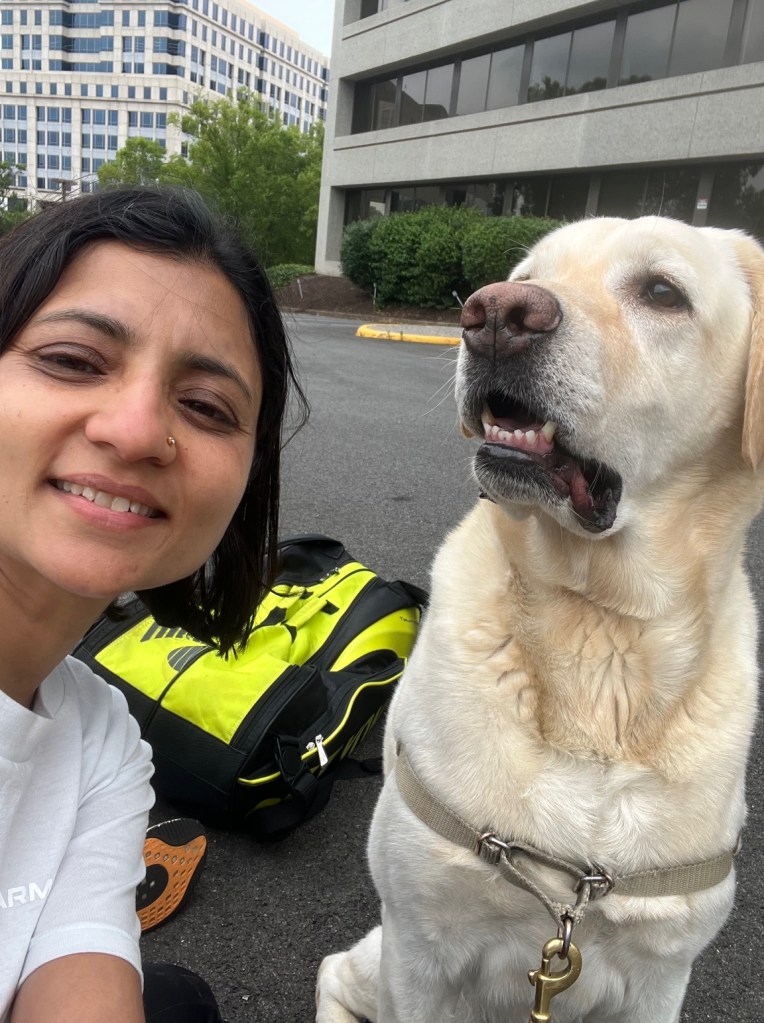
Tuffy, my golden lab, my companion for nine years, taught me something I’m still learning – how to live in the moment, how to love without conditions, how to be childlike without being self-conscious. His recent passing still feels like disbelief. It still feels like he’s gone to daycare while we’re on vacation.
This is what life is teaching us, I feel – to live like dogs do. Fully present, fully joyful, fully here.
With humans, I can’t be that way. I hold back. I perform. I worry about how I’m perceived. But with Tuffy? I could be silly. I could talk in that voice I use only for dogs, sing songs that made no sense, play games that were just ours. I could sit on the floor with him and forget about everything else.
He brought out the childlike part of me I thought I’d lost.
Tuffy didn’t need me the way I needed him. He was content. Emotionally mature. He trusted me. He didn’t need constant affection or reassurance – he just wanted to be near. I was more of a “Velcro” human to him. I’d put his bed wherever I was working, wherever I was doing things. He slept on his bed. I would just feel happy looking at him and calling out to him every now and then. In response, Tuffy would open his eyes or wag his tail, as if to say he loved me too.
And somehow, that was everything for me.
I remember how excited he’d get when I’d take him for walks, how happy he would be to welcome me every time I opened the front door and walked in. He loved bringing his toys to me and to play with him.
And I remember the last time.
Even when he was in pain – on what would be his last visit to the ER, though we didn’t know it then – he waited for me in the garage. My husband was walking with him toward the car, and I had to go back to get something. Tuffy stopped and turned to look at me. He wouldn’t budge. He turned back, waiting for me, looking out for me despite being in pain. I find that so emotional – his love for me, even in that moment. It was a habit he had. He wanted all family members to walk together with him. Not one ahead, not one behind. He found such joy in that togetherness.
What Tuffy taught me goes beyond the grief. He showed me what it means to live in presence – to find joy in simple things, to simply love, to trust without needing proof, to be fully here in each moment.
That’s the lesson. That’s what I carry forward.
Thank you, Tuffy, for teaching me how to live. For showing me what unconditional love looks like. For bringing out the best, most childlike, most joyful parts of me.
You can never be replaced. You will never be replaced.
I’ll honor you through the choices I make from what you’ve taught me. Somehow every time I think of you, I don’t end up feeling sad – rather a smile, a happiness in how you lived, what you taught us, our beautiful times together.
Somewhere in my healing journey, there was this gentle slowing down – a soft withdrawal from my usual urgency to react, to fix. Before, when I felt triggered or when sadness and panic hit, there was always this restlessness, this need to fix something, to move quickly. That place was not comfortable to be in.
What I never expected was that this slowing down was actually nature’s way of teaching me to be present. Through my trauma, I discovered this was a sign in my healing journey – that I was learning to let go and be more accepting.
One day when my best friend was asking me how I was doing, the words just came: “I’m steeping, like a tea bag in hot water.” I was surprised I even said that, because it was exactly how it felt.
Now when I need this time, I grow quieter, naturally gravitating toward solitude – long walks in nature, visits to the spa, or simply sitting on my balcony watching the sky and trees. I write sometimes, or just think, or don’t think at all. During this time, I don’t rush to process or understand. I just let whatever I’m feeling exist.
There’s something profound in this stillness. A calmness emerges that I never found in all my previous rushing toward solutions. Realizations surface naturally, like bubbles rising in still water. And in those moments, I find myself talking to my Creator – not in desperation, but in surrender.
“This is where I am. I need your help.”
It might take a day, sometimes longer, but eventually something shifts. There’s lightness. Clarity. A deeper understanding I couldn’t have forced. And always, always, humility.
I realize now that healing doesn’t happen through panic or the urge for immediate fixes, but through presence. Through simply being with what is, without needing to change it right away.
The most healing happens when I stop trying to heal and just… steep.
This process has taught me that sometimes the answer isn’t to do something about our emotions, but to be with them. To trust that sitting quietly with our experience, creating space for it to exist, allows something natural and necessary to unfold.
I’ve learned I need time alone with whatever I’m going through. And in that solitude, in that steeping, I find not emptiness but fullness. Not avoidance but the deepest kind of presence.
Maybe what we call healing isn’t always about getting better faster. Maybe sometimes it’s about learning to be present with ourselves exactly as we are, trusting that this presence itself transforms us in ways our rushing never could.
In daily life, whatever we do – whether we experience negativity like anger, frustration, jealousy, or hurt – I’ve come to understand that if we look deeper and deeper into our actions, we’re all seeking the same thing: peace, happiness, and contentment.
I think all that negativity is our unconscious way of trying to prove our self-worth through our ego. We demonstrate this in ways we’re not even aware of – through our struggles, our pain, our reaching for something more – all in an attempt to show that we’re worthy of love and recognition.
In my own life journey, I’ve recognized these patterns – wanting to feel seen, feeling inferior, trying to be the best at everything, people-pleasing, being self-critical, or carrying shame. Through my meditation practice and self-awareness, I’ve come a long way in understanding these tendencies. While they still show up every now and then, I can now choose differently when I notice them. We all have our own ways of unconsciously trying to prove we deserve love and happiness.
The truth is, we don’t have to do anything to earn that peace or prove our worth. It’s already within us. Our Creator loves us completely, and we have always had this love. The unconscious ways in which we try to prove our self-worth to ourselves and to others around us is never needed.
Sometimes we go through difficult experiences and learn from them. We realize that certain behaviors, thoughts, or choices aren’t bringing us the happiness we’re seeking. We start to notice that when we look for fulfillment outside ourselves – whether through hurting others, seeking power or even through self-criticism and shame – it doesn’t satisfy us. All these patterns come from the ego trying to find worth and meaning, when we already possess infinite worth simply by being.
When we observe how our life unfolds with these patterns, we can see how they affect the quality of our life and the quality of our mind. We can make different choices and turn inward instead. We can ask ourselves deeper questions about why we do what we do, why we react the way we react.
Many people don’t want to do this inner work because we’re afraid of what we might find about ourselves. We’re afraid of our shadows, our mistakes, our deeper wounds. But those questions, when we’re brave enough to ask them, can lead us deeper into self-awareness and self-discovery. It’s like removing a thorn that got deep within us. Yes, it hurts when the thorn is in, and it hurts even when we try to get it out – but we need to do it to be healed.
This process is beautiful. It’s a way of unbecoming who we think we are to discover who we were always meant to be – how we were originally created. The unbecoming process is like peeling away layers of an onion. As you go deeper, removing each layer of conditioning, fear, and false identity, you get closer to the pure essence that was always there.
This is what remains when everything else falls away – love, peace, and our true nature. We feel at peace knowing we do not have to prove anything to anyone. We feel comfortable knowing we are not perfect, and this makes it easier for us to let down our guard and accept ourselves as we are. This also enables us, as a ripple effect, to be more present and naturally accepting and loving toward others. When we are accepting of our own imperfections and loving toward ourselves, it becomes natural to extend that same acceptance and love to others. The nature of pure love is giving rather than expecting, and this changes our dynamic in relationships.
This understanding doesn’t require any special experiences or practices. It’s available to us in every moment of daily life, in every challenge, in every choice to look within rather than outside ourselves for what we’re truly seeking. Meditation practices help us through this self-awareness journey and help us become comfortable with ourselves. They allow us to see ourselves through a lens of detachment, helping us be more loving and gentler toward ourselves.
The journey inward is the journey home to who we’ve always been.
I’ve been having recurring thoughts about a particular service that I find meaningful and purposeful – something I could extend to others. But when I looked deeper, I recognized this mental chatter for what it was. A mind that is busy and urging action often stems from the ego seeking validation, while true divine guidance feels calm, peaceful, and organically natural. If something is truly meant to be, it emerges from this place of clarity and peace – not from racing thoughts.
Through my meditation practice, I’ve learned that God speaks to us through our hearts in the present moment. When we’re completely open to the here and now, we receive what we need. Meditation helps us recognize when thoughts come from ego versus divine guidance from our Heart and makes it a choice to shift back to simply being present.
So I realized: I don’t need to chase after racing thoughts or dreams. What’s meant for me will come in the given moment. All I need to do is be here and now, accepting whatever the moment offers with grace and gratitude. When I say yes to the Creator with a thankful heart, I become clear about what needs to be done – whether it’s catering to someone’s needs, cleaning someone’s space, offering a smile to a stranger, or feeding the hungry. The form doesn’t matter; what matters is the open-hearted presence I bring to it.
Even daily planning can flow from this centered space. When we plan from the present moment, it helps quiet mental noise and allows us to be more focused, rather than anxious about outcomes.
This insight deepened while I was eating. My mind became busy with random thoughts – thinking about this, planning that, wondering if I should watch something on my phone. These thoughts were pulling me away from simply being present and respecting the food before me. Then I remembered: I don’t have to chase after things to do or think about. The moment I felt this truth in my heart, everything shifted. I became quiet, fully present with my food, relishing every bite without needing any distractions.
This revealed something profound about mental restlessness. When we’re not present, the mind becomes noisy, always seeking something to chase or think about. This restlessness comes from the ego trying to maintain control, to feel important, to avoid the beautiful simplicity of just being.
We don’t have to chase anything. When we’re truly present, serving as instruments of our Creator, everything we need is already here and now. The peace, the purpose, the next right action – it all emerges naturally from this space of open-hearted presence.
May this reflection serve as a gentle reminder to return to the present moment, to trust in divine timing, and to find peace in simply being.
Have you ever gone to a movie theater by yourself? Bought that big bucket of popcorn, settled into your seat, and watched exactly what you wanted to see – no negotiations, no compromises? Have you ever taken yourself to your favorite restaurant, ordered your go-to dish, and simply enjoyed your own company?
I call it dating yourself. And it’s one of the most liberating things I’ve discovered in my thirties.
It all started when my bestie shared how much she loved going to theaters on her own. Something about that struck a chord in me. Her simple joy in choosing her own movie, her own time, without negotiation or compromise, inspired something in me I hadn’t realized I was missing.
My husband has always been wonderfully loving and surprising – he still is. This isn’t about lacking love in my life; it’s about discovering an additional layer of fulfillment I didn’t know I needed.
When I first tried going to a movie alone, I felt a rush of freedom I hadn’t expected. Just me, my popcorn, and exactly the story I wanted to lose myself in. The same goes for restaurants. Sitting alone at a table, ordering exactly what I’m craving, taking my time – it’s not lonely. It’s intentional. It’s caring for myself in the most direct way possible.
I used to wait for others to make my birthday special, to remember Valentine’s Day, to surprise me with thoughtful gestures. But somewhere along the way, I realized I was placing a heavy burden on the people I love – expecting them to be mind readers, to fulfill needs I hadn’t even clearly expressed.
Now? Every Valentine’s Day and every birthday, I take myself on a proper date. I plan exactly what I want to do, buy things that make me happy, celebrate who I am and who I’m becoming. It’s become my annual tradition – one I genuinely look forward to. And you know what’s beautiful about this shift? When my loved ones do surprise me – with a hug, a smile, a gift, a dinner invitation – it feels like pure joy instead of that craving or wondering within me about what they might do or give. They’ve always given out of love, but now I receive their gestures without the weight of expectation. When I do receive their loving gifts this way – already fulfilled and content – it’s pure bonus joy, free from any sense of need or demand. It makes me truly grateful for all the love I’m receiving, in a way I never was before.
I’ve learned to tell my husband exactly what would make me happy, without the guessing games. “I’d love a surprise,” I’ll say, “It could be anything.” And he delivers, every time, because there’s clarity now instead of pressure.
As I’ve gotten older, I’ve realized how crucial it is to be comfortable with our own company – not just as we age, but throughout our lives. We need to know who we are when no one else is around. We need to enjoy our own thoughts, our own interests, our own dreams.
This isn’t about becoming isolated. It’s about building a strong foundation of self-knowledge and self-care that makes us better partners, parents, and friends. When we’re not constantly running from ourselves or depending on others to fill every emotional need, we can love more freely and authentically.
When we take responsibility for our own happiness, something beautiful happens. The people in our lives can love us without the pressure of being our sole source of joy. Their gestures become gifts instead of obligations. Their presence becomes chosen rather than needed.
And when life inevitably brings changes – when children grow up and need us less, when relationships shift, when we face the natural solitude that comes with aging – we’re ready. We’ve already built a loving relationship with the person who will be with us through it all: ourselves.
I was talking to a friend recently about how much I enjoy spending time with myself, and as I spoke, I realized how transformative this journey has been. Learning to be my own companion hasn’t just made me more independent, it’s brought me a deeper peace. Less expectation, more fulfillment. I’ve become happier because I’m not waiting for others to fill a void; I’m already whole.
When I do need something from others, I simply ask. And I’m grateful that my family is supportive of this approach. There’s clarity now instead of resentment, requests instead of demands.
This is simply my story, my way of finding peace and fulfillment. I wanted to share how this approach has changed my life, how it’s helped me love the people around me more freely, and how it’s brought me to a place of genuine happiness.
When we learn to be our own providers of joy, when we stop placing the burden of our happiness entirely on others’ shoulders, something shifts. The love we receive becomes a beautiful addition to our lives rather than a desperate need.
Dating yourself isn’t about being alone; it’s about being whole. It’s about those solo movie nights, those birthday celebrations you plan with excitement, those honest conversations where you simply ask for what you want. It’s about finding that quiet confidence that comes from truly enjoying who you are.
Sometimes the most important realizations come from the simplest conversations with friends – moments when we suddenly see how much we’ve grown, how much peace we’ve found, and how beautiful it is to just be ourselves.
This morning, after I fed the birds in the little park area in front of our home, I sat down to meditate near the trees. I watched these little birds come and eat, and I felt so happy I lost track of time.
There’s a crow who visits my balcony every morning for his feed. He once came into our home through the open balcony door, cawing to remind me it was feeding time.
There were times when I used to feel lonely. But now, with the crow visiting me and me feeding the birds, I realize no one is really alone. We’re all here together. We’re so connected.
I feel this is such a blessing. I feel connected to these beings, like I belong with them. The land where I feed the birds isn’t mine in the human sense, but I can still feed them there. The birds aren’t confined to me, but I still feel like we belong to each other. The trees aren’t confined to me either, but I feel I belong alongside them.
When we belong and coexist, there is no sense of controlling or owning. We’re living with them as family.
That’s when it hit me – I had it backwards. I used to think I needed to own things to truly enjoy them. Like the times I felt if I had a bigger outdoor area, I could have a bird feeder hanging in my garden or grow more plants and flowers to enjoy. But the truth is, I don’t need to own anything. Everything already belongs to me. The whole world belongs to all of us.
It really does feel like we all belong to it. The trees, the birds, the sky, the water – it’s all just there for me, for all of us. We belong to it, and it belongs to us.
I feel such abundance, such richness – not because I possess anything, but because I have access to everything through belonging. Everything is given to us without needing to grasp or control it.
I feel immense gratitude to our Creator for providing us with all that we need – everything is already given – and for all the beauty that’s already there for us to enjoy.
We can still grow plants or take care of our animal friends in our space, but that doesn’t restrict our sense of belonging to the vastness of creation.
This thought made me feel so vast, so free. I felt truly happy – not because I had something, but because I let go of needing to have it. The happiness comes from not controlling, not owning, just being and connecting.
We’re so blessed. We have this entire world, and we can experience it as belonging to us while we belong to it. When we see it that way, everything changes. We want to take care of it. We want to coexist with each other because we’re all part of this same beautiful belonging.
This is such a beautiful reminder to step out into nature whenever we feel down or alone – to realize the beauty and peace that nature offers, reminding us we’re never truly alone.
We’re all family, belonging to this unlimited creation – a gift of God’s unlimited love flowing through everything around us.
For over a year, I had been feeling this desire to feed the birds. Living in a condo without the possibility of having a bird feeder on my balcony, I felt to go to PetSmart and buy bird food and feed birds outdoors. But I didn’t act upon it – my procrastination got in the way.
Finally, last week, I felt at least this year I should do it and act upon it. And I did it. The idea came to me: why not go to the trees in front of our home, to the little park area where there are trees? Why not feed them there?
I bought a bag of bird food – dried corn, seeds, and peanuts – and began my morning routine of feeding the birds under the trees in the park area in front of our home during my walk with my dog, Tuffy. Watching them come and eat filled me with such joy.
God’s Provision for His Little Ones
This morning, I woke up a bit late and made my way to the trees around 10 AM with my bag of bird food. As I was scattering the seeds on the ground, I noticed a lady walking toward the same tree. We smiled at each other, and she asked, “Do you feed the birds?”
“Yes,” I replied, “I just started doing this recently.”
What she told me next revealed the beautiful miracle unfolding. She had been feeding these same birds for the past year. Right there, in the very tree where I had been placing food on the ground, she had three bird feeders hanging – feeders I had somehow never noticed.
With tears in her eyes, she shared that she was moving away at the end of this month. She was heartbroken thinking about the birds who had come to depend on their daily feeding. Who would take care of them? She couldn’t bear the thought of these little creatures going hungry.
And there I was – having just begun this same calling on the exact same tree, just one week ago.
“Don’t worry,” I told her, “This is taken care of. I will continue feeding them.”
In that moment, I saw so clearly how God orchestrates His care for even the smallest of His creatures. The birds would not go unfed. One instrument was preparing to leave, and another had already been called into place. The same work of love, continuing seamlessly through different hands.
As we talked more, Marianna (she graciously allowed me to share her name and our story) showed me how to properly use the bird feeders. We discovered we had so much in common – both of us believers in listening to God through our hearts, both drawn to the same spiritual language.
Marianna and me by the tree
I shared with her how there was a time when I felt deeply connected to the trees, when I would hug one particular tree daily, asking it to be my friend and give me strength – to help me become solid and humble like the tree itself, unassuming and non-presumptuous.
She smiled and said “I have a tree I hug every day too.”
How can such connections be mere coincidence?
Reflections on Divine Orchestration
This whole experience revealed such a beautiful truth to me. It’s not about me or Marianna at all – it’s about God’s tender care for these little birds. They needed to be fed, and He made sure they would be.
One instrument was preparing to leave, and another had already been prepared and placed. The same work of love continuing through different hands. How perfectly He orchestrates!
This experience reinforced what I believe: that God takes care of everything. When we stay in the moment and listen to what our heart is telling us – we become part of His plan. This is what matters most to me: trusting that God handles everything, that He knows everything, and that He is as close as we can imagine, even beyond that.
It’s important to remember and remind ourselves that this is not something we are doing – or to feel great about it. It’s humbling to realize and feel that we are just instruments in God’s hands, just as Marianna was His instrument for the past year. The birds’ needs never go unmet because God sees them, cares for them, and provides for them through willing hearts.
This is the miracle: not the human connection, but the divine provision. God’s seamless care for His creatures, ensuring that the food these birds depend on continues to come, day after day, through whoever He calls to serve. And in this calling, we discover the most intimate relationship of all – with the One who knows everything, who orchestrates everything, who is closer than close.
Thank You, God
Thank you, Marianna, for listening to your Heart and feeding these birds so lovingly, and for helping me see how beautifully God provides for His creation.
And thank you, God, for using us both in Your perfect plan to care for these little ones. Thank you for showing me that even the birds are not forgotten, and that You make sure they are fed through willing hearts.
The miracle isn’t in human connections – it’s in Your seamless, tender care for every living creature. How amazing that You would call me to continue this sweet work of feeding Your birds.
But it’s not just the birds who are taken care of. God’s love is so complete that everyone is taken care of. Marianna and I are both filled with joy, gratitude and trust in You.
Every time we hear God’s voice in our heart and act upon it, we are transformed. When we become His instruments and don’t claim responsibility for ourselves, we are changed in the humblest way. God’s love transforms everyone who is touched by it – it transforms everything connected to it.
Sometimes the most profound truths are revealed in the simplest acts: that God sees, God cares, and God provides – even for the smallest sparrow.
As Mental Health Awareness Month prompts us to reflect on what truly nurtures our wellbeing, I find myself thinking about relationships – specifically, the ones that, despite our best efforts, aren’t meant to last.
I recently faced this with someone who once meant a great deal to me. After experiencing hurt, I valued the relationship enough to offer peace, to make things lighter, to do my best from my end. I genuinely tried to nurture what we had, hoping we could rebuild what was lost. Yet despite these sincere efforts, I eventually realized something important: sometimes the same patterns that caused the initial hurt remain, even after forgiveness has been offered and accepted.
Some relationships naturally drift apart, as though they were never truly meant to endure. The pattern can be particularly painful: a relationship forms, hurt occurs, distance grows, forgiveness follows, reconnection happens… only for the same cycle to repeat itself months or years later.
What I’ve learned about mental health through this experience is profound. Our inner voice often whispers the truth long before we’re ready to hear it. That feeling of something not being quite right – that’s wisdom trying to protect us.
I believe that prioritizing mental health means honoring those internal signals. It means recognizing when a connection depletes rather than replenishes us. It’s not about blame or holding grudges; it’s about acknowledging the reality of what is, rather than clinging to what we hoped could be.
Not every relationship that enters our life is meant to remain there permanently. Some connections serve their purpose for a season, teaching us necessary lessons before we continue separate paths.
The most valuable lesson I’ve learned is that forgiveness doesn’t obligate us to restore a relationship that repeatedly shows itself to be unhealthy.
I don’t believe we should forget the experiences that have shaped us. Each relationship – even the painful ones – has contributed to who we are today. These moments have taught us about boundaries, about ourselves, about what we truly need from connections that deserve space in our lives.
The journey toward better mental health often involves making peace with the reality that some chapters in our story are meant to close. This isn’t failure – it’s growth.
As Mental Health Awareness Month reminds us, we must come first in our own lives.
The greatest responsibility we have is to nurture our own wellbeing. No one else carries this responsibility for us – it is ours alone.
Sometimes, protecting that wellbeing means making thoughtful decisions about which relationships deserve our continued investment, which ones should be honored from a distance, and which should be released entirely.
This is crucial to our mental health – recognizing what brings us peace versus what disturbs it, acknowledging those feelings, and honoring them instead of pushing them aside. There’s wisdom in our discomfort that deserves to be heard.
There’s profound courage in recognizing when a relationship consistently disrupts your peace. Sometimes the most compassionate choice – both for yourself and the other person – is to release the expectation that things will be different next time.
Forgiveness doesn’t always mean restoration. Sometimes, it simply means freedom – the freedom to wish someone well on their journey while continuing your own, unburdened by regret or obligation.
In honoring our mental health, we learn that some of the most important boundaries we’ll ever set are the ones that protect our peace, even when others don’t understand. And that’s not just okay – it’s essential.
What have you realized about relationships that has been crucial for your mental health? What wisdom has your journey taught you about the connection between healthy boundaries and wellbeing?
From the times of Covid when work from home became the norm, remote work has presented unique challenges, particularly in understanding and connecting with colleagues. You learn to interpret coworkers from whatever little they share during meetings or daily standups. Emotionally connecting with peers has been difficult, not to mention how crucial it is to understand each other to work effectively as a team.
Years ago, a new colleague joined our company. He sounded very sarcastic, often cutting people off and calling out mistakes in a somewhat snobbish manner when someone didn’t understand or comprehend what he shared. He quickly developed a reputation as a difficult person to work with, and very soon I had formed an opinion of him as being hard to collaborate with, intimidating, and aggressive. Let’s call him “Jacob” for privacy reasons.
With many new people joining our team at that time, I had suggested at our Retro meeting that it would help us bond if we did a casual team building exercise. I was pleased when my scrum master and manager agreed, seeing value in such an activity. My manager went the extra mile by preparing some creative questions for the team.
One question asked everyone to share something about their childhood – what was their best learning experience or what they wished they had learned better.
When Jacob’s turn came, what he shared caused a paradigm shift in how I perceived him.
Jacob revealed that he was orphaned and didn’t know his birth parents. He had moved between several foster homes as a child before being raised by an elderly couple when he was 8 years old in rural Iowa. His foster parents had a big farm with neighbors half a mile away. There weren’t many children his age nearby with whom he could relate and play. His foster parents were kind enough to teach him life skills and provide him education. He worked very hard to respect the opportunity he had and to thank his parents too.
He shared with a chuckle that due to his childhood and growing up with elderly parents, he had always struggled with connecting to people his own age. His weakness has been his awkwardness with people, and his communication style has suffered as a result. He acknowledged that he could come across as rude or too direct, but emphasized that he doesn’t do it intentionally – he’s simply struggling with it. He added that he’s actively working to improve.
Hearing him talk shifted something profound in me. It made me realize how quick we are to judge others. We don’t know their full story, and it’s true that to a great extent, our choices and behaviors are heavily influenced by our life circumstances and childhood conditioning.
While it’s important to listen to our instincts when our energy senses something or someone is not good for our mental health, we don’t need to rush to judgment or share harsh opinions. Rather, we can respect our feelings and create appropriate distance when needed, as our primary responsibility is to take care of ourselves.
We tend to waste our energy and time harboring negative feelings towards others or obsessing over “why” or “how could they” behave a certain way. This often leads us to assume things about situations unknown to us. We may never truly understand why people behave the way they do, but we can take care of our wellbeing, know our boundaries, and simply meet people where they are, keeping things uncomplicated. No one is responsible for our happiness except ourselves.







 lotusheartgrateful.com