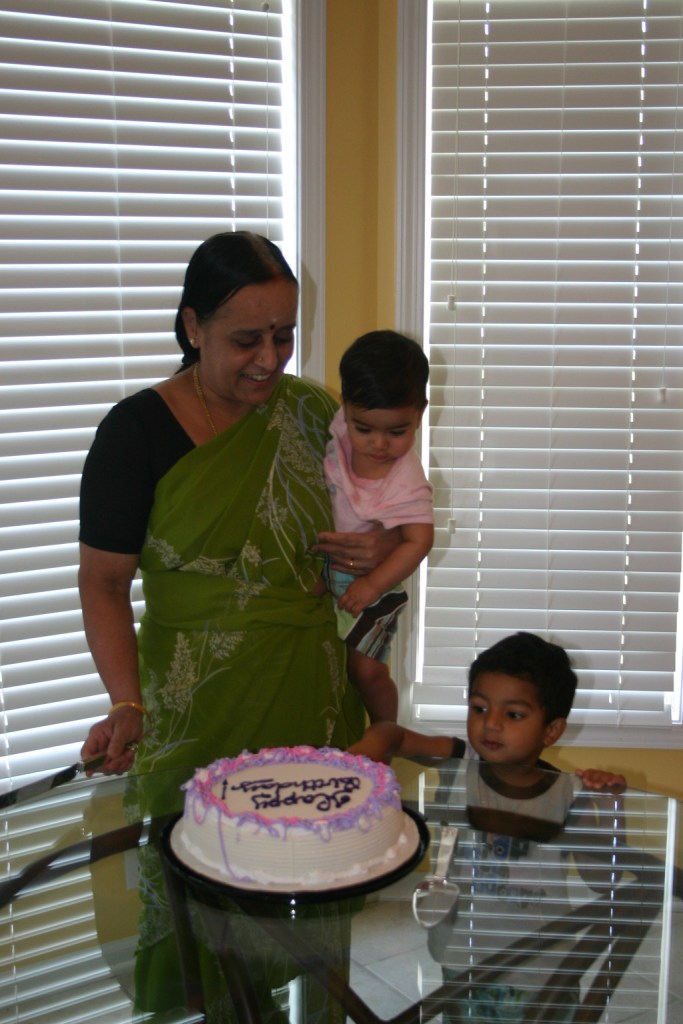
Celebrating Amma – A Life of Grace and Purpose

Amma's birthday

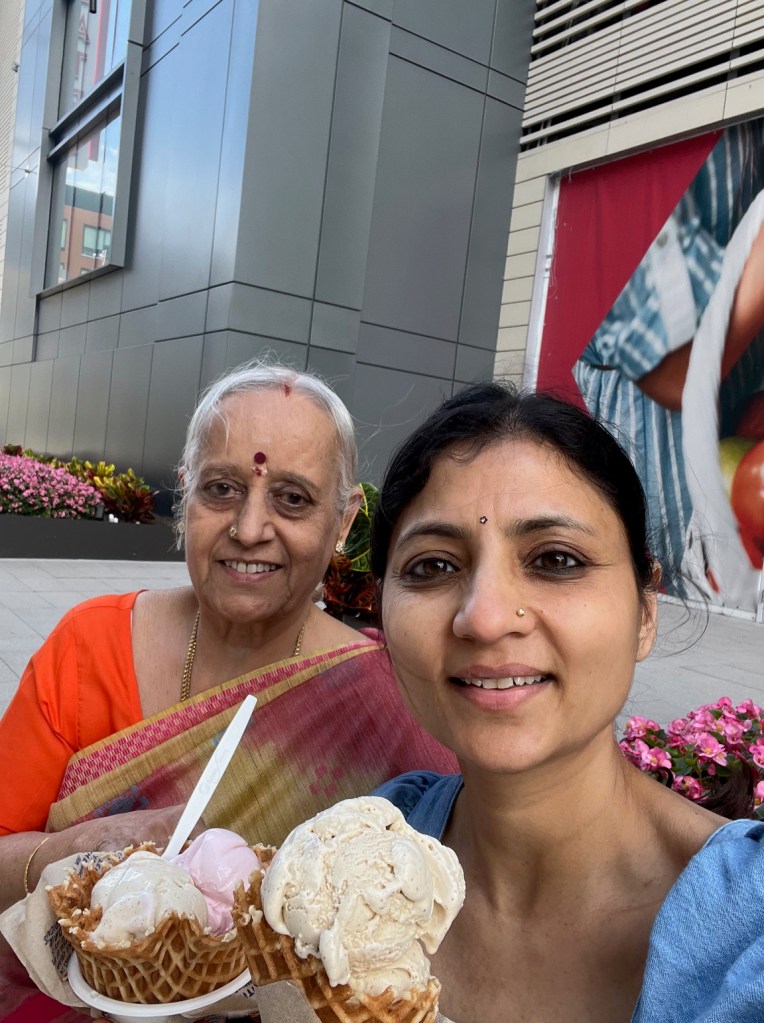
Some people carry grace like a quiet strength, touching the lives around them through simple, daily acts of love. In my husband’s mother – Amma – I discovered a woman whose beauty runs far deeper than what meets the eye, whose generous heart has shaped not just her family but everyone fortunate enough to witness her way of living.

When I first entered this family as a young bride, I was struck by more than just Amma’s natural beauty. There was something in the way she moved through her world – purposeful, caring, always thinking of others before herself. Over the years, what began as admiration has grown into deep respect and genuine affection.

In her, I found a mentor whose actions spoke louder than any words of advice.

There’s something almost magical about walking into Amma’s home. No matter when you arrive – whether it’s been planned for weeks or you’ve shown up unexpectedly – everything is immaculate. Not the cold perfection of a showroom, but the warm, lived-in cleanliness that speaks of care and respect.

In those early years of marriage, I was amazed by this aspect of her life. Despite her workload, despite being tired after long days, she ensured her work was done and, most importantly, that her space reflected the care she felt for her family. Her home wasn’t just clean – it was organized with a thoughtfulness that made everything feel intentional.

Over the years, I’ve come to understand her philosophy about our surroundings. The place around us is the one thing we can have control over, and when we keep it with neatness and care, that’s how we respect our space and ourselves.

I watched her live this philosophy every single day. She kept her things organized not out of obsession, but out of love. What I’ve always admired about Amma is her ability to not procrastinate or push things to a later date – she gets things done because she thinks it’s important. This applies not just to keeping her surroundings clean, but to everything in her life. She always dresses very neatly, presents herself with care, and tackles tasks without delay. This is another quality I can see clearly in my husband – he learned from her that important things shouldn’t be postponed.

Every time I visit India, even now when she and Appa are in their later years, I’m still amazed by how neat and tidy their house remains. Despite their age, their home still reflects that same grace and attention to detail.

What amazes me about Amma is her memory – it’s sharper than mine, and I’m much younger than her. She remembers details about conversations, events, and people that happened years ago. She even remembers exactly where things are placed in the house. She recalls exactly what was said, who was there, what was served. Her incredible memory helps her keep track of everyone she loves.

This became one of my greatest inspirations. Through witnessing her actions – never through words of instruction – I learned how keeping our space clean helps our minds feel clearer, more peaceful. I try to follow this lesson she taught me, though I often fall short of her standard of grace.

If there’s one thing that defines Amma’s approach to life, it’s abundance – not material abundance, but an abundance of heart. This shows most clearly in her kitchen, where no meal is ever planned for just the right number of people.

“It’s better to have more than for someone to have less,” I’ve come to understand this is her philosophy, and I’ve watched her live by this principle for over two decades. When guests come – whether it’s two people or ten – she always cooks extra. Always. I used to think this was just careful planning, but I came to understand it’s something deeper. It’s her way of showing love through provision, of ensuring that no one who enters her home ever feels there isn’t enough.

What moves me most is how she approaches her own needs. Every single day, Amma eats last. After making sure everyone in the family has had everything they need, after serving seconds and checking that everyone is satisfied, only then does she sit down to her own meal. I’ve tried countless times to negotiate with her about this, to convince her to eat with the rest of us, but I’ve lost every single one of these gentle battles.

This generosity extends beyond food. She gives of herself in countless small ways – remembering exactly how her family members like their coffee, ensuring their favorite dishes are prepared, thinking ahead to what might make their visits more comfortable. Her heart overflows with care for those closest to her.

Some of my happiest memories with Amma happen in the kitchen. There’s something special about working alongside her – the easy rhythm we fall into, the way we can cook together without getting in each other’s way. She became not just my teacher but my companion in creating meals for the family.

In those early years of marriage, her kitchen became my classroom. Not through formal lessons, but through watching, trying, and gradually understanding the subtle art of South Indian cooking. Her cooking has so much taste, so much depth of flavor, and I learned by standing beside her, observing how she balanced spices, how she knew exactly when each dish was ready.

What meant so much to me was how she would encourage me when I cooked something she enjoyed. Coming from someone so experienced in the kitchen, her appreciation gave me confidence to keep trying new dishes and flavors.

But our connection goes beyond cooking techniques. We’re both women who love to enjoy life, who find pleasure in good food and good company. What I discovered about Amma is how beautifully spontaneous she is. Many times, in the middle of an ordinary day, I’d turn to her with a sudden idea.

“Would you be interested in going out to eat?” I’d ask, and she would always say yes with such enthusiasm. Off we’d go – two women who shared a love for trying different foods, for the simple pleasure of eating something delicious without having to cook it ourselves.

Amma enjoys chaat – those wonderful North Indian snacks – and South Indian foods with equal enthusiasm. Be it food outings or watching movies together – another common interest we share – these became some of our best bonding moments.

What made our relationship so easy from the beginning was discovering that Amma, despite being from an older generation, wasn’t rigid or overly orthodox in her ways. She was ritualistic, yes, but in a practical way that worked for our family rather than being bound by tradition for tradition’s sake. This was such a blessing for me as a young bride – being someone who also isn’t too rigid or overly ritualistic, I found in her a kindred spirit who valued substance over strict adherence to form.

Amma carries the stories of her entire family in her heart. She’s deeply attached not just to her own children, but to the family she married into and her extended family – her brothers and their families. When she speaks of them, which she does often, it’s always with warmth and affection. I’ve never heard her say anything negative about any family member. Instead, she focuses on their positives, their kindness, the ways they’ve touched her life.

Through her stories, I’ve come to know these relatives as real people with beautiful qualities. She remembers all the small things someone has done for her – a thoughtful gesture from decades ago, a moment of kindness during a difficult time. Her gratitude runs deep, and she carries these memories like treasures.

Her love for her grandchildren is something truly special to witness. When my children were young and she and Appa would visit us here, the house would transform with her presence. She didn’t just babysit – she played with them, engaged with them, created a bond that my children still cherish.

I can still picture her playing card games with them, and she brought the same competitive spirit to these games that she had with the adults. She would playfully hide the jokers, keep a perfect poker face, and tease her young opponents with that mischievous glint in her eye. What I loved watching was how she never gave up her competitive edge just because they were children – she played with the same interest and determination, making the games genuinely challenging and exciting for them. She was an expert at card games, and even with her grandchildren, she played to win while making sure everyone had fun.

When they were toddlers, she would spend hours making their favorite pureed foods, taking such care to prepare exactly what they loved. She would sit with them during cartoon time, patiently feeding them spoonful by spoonful, completely absorbed in making sure they were well-nourished and happy and equally enjoying with them their favorite shows. Even now, years later, her first concern when the grandchildren visit is whether they’re hungry. She’ll immediately start thinking of what to cook for them, what would make them feel most loved and cared for.

Her cooking was aromatic, filling the house with wonderful scents. She made sure her grandchildren experienced the tastes and comfort of traditional South Indian foods she grew up with.

The most powerful teachings often come not through lectures or advice, but through quiet examples. Amma taught me about life simply by living hers with such grace and intention.

From her, I learned that cleanliness and organization aren’t about perfection – they’re about creating a peaceful space where love can flourish. I learned that hospitality isn’t about having the fanciest things, but about making people feel genuinely welcomed and cared for.

I can see her influence clearly in my husband – the way he keeps things organized, his natural cleanliness, his attention to neatness. These aren’t traits he consciously learned; they’re simply part of who he is because of the mother who raised him.

Amma has other passions that bring her joy – she loves playing Sudoku and puzzle games, exercising her sharp mind with challenges that keep her engaged. I can see where my husband and children inherited their love for puzzles and mental games.

As I write this memoir as a birthday gift for Amma, I reflect on the woman she is and the many ways she has touched our family’s life.

What I’ve come to appreciate is how we’ve both grown in our understanding of each other over the years. Family relationships aren’t always simple, but there’s something valuable in learning to honor the good we see in each other.

Amma, as you celebrate another year of life, I want you to know how much your devotion to your children and grandchildren means to all of us. You’ve also been there during my difficult moments, listening with patience and understanding. That quiet support meant more to me than you might know.

I see how lovingly you care for Appa, always making sure he’s comfortable and has everything he needs. I find that very inspiring.

Your son carries your best qualities – your sense of organization, your attention to detail, your love of family. Your grandchildren light up when they remember those card games and the special foods you made just for them.

You’ve shown me what it means to maintain a graceful home, to care deeply for family, and to find joy in simple pleasures like a good meal shared or a challenging game of cards.

On this special day, I celebrate the gift of having witnessed your love for your family over all these years. May this new year bring you continued health, happiness, and many more moments of joy with those you hold most dear.

With all my love and admiration,

Sujatha

My Visit to Adoni – A Child’s Memory of Kindness

I must have been quite young, about 6-7 years, when I visited my father’s uncle in Adoni, a small city in Andhra Pradesh. That was the early 1980s, and their neighborhood had rows of small, tiled houses where everyone knew each other. It was a simpler time – not much of city development, just a close-knit community where neighbors seemed to care for each other. Their house was simple – a small house with a tiled roof with just three small rooms: a living room, a small kitchen, and a bedroom. What fascinated me most was the little room on the tiled roof that you could climb up to reach. It felt like a secret hideaway in that modest home.

They didn’t have a bathroom inside the house. Instead, we used the communal street bathroom. As a child accustomed to indoor bathrooms, this was genuinely difficult for me, but I managed. My parents had taught us to adjust gracefully when staying with others, to not make the hosts uncomfortable. They had shown my siblings and me that love and kindness mattered beyond anything.

Adoni Thatha (that’s how I called him) was a happy man who always lovingly addressed me as “Bangaru” (gold). He had this innocence about him and the way he laughed. He had a positivity that even as a young girl, I could feel – perhaps because I had experienced the absence of such warmth before. I felt happier around him and safe.

Looking back, I realize he was the first grandfather figure I felt connected to. Both my grandfathers had passed away before I was born. Even though we did not interact much, the time with him felt like being with my own grandfather.

What I remember most vividly is the Adoni upma that Avva (his wife, grandmother in my language) would make for me. I remember Thatha would rave about this food as it is a traditional food of the city and told me I would love it. He had asked his wife to make this for me. It is my favorite to this day. This south Indian upma was made with puffed rice that was soaked in water and drained. It was made mostly the usual way of making upma but at the end garnished with crushed roasted gram dal and roasted peanuts.

One of the most beautiful memories from that visit was a green parrot that Adoni Thatha cared for. This bird had fallen and broken its leg, and I watched how tenderly he took care of it. He kept the parrot in a cage to help it heal. He would take the bird out, wrap its leg with a bandage, and talk to it lovingly. He allowed me to play with the bird, and he would become like a child himself, playing and feeding it.

What touched me even more was learning later – months or maybe years after my visit – that once the parrot’s leg had completely healed, he set it free. This was one of the earliest memories I have of kindness to an animal that stayed with me. Even though he loved the bird dearly, he chose to let it fly away when it was ready. His love for the bird meant wanting it to be free.

Adoni Avva was equally wonderful. I remember accompanying her as she worked with other women in the community, making cotton threads for lighting lamps in the temple. I don’t remember exactly what I did during those gatherings, but I remember I would observe how it is done and she let me weave a few cotton threads and taught me how to.

I would tag along when she went to visit her friends. As a child, I remember enjoying just observing the surroundings and soaking in the newness of the experiences.

Looking back now, I realize something profound: children remember kindness above all else. Despite the uncomfortable bathroom situation, despite being in an unfamiliar place with relative strangers, what stayed with me was love.

I wasn’t there with my parents and siblings – it was just me in that small house with these caring people who made sure I felt welcomed, fed, and included. They could have seen my visit as an inconvenience, but instead they treated me, a little girl, like a treasured guest.

They took me around the community, introduced me to their world, and shared their simple but meaningful life with an open heart. In their small house, they made sure I had everything I needed to feel at home.

These memories have stayed with me, not because of any grand gesture or expensive gifts, but because of the genuine warmth I felt in that little house in Adoni. It taught me that hospitality isn’t about having the perfect home or the finest things – it’s about making someone feel truly seen, loved, and valued, and genuinely welcomed with your whole heart.

Letters Spaced Just Right: My Mother and Her Siblings

I am dedicating this to my mother.

Every time she shares these childhood memories – even though I’ve heard them countless times – I find myself filled with the same joy and wonder that lights up her face. I have gathered here some of the stories she has shared with me over the years. I never grow tired of listening to these tales. Instead, I am marveled at the innocence and plain adoration she has for her siblings. Watching her describe these incidents with such delight, even now at seventy-two, fills me with gratitude for her, for her upbringing, and for the joy she carries through life.

In a recent video call, my mother narrated her times with her siblings. Even though I listened to many of these stories before, I was delighted and engaged in her stories, smiling at her enthusiastic narrations of her childhood times with her cute expressions.

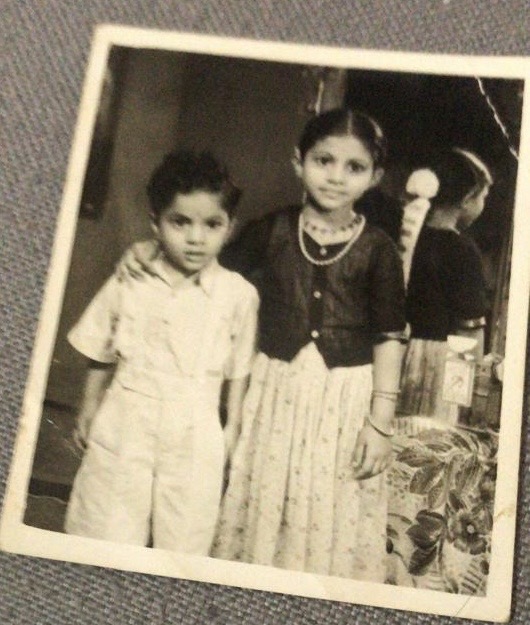
My mother with her younger brother Subi Mama

My mom Lakshmi’s face lights up when she talks about her family. At seventy-two, she still giggles like a child when she mentions Subi Mama, her younger brother and partner in mischief. When she speaks of Vicha Mama (Vishwanathan), her elder brother who was thirteen years older, she transforms into a respectful student, still in awe of his wisdom. And then there’s Balamma, whom we lovingly call Pedhamma (which means “elder mother” in Telugu), who was 15 years older than my mother and whose quiet strength has inspired us all.

When Mom talks about her brothers, her whole face changes. Stories about Subi Mama bring out her playful side – she smiles and laughs with that same childhood mischief in her eyes. But when she speaks of Vicha Mama, she becomes almost reverent – still grateful for her brother’s loving guidance.

My mother’s elder brother Vicha Mama

The Salt Surprise

When my mother was a little girl, she had a sweet tooth that often got her into trouble. Whenever she thought no one was looking, her small hands would sneak into the sugar box. She’d keep watch at the door while quickly scooping sugar into her mouth, enjoying her secret treat.

What she didn’t know was that Vicha Mama, her elder brother who was studying to be a doctor, had noticed her sugar stealing. One day, he quietly switched the sugar and salt containers.

That afternoon, when my mother dipped her fingers into what she thought was sugar, her face twisted in shock as salt filled her mouth.

“You think you had sugar,” Vicha Mama said, suddenly appearing in the doorway with a stern face hiding a hint of a smile. “But now it’s salt. I know what you’ve been doing, all that stealing.”

He made her finish what was in her mouth. “You need to swallow it all,” he said firmly.

Tears filled my mother’s eyes as she swallowed, but the lesson stuck with her forever. It wasn’t meant to be cruel – it was Vicha Mama’s way of teaching her to be honest, even when nobody seemed to be watching.

She is 72 years old now and still sneaks sugar and candies when we’re not looking. I’ll catch her with a sweet in her mouth, and she’ll give me that same guilty smile from her childhood stories. 

Sweet Mango Days

Summer meant mangoes – sweet and juicy. Vicha Mama would hand-pick the ripest ones and bring them home for his younger siblings. My mother and Subi Mama would sit together eating mangoes, juice dripping down their chins, giggling as they enjoyed their treat.

“This is the best thing in the world even with the fiber that gets stuck in your teeth, it made it even more fun,” my mother would say, with those naughty eyes. I never understood how she could be so excited about something that left strings between your teeth, but her enthusiasm was infectious.

But one day, my mother got suspicious. She thought her elder brother was keeping the biggest, juiciest mangoes for himself. When no one was looking, she stole a large, perfect-looking mango from his room.

Her excitement quickly turned to disappointment when her first bite revealed it was sour and unripe. Before she could hide the evidence, Vicha Mama found her.

“Why don’t you wait for me to give you the best mango?” he asked, looking disappointed but not angry. “The best mangoes have wrinkles on the skin – that means they’re sweet. The big, smooth ones are usually sour.”

He made her eat the entire mango, teaching her another lesson: patience is virtue.

Learning Order from Chaos

Vicha Mama believed in teaching his siblings how to take care of themselves. On Saturday afternoons, he would empty their cupboards, throwing all the clothes on the floor in what looked like a mess. But he had a plan.

“Watch carefully,” he would say, showing them exactly how to fold each piece of clothing. “By the time I come back, everything needs to be back in the cupboard, neatly organized.”

Even the freshly ironed clothes weren’t spared from this weekly lesson. My mother and Subi Mama would work together, their small hands learning to transform disorder into harmony. These Saturday organizing sessions became a kind of ritual – first the chaos, then the teamwork, and finally the satisfaction of a job well done.

Penmanship and Character

“Your handwriting must be neat and very clear. It must reflect your mind,” Vicha Mama once told my mother, and she took this to heart.

He taught his little sister to leave exactly one little finger’s width between each word. He would watch as she practiced, gently guiding her hand across the page. “Make each letter clear,” he would say.

Today, at seventy-two, my mother’s handwriting is still beautiful – whether she’s writing in English, Telugu, or Tamil. Each letter is carefully formed, each word has its proper space. Her writing isn’t just words on paper – it’s a kind of art that shows how clearly she thinks.

Watching her write even a simple note is like watching someone who has practiced the same careful movements for decades. Her pen moves smoothly, never rushing. I marvel at her patience in enjoying the writing process – something never meant to be done quickly – in our world of quick typing and text messages.

Learning Self-Reliance

When school started each year, my mother and Subi Mama would first ask their house helper to cover their books with brown paper and put on neat labels. When her elder brother found out about this, he decided it was time for another lesson.

“You’re old enough to do this yourselves,” he told them, my mother studying in ninth grade at that time.

Step by step, he showed them how to measure the paper, make clean folds, and secure the corners. “From now on, you’ll do this yourselves,” he said.

This skill stayed with my mother her whole life. Years later, I would watch in amazement as she covered our schoolbooks with the same careful attention, neatly binding them. Those bindings weren’t just neat – they stayed strong and firm throughout the school year, protecting our books through daily wear and countless openings.

Paper Bits in the Breeze

While Vicha Mama was the teacher, my mother found a best friend in her younger brother, Subi Mama. When their parents would go out to see a movie, the siblings would say:

Oh, you go. We’ll be fine at home” with angelic faces masking the playful schemes already forming in their minds.

Once alone, they would tear paper into tiny pieces, gather them in their hands, and run outside to throw them into the air, watching the bits float like snow. They never got caught for these small adventures, their shared secret bringing them closer together.

In the 50s and 60s, when social media was not part of the world and with many homes not having a television, children found creative ways to spend their time and play. I would say back then there was more quality time spent with each other, and people had a lot more time appreciating the little things in life.

As they grew up, their connection stayed just as strong. Being separated by less than two years in age helped them see each other not just as siblings but as true confidants. They became each other’s trusted friends, protectors, and supporters through life’s journey – their deep bond nurtured by those childhood conspiracies.

Strength Through Silence

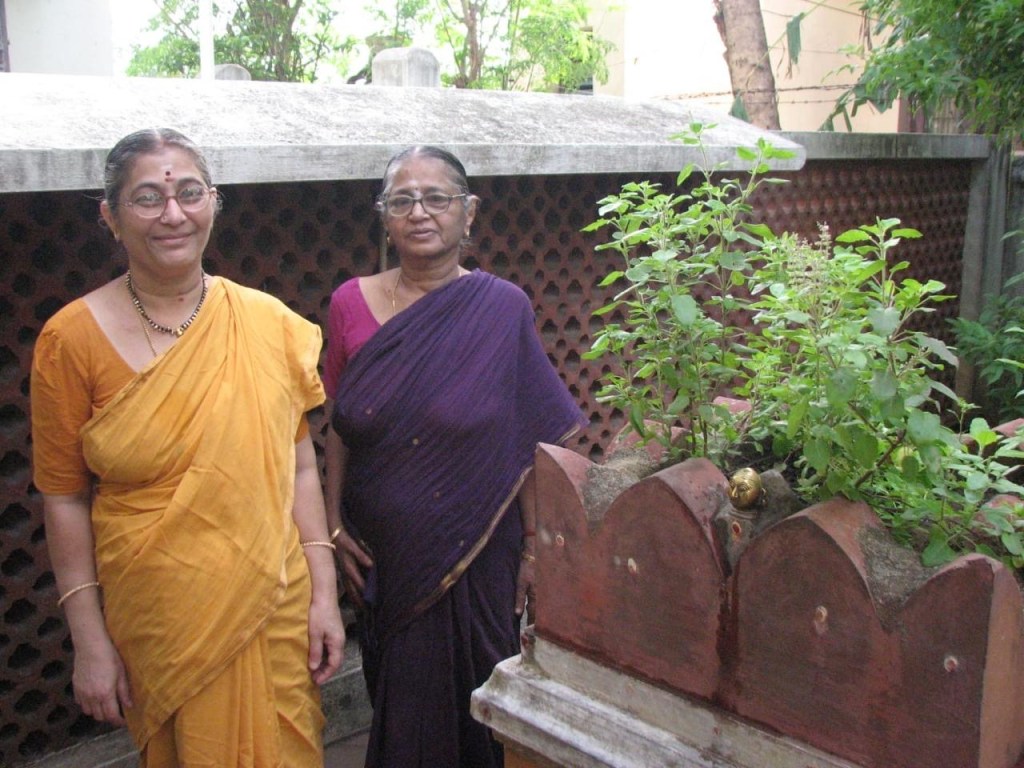
My mother with her eldest sister (my mother on left, Pedhamma on the right)

Apart from these childhood adventures was Balamma,  my mother’s eldest sister. Married young, as was common then, Pedhamma only appears in my mother’s early memories as a visitor who came home with her young son during vacations. But her influence on our family was deep and lasting.

Pedhamma’s life was filled with heartbreak – a genetic disease in her husband’s family took not only her husband but two of her children as well. As a single mother, she faced these terrible losses and many other hardships with a quiet dignity that touched everyone who knew her.

What made Pedhamma so special wasn’t just that she survived these troubles, but that she never felt sorry for herself or became bitter. She never complained, never acted like a victim, never let her own pain stop her from loving others. She would cry for someone else’s problems before even mentioning her own, facing each new challenge with quiet strength and dignity instead of giving up.

When my mother or her siblings had problems in their own lives, they would think of their eldest sister. Their troubles would suddenly seem smaller compared to what she had been through and how gracefully she handled it all.

Today, Pedhamma’s memory lives on in our family. Her name stands for accepting life’s hardships with dignity – not by giving up, but by acknowledging reality in a way that lets you move forward without being defined by your troubles. She showed them that real strength isn’t about avoiding hard times, but about how you carry yourself through them. Her perseverance, patience and love showed all of us how to accept life’s challenges and act from the place of now.

Stories that Bind Us

My childhood summers were filled with fun and excitement of meeting my cousins and staying at my Mamas’ and Pedhamma’s.

At Vicha Mama’s, I’d bubble with excitement as he’d greet me at Warangal station with that precious flask of vanilla ice cream – a small gesture that made me feel so special.

My time at Pedhamma’s house created another kind of joy – simple, happy times spent playing with neighborhood children, exploring freely in a loving space under the watchful eyes of my mother’s eldest sister. Pedhamma spoke little but loved deeply – strict yet never judgmental. Her quiet way of showing affection created a peaceful haven I looked forward to every school break.

Then there were the magical stays at Subi Mama’s home in Bhimli. His house, surrounded by mango trees in the ashram grounds, became my childhood paradise. The sound of ocean waves in the nights felt soothing and shifted us to a place of calmness. There was nothing like the thrill of climbing those mango trees with my cousins or playing hide-and-seek within that big compound.

Even now, when my mother and Subi Mama get together, the years fall away and they become those children again – the ones who once threw paper bits into the summer breeze. When she tells stories about their mischief, her eyes light up with that same playful sparkle, her laughter as fresh as it must have been back then. And when she talks about Vicha Mama, her voice fills with the same respect and love she’s felt her whole life for the brother who taught her so many important lessons – sometimes strict, always loving, forever shaping the person she became.

In my mother’s life at seventy-two, her relationships with her siblings remain the strongest foundation in her life. Their love for each other, the playfulness, and wisdom continue to influence not just her, but all of us who came after. The reverence we children feel for our Mamas and Pedhamma mirrors what my mother feels for her own siblings – a cycle of love and respect that continues through generations.

The stories she shares now – about sugar turned to salt, about sour and sweet mangoes, about paper pieces floating in the wind – are more than just childhood memories. They form the foundation of who she is. There is a special joy in watching my mother become a child again, her face lighting up as she relives these precious moments from her past.

The Chennai Diaries – Bicycle Adventures on Mangesh Street

The warm summer breeze caressed my face as I perched sideways on the front bar of my elder cousin Hari’s bicycle, giggling heartily with each turn of the wheel. Hari, in his late teens, pedaled confidently through the bustling streets of T.Nagar, his wavy hair swaying in the wind. With his chiseled face glowing in the bright sun, his sweet smile and mischievous eyes held a charm that seemed to make every passerby smile back.

Hari’s world was an extraordinary one, and during my summer breaks at my aunt’s house, I had the privilege to be a part of it. Those summers at my aunts were the happiest days of my childhood, free from judgement and filled with endless adventures. The neighborhood buzzed with life, and every evening, kids aged 5 to 25 spilled out of their homes, ready to play.

Hari was the heart of these escapades. He teased me endlessly, pampered me when I least expected it, and even made me play chess with his friends, who deliberately let me win. Though I didn’t understand it then, their lighthearted gestures were meant to cheer me up and make me feel included.

One of my favorite memories was riding on Hari’s bicycle as he expertly navigated the chaos of Mangesh Street. Auto rickshaws swerved through narrow spaces, pedestrians crossed the streets boldly and vehicles moving in their own instinctive patterns. My cousin navigated these streets like a seasoned professional, knowing exactly when to pause, speed up, or make those sharp turns. Every now and then, he mischievously threatened to throw me off the bicycle into a dirty pit.

As we rode, I enjoyed observing the people and their moods and made wonderful stories in my mind, one of my childhood hobbies. Each street was its own living story – the fruit vendor cutting guavas and mangoes into thin long strips became the warrior hero, the vegetable seller neatly arranging tomatoes into perfect pyramids became the spy, the shoe repairman on the corner of the road claiming his own space became the wise elder, and the children playing with marbles became the supporting cast. Even the animals played their part perfectly. The dignified cow near the temple stood like an ancient guardian, while the street dogs provided perfect comic relief to the daily street drama.

In my mind’s theatre, the street’s cast changed daily – today’s protagonist could be tomorrow’s antagonist, each passerby stepping into new roles in my ever-changing story.

While the streets offered their daily theater, our next destination promised a different kind of adventure. We made our first stop at the library.

This library held a special place in my heart. Each visit felt like finding yet another secret passage into an endless adventure. As we entered this quaint dark shop, the narrow wooden stairs and small floors weren’t just physical spaces – they were gateways to different worlds. Each floor held its own genre kingdom – adventures on one level, fairy tales on another, and so on. I found the musty-sweet aroma of the old books mixed with the scent of the wooden shelves both comforting and mysterious. One must literally crawl their way to the books. It felt like a luxury to be here, as a ticket to one of the adventures specially designed for an imagination-thirsty kid.

The store owner, an old man with a long beard, weary eyes, and a kind smiling face, always greeted me as “papa.” He tirelessly helped me find books I would love to read. The helper boy, not much older than me, moved like a quick squirrel among the narrow shelves, knowing exactly where each book lived.

My cousin parked his bicycle here and, after getting some books, we walked to the ice cream shop down the street, right at the intersection of two main roads. They also served fresh juices here. That shop still stands today serving their fresh juices and ice creams.

The ice cream shop was a single room that houses a long wooden bench. A big fan was running non-stop on one side of the wall. They had limited flavors of ice cream and always had my favorites – vanilla and butterscotch. Hari got himself a sugarcane juice, while I got my favorite butterscotch ice cream on a cone. With no place to sit, we stood outside the shop enjoying our treats. It was a race against time and heat, a game I played with the sun. I focused on the serious business of saving each golden drop before it met the floor, my tongue quick to catch any escape attempts. I felt victorious when I had my ice cream in a completely clean manner. My cousin found this hilarious and would often tease me about my efforts with his friends, but I simply didn’t bother.

Back at my aunt’s house, I settled into the sofa surrounded by the books I borrowed from the library. I was ready to read new stories, shaping my imagination further. Soon, the evening would call us out to join our friends – some older, some younger, all part of our colony’s extended family.

Looking back, those summers weren’t just a series of carefree adventures; they were a blessing in finding joy in the ordinary. Hari’s easy charm and mischievous confidence were infectious. He taught me how to embrace the chaos of the world with a smile and how to find joy in the simplest moments. Even now, when I think of Mangesh Street, I remember Hari’s innocent laughter echoing through time, reminding me of a childhood filled with freedom, imagination and love.

Grateful for Amma’s Visit

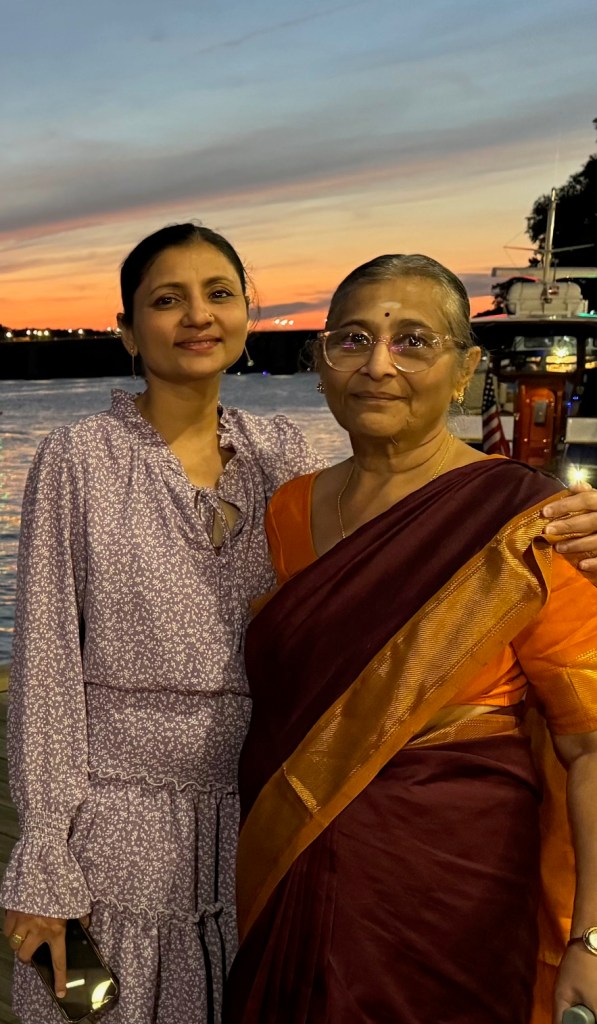
Amma and I

These past few months with Amma have been precious. Living far from India for 25 years, each visit feels like a cherished chapter in our story.

Amma has taught me some of life’s most valuable lessons. During my college years, when I was particularly affected by others’ opinions, her wisdom shaped who I became. She taught me to stay rooted in my convictions and not let others’ comments shake my belief in myself. Her quiet strength and unwavering trust in me became my foundation, making it easy to share everything with her during that time.

What has always amazed me is her capacity to forgive and understand. In my younger years, I watched in awe at how she could forgive so easily and deeply empathize with others. I often wondered, “How could I ever be like her?” Now, to my surprise, I find myself naturally embracing these same qualities. Her way of leading by example has shaped me in ways I’m only now beginning to recognize.

I feel deeply blessed when I think about how she has been there for every important moment in my life—traveling to stay with me during both my pregnancies, helping us when the children were toddlers, and now, despite her own challenges, making the long journey to be with us again. Her love shines through in the simplest of ways: the healthy meals she lovingly prepares, her quiet support, and her calm, reassuring presence.

This visit has been particularly special. Watching her bond with my children grow deeper has been a joy. Their faces light up in her presence as they laugh at her playful commentary during our evening TV shows. I loved seeing her smile, hearing her soft teasing, and even her strong opinions on the little things—it’s all so endearing and uniquely Amma. Working from home allowed us to spend more time together—simple, everyday moments that have become cherished memories. Whether we were laughing over my teasing, sharing meals she made with love, or talking about everything and nothing, these are the moments I’ll treasure forever.

Since my father’s passing, we have each navigated our own grief, but our love for one another has been a constant source of strength. Now, seeing her happiness, hearing her laughter, and watching her shower her grandchildren with the same unconditional love she gave me fills my heart with gratitude.

Living far from home makes these moments even more meaningful. Amma left for India today, and as the house feels quieter, I’m reminded of how precious our time together truly is. Living away has taught me to appreciate my loved ones even more, especially as we grow older and gain perspective. I feel truly blessed for her visit, for her love, and for the time we shared. These moments, though fleeting, leave a lasting warmth in my heart and remind me of what matters most.