For over a year, I had been feeling this desire to feed the birds. Living in a condo without the possibility of having a bird feeder on my balcony, I felt to go to PetSmart and buy bird food and feed birds outdoors. But I didn’t act upon it – my procrastination got in the way.
Finally, last week, I felt at least this year I should do it and act upon it. And I did it. The idea came to me: why not go to the trees in front of our home, to the little park area where there are trees? Why not feed them there?
I bought a bag of bird food – dried corn, seeds, and peanuts – and began my morning routine of feeding the birds under the trees in the park area in front of our home during my walk with my dog, Tuffy. Watching them come and eat filled me with such joy.
God’s Provision for His Little Ones
This morning, I woke up a bit late and made my way to the trees around 10 AM with my bag of bird food. As I was scattering the seeds on the ground, I noticed a lady walking toward the same tree. We smiled at each other, and she asked, “Do you feed the birds?”
“Yes,” I replied, “I just started doing this recently.”
What she told me next revealed the beautiful miracle unfolding. She had been feeding these same birds for the past year. Right there, in the very tree where I had been placing food on the ground, she had three bird feeders hanging – feeders I had somehow never noticed.
With tears in her eyes, she shared that she was moving away at the end of this month. She was heartbroken thinking about the birds who had come to depend on their daily feeding. Who would take care of them? She couldn’t bear the thought of these little creatures going hungry.
And there I was – having just begun this same calling on the exact same tree, just one week ago.
“Don’t worry,” I told her, “This is taken care of. I will continue feeding them.”
In that moment, I saw so clearly how God orchestrates His care for even the smallest of His creatures. The birds would not go unfed. One instrument was preparing to leave, and another had already been called into place. The same work of love, continuing seamlessly through different hands.
As we talked more, Marianna (she graciously allowed me to share her name and our story) showed me how to properly use the bird feeders. We discovered we had so much in common – both of us believers in listening to God through our hearts, both drawn to the same spiritual language.
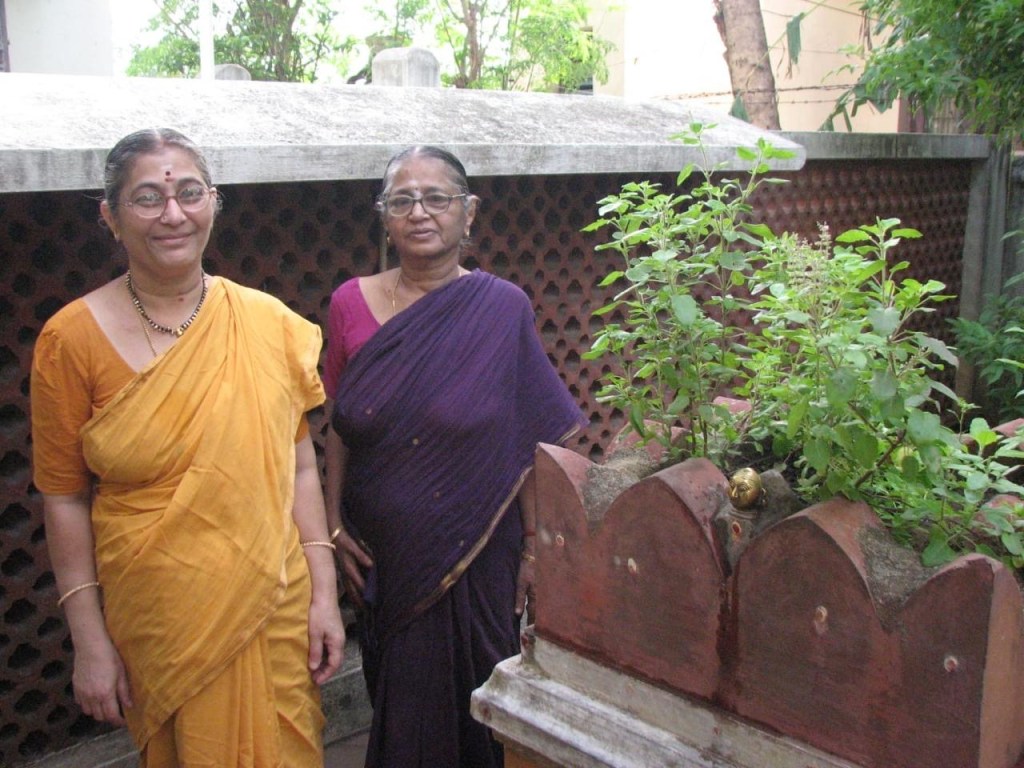
Marianna and me by the tree
I shared with her how there was a time when I felt deeply connected to the trees, when I would hug one particular tree daily, asking it to be my friend and give me strength – to help me become solid and humble like the tree itself, unassuming and non-presumptuous.
She smiled and said “I have a tree I hug every day too.”
How can such connections be mere coincidence?
Reflections on Divine Orchestration
This whole experience revealed such a beautiful truth to me. It’s not about me or Marianna at all – it’s about God’s tender care for these little birds. They needed to be fed, and He made sure they would be.
One instrument was preparing to leave, and another had already been prepared and placed. The same work of love continuing through different hands. How perfectly He orchestrates!
This experience reinforced what I believe: that God takes care of everything. When we stay in the moment and listen to what our heart is telling us – we become part of His plan. This is what matters most to me: trusting that God handles everything, that He knows everything, and that He is as close as we can imagine, even beyond that.
It’s important to remember and remind ourselves that this is not something we are doing – or to feel great about it. It’s humbling to realize and feel that we are just instruments in God’s hands, just as Marianna was His instrument for the past year. The birds’ needs never go unmet because God sees them, cares for them, and provides for them through willing hearts.
This is the miracle: not the human connection, but the divine provision. God’s seamless care for His creatures, ensuring that the food these birds depend on continues to come, day after day, through whoever He calls to serve. And in this calling, we discover the most intimate relationship of all – with the One who knows everything, who orchestrates everything, who is closer than close.
Thank You, God
Thank you, Marianna, for listening to your Heart and feeding these birds so lovingly, and for helping me see how beautifully God provides for His creation.
And thank you, God, for using us both in Your perfect plan to care for these little ones. Thank you for showing me that even the birds are not forgotten, and that You make sure they are fed through willing hearts.
The miracle isn’t in human connections – it’s in Your seamless, tender care for every living creature. How amazing that You would call me to continue this sweet work of feeding Your birds.
But it’s not just the birds who are taken care of. God’s love is so complete that everyone is taken care of. Marianna and I are both filled with joy, gratitude and trust in You.
Every time we hear God’s voice in our heart and act upon it, we are transformed. When we become His instruments and don’t claim responsibility for ourselves, we are changed in the humblest way. God’s love transforms everyone who is touched by it – it transforms everything connected to it.
Sometimes the most profound truths are revealed in the simplest acts: that God sees, God cares, and God provides – even for the smallest sparrow.
As Mental Health Awareness Month prompts us to reflect on what truly nurtures our wellbeing, I find myself thinking about relationships – specifically, the ones that, despite our best efforts, aren’t meant to last.
I recently faced this with someone who once meant a great deal to me. After experiencing hurt, I valued the relationship enough to offer peace, to make things lighter, to do my best from my end. I genuinely tried to nurture what we had, hoping we could rebuild what was lost. Yet despite these sincere efforts, I eventually realized something important: sometimes the same patterns that caused the initial hurt remain, even after forgiveness has been offered and accepted.
Some relationships naturally drift apart, as though they were never truly meant to endure. The pattern can be particularly painful: a relationship forms, hurt occurs, distance grows, forgiveness follows, reconnection happens… only for the same cycle to repeat itself months or years later.
What I’ve learned about mental health through this experience is profound. Our inner voice often whispers the truth long before we’re ready to hear it. That feeling of something not being quite right – that’s wisdom trying to protect us.
I believe that prioritizing mental health means honoring those internal signals. It means recognizing when a connection depletes rather than replenishes us. It’s not about blame or holding grudges; it’s about acknowledging the reality of what is, rather than clinging to what we hoped could be.
Not every relationship that enters our life is meant to remain there permanently. Some connections serve their purpose for a season, teaching us necessary lessons before we continue separate paths.
The most valuable lesson I’ve learned is that forgiveness doesn’t obligate us to restore a relationship that repeatedly shows itself to be unhealthy.
I don’t believe we should forget the experiences that have shaped us. Each relationship – even the painful ones – has contributed to who we are today. These moments have taught us about boundaries, about ourselves, about what we truly need from connections that deserve space in our lives.
The journey toward better mental health often involves making peace with the reality that some chapters in our story are meant to close. This isn’t failure – it’s growth.
As Mental Health Awareness Month reminds us, we must come first in our own lives.
The greatest responsibility we have is to nurture our own wellbeing. No one else carries this responsibility for us – it is ours alone.
Sometimes, protecting that wellbeing means making thoughtful decisions about which relationships deserve our continued investment, which ones should be honored from a distance, and which should be released entirely.
This is crucial to our mental health – recognizing what brings us peace versus what disturbs it, acknowledging those feelings, and honoring them instead of pushing them aside. There’s wisdom in our discomfort that deserves to be heard.
There’s profound courage in recognizing when a relationship consistently disrupts your peace. Sometimes the most compassionate choice – both for yourself and the other person – is to release the expectation that things will be different next time.
Forgiveness doesn’t always mean restoration. Sometimes, it simply means freedom – the freedom to wish someone well on their journey while continuing your own, unburdened by regret or obligation.
In honoring our mental health, we learn that some of the most important boundaries we’ll ever set are the ones that protect our peace, even when others don’t understand. And that’s not just okay – it’s essential.
What have you realized about relationships that has been crucial for your mental health? What wisdom has your journey taught you about the connection between healthy boundaries and wellbeing?
Every time she shares these childhood memories – even though I’ve heard them countless times – I find myself filled with the same joy and wonder that lights up her face. I have gathered here some of the stories she has shared with me over the years. I never grow tired of listening to these tales. Instead, I am marveled at the innocence and plain adoration she has for her siblings. Watching her describe these incidents with such delight, even now at seventy-two, fills me with gratitude for her, for her upbringing, and for the joy she carries through life.
In a recent video call, my mother narrated her times with her siblings. Even though I listened to many of these stories before, I was delighted and engaged in her stories, smiling at her enthusiastic narrations of her childhood times with her cute expressions.
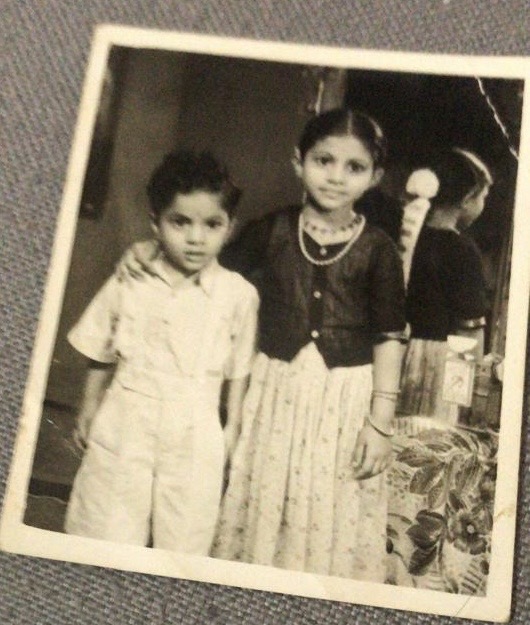
My mother with her younger brother Subi Mama
My mom Lakshmi’s face lights up when she talks about her family. At seventy-two, she still giggles like a child when she mentions Subi Mama, her younger brother and partner in mischief. When she speaks of Vicha Mama (Vishwanathan), her elder brother who was thirteen years older, she transforms into a respectful student, still in awe of his wisdom. And then there’s Balamma, whom we lovingly call Pedhamma (which means “elder mother” in Telugu), who was 15 years older than my mother and whose quiet strength has inspired us all.
When Mom talks about her brothers, her whole face changes. Stories about Subi Mama bring out her playful side – she smiles and laughs with that same childhood mischief in her eyes. But when she speaks of Vicha Mama, she becomes almost reverent – still grateful for her brother’s loving guidance.
My mother’s elder brother Vicha Mama
The Salt Surprise
When my mother was a little girl, she had a sweet tooth that often got her into trouble. Whenever she thought no one was looking, her small hands would sneak into the sugar box. She’d keep watch at the door while quickly scooping sugar into her mouth, enjoying her secret treat.
What she didn’t know was that Vicha Mama, her elder brother who was studying to be a doctor, had noticed her sugar stealing. One day, he quietly switched the sugar and salt containers.
That afternoon, when my mother dipped her fingers into what she thought was sugar, her face twisted in shock as salt filled her mouth.
“You think you had sugar,” Vicha Mama said, suddenly appearing in the doorway with a stern face hiding a hint of a smile. “But now it’s salt. I know what you’ve been doing, all that stealing.”
He made her finish what was in her mouth. “You need to swallow it all,” he said firmly.
Tears filled my mother’s eyes as she swallowed, but the lesson stuck with her forever. It wasn’t meant to be cruel – it was Vicha Mama’s way of teaching her to be honest, even when nobody seemed to be watching.
She is 72 years old now and still sneaks sugar and candies when we’re not looking. I’ll catch her with a sweet in her mouth, and she’ll give me that same guilty smile from her childhood stories.
Sweet Mango Days
Summer meant mangoes – sweet and juicy. Vicha Mama would hand-pick the ripest ones and bring them home for his younger siblings. My mother and Subi Mama would sit together eating mangoes, juice dripping down their chins, giggling as they enjoyed their treat.
“This is the best thing in the world even with the fiber that gets stuck in your teeth, it made it even more fun,” my mother would say, with those naughty eyes. I never understood how she could be so excited about something that left strings between your teeth, but her enthusiasm was infectious.
But one day, my mother got suspicious. She thought her elder brother was keeping the biggest, juiciest mangoes for himself. When no one was looking, she stole a large, perfect-looking mango from his room.
Her excitement quickly turned to disappointment when her first bite revealed it was sour and unripe. Before she could hide the evidence, Vicha Mama found her.
“Why don’t you wait for me to give you the best mango?” he asked, looking disappointed but not angry. “The best mangoes have wrinkles on the skin – that means they’re sweet. The big, smooth ones are usually sour.”
He made her eat the entire mango, teaching her another lesson: patience is virtue.
Learning Order from Chaos
Vicha Mama believed in teaching his siblings how to take care of themselves. On Saturday afternoons, he would empty their cupboards, throwing all the clothes on the floor in what looked like a mess. But he had a plan.
“Watch carefully,” he would say, showing them exactly how to fold each piece of clothing. “By the time I come back, everything needs to be back in the cupboard, neatly organized.”
Even the freshly ironed clothes weren’t spared from this weekly lesson. My mother and Subi Mama would work together, their small hands learning to transform disorder into harmony. These Saturday organizing sessions became a kind of ritual – first the chaos, then the teamwork, and finally the satisfaction of a job well done.
Penmanship and Character
“Your handwriting must be neat and very clear. It must reflect your mind,” Vicha Mama once told my mother, and she took this to heart.
He taught his little sister to leave exactly one little finger’s width between each word. He would watch as she practiced, gently guiding her hand across the page. “Make each letter clear,” he would say.
Today, at seventy-two, my mother’s handwriting is still beautiful – whether she’s writing in English, Telugu, or Tamil. Each letter is carefully formed, each word has its proper space. Her writing isn’t just words on paper – it’s a kind of art that shows how clearly she thinks.
Watching her write even a simple note is like watching someone who has practiced the same careful movements for decades. Her pen moves smoothly, never rushing. I marvel at her patience in enjoying the writing process – something never meant to be done quickly – in our world of quick typing and text messages.
Learning Self-Reliance
When school started each year, my mother and Subi Mama would first ask their house helper to cover their books with brown paper and put on neat labels. When her elder brother found out about this, he decided it was time for another lesson.
“You’re old enough to do this yourselves,” he told them, my mother studying in ninth grade at that time.
Step by step, he showed them how to measure the paper, make clean folds, and secure the corners. “From now on, you’ll do this yourselves,” he said.
This skill stayed with my mother her whole life. Years later, I would watch in amazement as she covered our schoolbooks with the same careful attention, neatly binding them. Those bindings weren’t just neat – they stayed strong and firm throughout the school year, protecting our books through daily wear and countless openings.
Paper Bits in the Breeze
While Vicha Mama was the teacher, my mother found a best friend in her younger brother, Subi Mama. When their parents would go out to see a movie, the siblings would say:
“Oh, you go. We’ll be fine at home” with angelic faces masking the playful schemes already forming in their minds.
Once alone, they would tear paper into tiny pieces, gather them in their hands, and run outside to throw them into the air, watching the bits float like snow. They never got caught for these small adventures, their shared secret bringing them closer together.
In the 50s and 60s, when social media was not part of the world and with many homes not having a television, children found creative ways to spend their time and play. I would say back then there was more quality time spent with each other, and people had a lot more time appreciating the little things in life.
As they grew up, their connection stayed just as strong. Being separated by less than two years in age helped them see each other not just as siblings but as true confidants. They became each other’s trusted friends, protectors, and supporters through life’s journey – their deep bond nurtured by those childhood conspiracies.
Strength Through Silence
My mother with her eldest sister (my mother on left, Pedhamma on the right)
Apart from these childhood adventures was Balamma, my mother’s eldest sister. Married young, as was common then, Pedhamma only appears in my mother’s early memories as a visitor who came home with her young son during vacations. But her influence on our family was deep and lasting.
Pedhamma’s life was filled with heartbreak – a genetic disease in her husband’s family took not only her husband but two of her children as well. As a single mother, she faced these terrible losses and many other hardships with a quiet dignity that touched everyone who knew her.
What made Pedhamma so special wasn’t just that she survived these troubles, but that she never felt sorry for herself or became bitter. She never complained, never acted like a victim, never let her own pain stop her from loving others. She would cry for someone else’s problems before even mentioning her own, facing each new challenge with quiet strength and dignity instead of giving up.
When my mother or her siblings had problems in their own lives, they would think of their eldest sister. Their troubles would suddenly seem smaller compared to what she had been through and how gracefully she handled it all.
Today, Pedhamma’s memory lives on in our family. Her name stands for accepting life’s hardships with dignity – not by giving up, but by acknowledging reality in a way that lets you move forward without being defined by your troubles. She showed them that real strength isn’t about avoiding hard times, but about how you carry yourself through them. Her perseverance, patience and love showed all of us how to accept life’s challenges and act from the place of now.
Stories that Bind Us
My childhood summers were filled with fun and excitement of meeting my cousins and staying at my Mamas’ and Pedhamma’s.
At Vicha Mama’s, I’d bubble with excitement as he’d greet me at Warangal station with that precious flask of vanilla ice cream – a small gesture that made me feel so special.
My time at Pedhamma’s house created another kind of joy – simple, happy times spent playing with neighborhood children, exploring freely in a loving space under the watchful eyes of my mother’s eldest sister. Pedhamma spoke little but loved deeply – strict yet never judgmental. Her quiet way of showing affection created a peaceful haven I looked forward to every school break.
Then there were the magical stays at Subi Mama’s home in Bhimli. His house, surrounded by mango trees in the ashram grounds, became my childhood paradise. The sound of ocean waves in the nights felt soothing and shifted us to a place of calmness. There was nothing like the thrill of climbing those mango trees with my cousins or playing hide-and-seek within that big compound.
Even now, when my mother and Subi Mama get together, the years fall away and they become those children again – the ones who once threw paper bits into the summer breeze. When she tells stories about their mischief, her eyes light up with that same playful sparkle, her laughter as fresh as it must have been back then. And when she talks about Vicha Mama, her voice fills with the same respect and love she’s felt her whole life for the brother who taught her so many important lessons – sometimes strict, always loving, forever shaping the person she became.
In my mother’s life at seventy-two, her relationships with her siblings remain the strongest foundation in her life. Their love for each other, the playfulness, and wisdom continue to influence not just her, but all of us who came after. The reverence we children feel for our Mamas and Pedhamma mirrors what my mother feels for her own siblings – a cycle of love and respect that continues through generations.
The stories she shares now – about sugar turned to salt, about sour and sweet mangoes, about paper pieces floating in the wind – are more than just childhood memories. They form the foundation of who she is. There is a special joy in watching my mother become a child again, her face lighting up as she relives these precious moments from her past.
From the times of Covid when work from home became the norm, remote work has presented unique challenges, particularly in understanding and connecting with colleagues. You learn to interpret coworkers from whatever little they share during meetings or daily standups. Emotionally connecting with peers has been difficult, not to mention how crucial it is to understand each other to work effectively as a team.
Years ago, a new colleague joined our company. He sounded very sarcastic, often cutting people off and calling out mistakes in a somewhat snobbish manner when someone didn’t understand or comprehend what he shared. He quickly developed a reputation as a difficult person to work with, and very soon I had formed an opinion of him as being hard to collaborate with, intimidating, and aggressive. Let’s call him “Jacob” for privacy reasons.
With many new people joining our team at that time, I had suggested at our Retro meeting that it would help us bond if we did a casual team building exercise. I was pleased when my scrum master and manager agreed, seeing value in such an activity. My manager went the extra mile by preparing some creative questions for the team.
One question asked everyone to share something about their childhood – what was their best learning experience or what they wished they had learned better.
When Jacob’s turn came, what he shared caused a paradigm shift in how I perceived him.
Jacob revealed that he was orphaned and didn’t know his birth parents. He had moved between several foster homes as a child before being raised by an elderly couple when he was 8 years old in rural Iowa. His foster parents had a big farm with neighbors half a mile away. There weren’t many children his age nearby with whom he could relate and play. His foster parents were kind enough to teach him life skills and provide him education. He worked very hard to respect the opportunity he had and to thank his parents too.
He shared with a chuckle that due to his childhood and growing up with elderly parents, he had always struggled with connecting to people his own age. His weakness has been his awkwardness with people, and his communication style has suffered as a result. He acknowledged that he could come across as rude or too direct, but emphasized that he doesn’t do it intentionally – he’s simply struggling with it. He added that he’s actively working to improve.
Hearing him talk shifted something profound in me. It made me realize how quick we are to judge others. We don’t know their full story, and it’s true that to a great extent, our choices and behaviors are heavily influenced by our life circumstances and childhood conditioning.
While it’s important to listen to our instincts when our energy senses something or someone is not good for our mental health, we don’t need to rush to judgment or share harsh opinions. Rather, we can respect our feelings and create appropriate distance when needed, as our primary responsibility is to take care of ourselves.
We tend to waste our energy and time harboring negative feelings towards others or obsessing over “why” or “how could they” behave a certain way. This often leads us to assume things about situations unknown to us. We may never truly understand why people behave the way they do, but we can take care of our wellbeing, know our boundaries, and simply meet people where they are, keeping things uncomplicated. No one is responsible for our happiness except ourselves.
One fine day, I see saggy eyes, wrinkles on my skin Where were you before? Is it stress, is it my tiredness, is it my depression? That brought you to me. Being noticed not just by me but by family I realize I may be growing older.
Is this how getting old presents itself to me? Witnessing a silver hair Fatigue visiting more often Metabolism slower, body shape unpredictable Seeing younger men and women as my own kids Sometimes a reason for my excuse for stillness.
As time went by, I realize the abuse, neglect and being ungrateful My body has gone through because of me I feel remorseful, sorry, but I cannot change my past She has traveled with me for 46 years non-stop and continues.
I thank you, my divine abode, for providing me the space where my life can live in. You are a gift given by Him You were made just perfect in His eyes I ask for forgiveness from you and promise I will take care of you, To serve you, nurture you in gentleness and humility In gratitude for you as you are His blessing to me.
Thank you for this outer skin you have given me To protect the inner body from heat, germs and things not good for my life in you I promise to be present as my skin is touched with gentleness and love As I bathe and do my skin rituals To ensure my skin feels nourished and happy Not for others to compliment or pass me a second look in wonder But for me to ensure you are happy inside and out.
Thank you for giving me the appetite So I know I must eat so you are nurtured I promise to eat healthy Unprocessed food, greens, vegetables and fruits Plenty of water for hydration Not for me to lose weight or look in a certain way But for you to be happy and healthy, So that my life in you can live a minute more.
Thank you for the bones, muscles and organs That function and that work as magic To carry the life in me forward So I have another moment of living I promise to take care of you Through my walks, jogging, exercise Lifting weights so your muscles do not weaken For me to ensure you feel strong and happy.
Thank you, God, for this beautiful body To choose You through my actions this lifetime Giving me another chance This body being one of the most beautiful miracles created by You.
Dear God, please give me the mind, realizations, intention To only choose You To be grateful, loving to my body and all the gifts You have given me To live each day with purpose and meaning Using this most precious gift given to me by You.
Happily walking towards my mom’s car, Orange leash tethered to my harness. Walking sideways with a wiggle and joy, I hear my mom opening the car with her keys.
“Ready, Tuffy? Jump!”
I finally figured the way in, that is right. Sitting in the rear seat of my mom’s car, A little whine and she understands. Mom lowers the windows just for me.
Cool fresh breeze tickling my whiskers, Smelling Spring’s sweet air. Shedding season it is, but I don’t mind, My scent is strong, Mom reminds me all the time!
Riding on my mom’s car at the back seat, Adventures with her are always unique. The last time she tried the small trunk instead, I tumbled down when the door opened wide. Pressed against the door like jam in a jar, Poor mom felt guilty – that went too far!
My hair floats free in golden clouds, Dancing in sunlight like summer dreams. Mom wrinkles her nose but I don’t know why. The smell of the car mixed with spring’s delight, the feel of breeze caressing my fur, pure joy I cannot hide.
The sounds of vehicles passing by, A rock music to my ears under the spring blue sky. The people who wave at me as we drive along, Their friendly waves make my tail wag with glee. The dogs in other cars catching my eye, Some friendly and some shy as we pass by.
Sometimes I bark at dogs we pass by, Some get a wag, others a fierce “Hi!” Mom laughs at my selective hellos, The way I choose friends, nobody knows. So many humans smile when they see my face, My Labrador joy spreads all over the place.
My nose pressed to the window glass, Taking in scents as landscapes pass. Mom says, “Tuffy, you smell so bad!” I tilt my head – why is she sad? I notice her cracking the window more wide, As I continue enjoying the ride!
At traffic lights, I sit up tall, Gazing at people and places we pass by.
Where are we going? I wonder with glee, Our favorite trails with trees to see? Is it the wooded trail where squirrels play? Or just a simple neighborhood walk today? Perhaps the groomer’s where I happily recline, The brushing and pampering feeling simply divine!
Each place holds joy, each trip a treat, With mom beside me, life is sweet!
Five years into our journey together, You joined our family, changing us forever.
The Beginning
Ecstatic to know new life grew within, The changing shape, a joy I’d never been. Though skinny all my life before this time, Each flutter in my womb felt so sublime. Cravings strange and new consumed my days, The sweets I sought – now your beloved ways.
March light was shining when you came to be, When placed within my arms, all pain set free. A joy so deep, no words could ever convey, Your serious eyes, my father’s look at play. A legacy continued, wise and true, A story spanning generations through you.
Little Explorer
As a toddler quiet, rarely did you cry, Drawers and cupboards caught your watchful eye. The kitchen was your playground, full of charms, Utensils scattered freely by your arms. On dishwasher doors perched with pure delight, Forks and spoons in vents – a puzzling sight. We’d rush our chores before you’d hear and run, Your ears so sharp, determined, quick to come. Unstoppable your spirit, bright with fun.
Growing Mind
Your childhood days were focused, sharp, precise, With puzzles, presidents, and Legos to entice. So trusting was your heart, so kind your way, Your brother’s tricks you’d fall for day by day. We captured every moment, smile and tear, Each memory a treasure we hold dear.
Compassionate Teen
As teenage years arrived, your heart stayed true, Birthdays at shelters showing what you’d do. “Bring food, not gifts,” you’d tell your friends with care, Your simple giving spirit, rich and rare. You taught us how compassion lights the way, Your wisdom far beyond your years each day.
Letting Go
Now independent, strong you’ve grown to be, Though part of me would keep you close to me. Sometimes I wish to pull you back within, With love I’ve learned to let your spirit win. Your happiness, the gift I’m thankful for, As you explore what life has held in store.
From our safe nest you’ve flown to distant halls, A college journey heeding learning’s calls. Each month we meet, our arms stretched wide to hold The man you’re fast becoming, brave and bold.
The Man Today
Still focused, loving, steadfast in your ways, Unconditional our love through all your days. We thank you for the person that you are, A guiding elder brother, like a star, Supporting siblings with your gentle hand, A role you’ve always seemed to understand.
Forever Love
My baby, boy, and man—all three in one, From heartbeats beneath my skin to who you’ve become. A young man standing tall with strength and grace, My love grows deeper as you set your pace. Know that your mother’s heart is always near, Through triumphs bright or mistakes made from fear.
Twenty years of watching wonder grow, Twenty years of love that overflows, Twenty years of memories we treasure so, And countless more as life continues to unfold.
A smile to my Heart brings a Joy to my Soul. The more I meditate and give the Love to my Heart, I realize I am being Loved. My Heart reminds me of my purpose… to share and Give the Love to others, to act as Beautiful Instruments of the Divinity.
What more do I need when I am being caressed in Your Love? What more can I ask for when held in Your Grace? Here, I become speechless in Gratitude so deep… Deeper than the oceans, Deeper than the darkest nights. Oh how peaceful is this? I am one with the Divine.
My Dear Love, Please help me… In every way and all ways. As I know so little, little than the drop in the ocean. I am Your child, Your Baby. I want to be held in Your arms, be safe in Your palm. Bless my Being that I may always know I am nowhere but right here in Your arms, Where I have always been and always will be held In Your strong, embracing arms.
How deceiving is this illusion? This illusion of separation, That I am away from You, which makes me feel I am scared, on my own. Only to realize that experiencing this ego is one of the ways I realize I need You more than ever.
As every time I go deep in my ego, go very deep in my emotions, and have a clouded day that makes me feel I have nowhere to go… Makes me cry, shout and deny You all at the same time. You are right there observing me like a Mother watching its child’s tantrums with a smile that says it all. And, then when the child in me has finished its tantrums, You open Your arms so that I can run to You as Your little baby. What words do I have to explain this union?
Beloved Source of Unconditional Love, please bless me so that I am never separate from You, even during times of doubt. I do not need the ego to realize Your Love. Please help my Heart to know that every time I choose my ways, I turn away from Your Love.
Melt me in Your Love. Burn me in Your Eternal Flame. Bless my Being so that I am One with You. I surrender my will, my desires and all my efforts to You, At Your Lotus Feet. To be One with You, to be Your Instrument. Bless my Being as You melt this feeling of separateness through the thoughts and feelings of my wants, my desires and my emotions. As my Divine Love, I cannot live even those moments of feeling away from You.
Bumble bees buzzing on golden daisies Butterflies hovering on delightful pansies Fireflies glittering in evening’s glow Dragonflies hovering in starlit snow Thank you, God, for your beautiful artistry
Zebra galloping swift and strong Deer leaping with graceful joy Monkeys swinging between trees in glee Majestic lions roaming wild and free Thank you, God, for your strength divine
Woodpeckers drumming on sturdy tree bark Owls hooting tales through moonlit dark Hummingbirds dancing with whirring wings Sparrows greeting morning as they sing Thank you, God, for this heavenly chime
Red and white roses in bloom, their passion unfold White jasmine’s intoxication, a treasure to behold Gardenia’s creamy petals whisper deep forest essence Lavender purple, calming peace in twilight presence Thank you, God, for each fragrant prayer
Nature’s symphony – wind, water, song Whispers of hidden stream that gently hum along Distant roar of waterfalls, reminding of a thunderous rain Cool breezes dancing to ease summer’s strain Thank you, God, for Earth’s eternal hymn
The reason for me to write these reflections and share them is my way of reaching with the outer world, perhaps in a way that feels safe for me.
Working from home since Covid has in a way disconnected me from the outside world and socializing. Moving to a new place prior to Covid didn’t help either – the isolation of Covid amplifying the challenge of building new connections. Even before, I have been this reserved, someone who can easily connect deeper one-on-one, rather than in a group. It has come from some challenging trauma around school bullying and people.
I have come a long way taking care of myself – physical fitness, health, mental health, routine practices like meditation, being in nature. Through these practices and therapy, I’ve found peace in solitude, even learned to embrace it deeply. Yet there’s a part of me that longs to be around people – not in large groups, but in meaningful connections.
This morning brought a realization I hadn’t expected: I don’t feel safe around people I don’t know, especially when I need to meet them physically and regularly. This understanding explains why I haven’t joined or have not continued any in-person classes recently – yoga, art, or community groups. Perhaps it’s the fear of getting hurt again, or maybe something deeper I’m still trying to understand. It’s strange because I used to regularly participate in group activities before – volunteering at a hospice, working in homeless kitchens, being a community teacher. But especially since moving and through these Covid years, I’ve felt paralyzed around people. It’s daunting.
While my therapy and meditation practices have helped me heal so much from my depression, find my cheerful self and in fact made me happier than I have ever in my life, there’s a part of me that is still hurting and not open to embrace the goodness of socializing in a way that speaks to me, to feel safer inside beyond the people, environment that I am used to.
Writing this down feels healing somehow. At this moment, I offer a prayer to our Creator to help with continuing my healing journey, to be replaced with Love from Him.
Being aware is the first step, isn’t it? I can feel it – this understanding is already part of the healing. I know I’ll move through this phase too, just as I’ve moved through others before it.







 lotusheartgrateful.com