
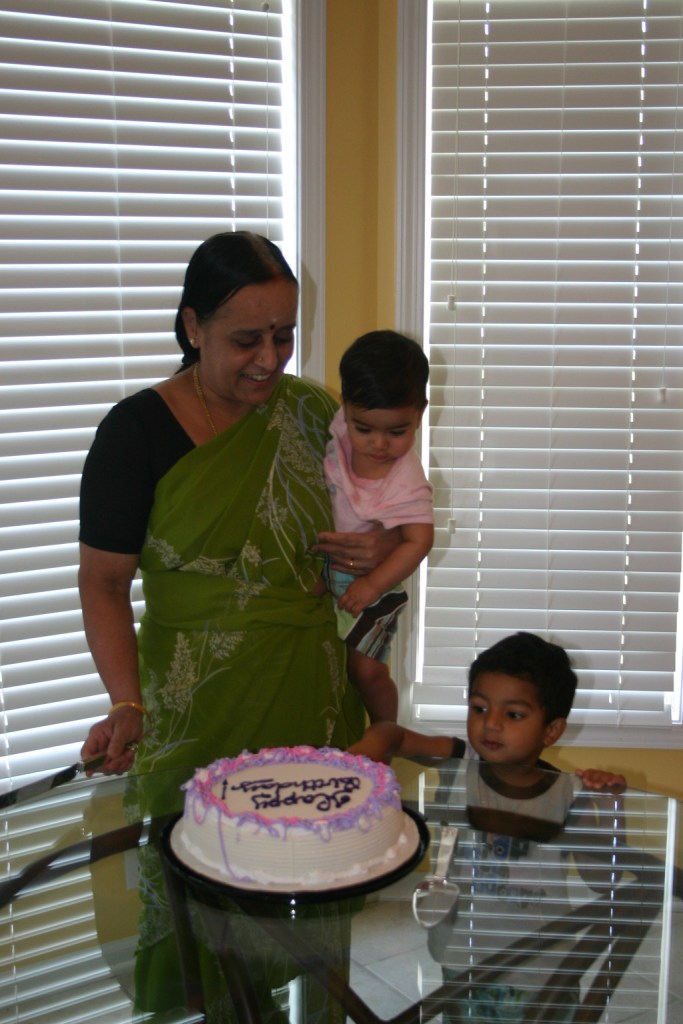
Some people carry grace like a quiet strength, touching the lives around them through simple, daily acts of love. In my husband’s mother – Amma – I discovered a woman whose beauty runs far deeper than what meets the eye, whose generous heart has shaped not just her family but everyone fortunate enough to witness her way of living.
When I first entered this family as a young bride, I was struck by more than just Amma’s natural beauty. There was something in the way she moved through her world – purposeful, caring, always thinking of others before herself. Over the years, what began as admiration has grown into deep respect and genuine affection.
In her, I found a mentor whose actions spoke louder than any words of advice.
The Art of Grace

There’s something almost magical about walking into Amma’s home. No matter when you arrive – whether it’s been planned for weeks or you’ve shown up unexpectedly – everything is immaculate. Not the cold perfection of a showroom, but the warm, lived-in cleanliness that speaks of care and respect.
In those early years of marriage, I was amazed by this aspect of her life. Despite her workload, despite being tired after long days, she ensured her work was done and, most importantly, that her space reflected the care she felt for her family. Her home wasn’t just clean – it was organized with a thoughtfulness that made everything feel intentional.
Over the years, I’ve come to understand her philosophy about our surroundings. The place around us is the one thing we can have control over, and when we keep it with neatness and care, that’s how we respect our space and ourselves.
I watched her live this philosophy every single day. She kept her things organized not out of obsession, but out of love. What I’ve always admired about Amma is her ability to not procrastinate or push things to a later date – she gets things done because she thinks it’s important. This applies not just to keeping her surroundings clean, but to everything in her life. She always dresses very neatly, presents herself with care, and tackles tasks without delay. This is another quality I can see clearly in my husband – he learned from her that important things shouldn’t be postponed.
Every time I visit India, even now when she and Appa are in their later years, I’m still amazed by how neat and tidy their house remains. Despite their age, their home still reflects that same grace and attention to detail.
What amazes me about Amma is her memory – it’s sharper than mine, and I’m much younger than her. She remembers details about conversations, events, and people that happened years ago. She even remembers exactly where things are placed in the house. She recalls exactly what was said, who was there, what was served. Her incredible memory helps her keep track of everyone she loves.
This became one of my greatest inspirations. Through witnessing her actions – never through words of instruction – I learned how keeping our space clean helps our minds feel clearer, more peaceful. I try to follow this lesson she taught me, though I often fall short of her standard of grace.
A Heart That Overflows

If there’s one thing that defines Amma’s approach to life, it’s abundance – not material abundance, but an abundance of heart. This shows most clearly in her kitchen, where no meal is ever planned for just the right number of people.
“It’s better to have more than for someone to have less,” I’ve come to understand this is her philosophy, and I’ve watched her live by this principle for over two decades. When guests come – whether it’s two people or ten – she always cooks extra. Always. I used to think this was just careful planning, but I came to understand it’s something deeper. It’s her way of showing love through provision, of ensuring that no one who enters her home ever feels there isn’t enough.
What moves me most is how she approaches her own needs. Every single day, Amma eats last. After making sure everyone in the family has had everything they need, after serving seconds and checking that everyone is satisfied, only then does she sit down to her own meal. I’ve tried countless times to negotiate with her about this, to convince her to eat with the rest of us, but I’ve lost every single one of these gentle battles.
This generosity extends beyond food. She gives of herself in countless small ways – remembering exactly how her family members like their coffee, ensuring their favorite dishes are prepared, thinking ahead to what might make their visits more comfortable. Her heart overflows with care for those closest to her.
Kitchen Companions
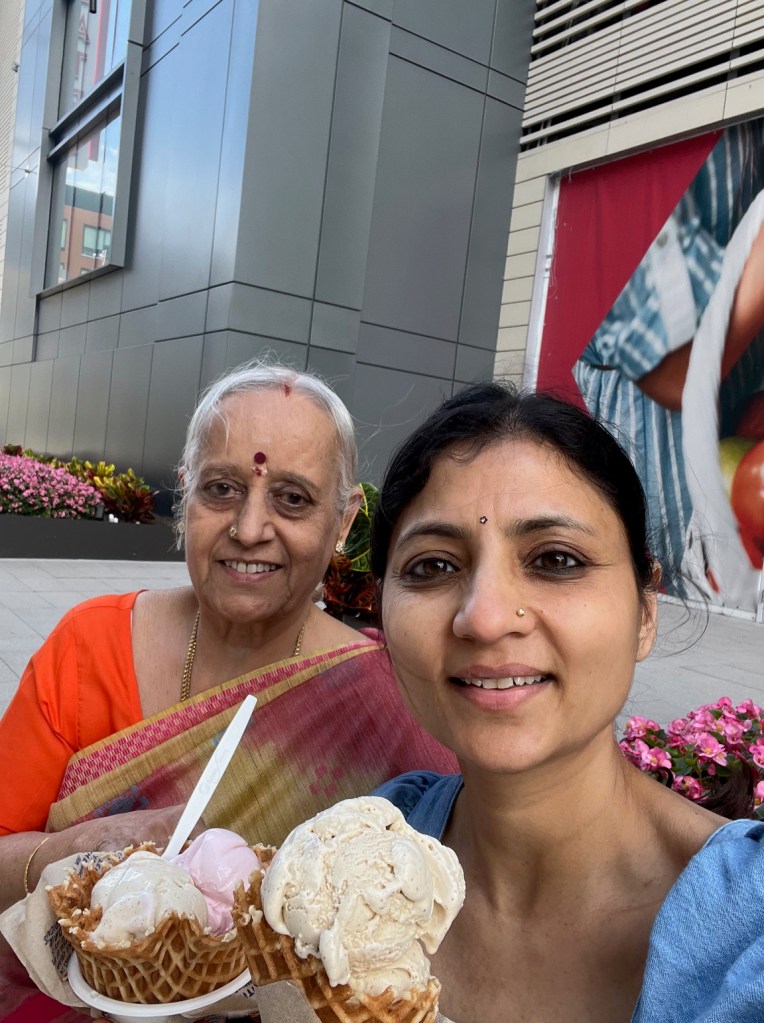
Some of my happiest memories with Amma happen in the kitchen. There’s something special about working alongside her – the easy rhythm we fall into, the way we can cook together without getting in each other’s way. She became not just my teacher but my companion in creating meals for the family.
In those early years of marriage, her kitchen became my classroom. Not through formal lessons, but through watching, trying, and gradually understanding the subtle art of South Indian cooking. Her cooking has so much taste, so much depth of flavor, and I learned by standing beside her, observing how she balanced spices, how she knew exactly when each dish was ready.
What meant so much to me was how she would encourage me when I cooked something she enjoyed. Coming from someone so experienced in the kitchen, her appreciation gave me confidence to keep trying new dishes and flavors.
But our connection goes beyond cooking techniques. We’re both women who love to enjoy life, who find pleasure in good food and good company. What I discovered about Amma is how beautifully spontaneous she is. Many times, in the middle of an ordinary day, I’d turn to her with a sudden idea.
“Would you be interested in going out to eat?” I’d ask, and she would always say yes with such enthusiasm. Off we’d go – two women who shared a love for trying different foods, for the simple pleasure of eating something delicious without having to cook it ourselves.
Amma enjoys chaat – those wonderful North Indian snacks – and South Indian foods with equal enthusiasm. Be it food outings or watching movies together – another common interest we share – these became some of our best bonding moments.
What made our relationship so easy from the beginning was discovering that Amma, despite being from an older generation, wasn’t rigid or overly orthodox in her ways. She was ritualistic, yes, but in a practical way that worked for our family rather than being bound by tradition for tradition’s sake. This was such a blessing for me as a young bride – being someone who also isn’t too rigid or overly ritualistic, I found in her a kindred spirit who valued substance over strict adherence to form.
The Family Keeper

Amma carries the stories of her entire family in her heart. She’s deeply attached not just to her own children, but to the family she married into and her extended family – her brothers and their families. When she speaks of them, which she does often, it’s always with warmth and affection. I’ve never heard her say anything negative about any family member. Instead, she focuses on their positives, their kindness, the ways they’ve touched her life.
Through her stories, I’ve come to know these relatives as real people with beautiful qualities. She remembers all the small things someone has done for her – a thoughtful gesture from decades ago, a moment of kindness during a difficult time. Her gratitude runs deep, and she carries these memories like treasures.
Her love for her grandchildren is something truly special to witness. When my children were young and she and Appa would visit us here, the house would transform with her presence. She didn’t just babysit – she played with them, engaged with them, created a bond that my children still cherish.
I can still picture her playing card games with them, and she brought the same competitive spirit to these games that she had with the adults. She would playfully hide the jokers, keep a perfect poker face, and tease her young opponents with that mischievous glint in her eye. What I loved watching was how she never gave up her competitive edge just because they were children – she played with the same interest and determination, making the games genuinely challenging and exciting for them. She was an expert at card games, and even with her grandchildren, she played to win while making sure everyone had fun.
When they were toddlers, she would spend hours making their favorite pureed foods, taking such care to prepare exactly what they loved. She would sit with them during cartoon time, patiently feeding them spoonful by spoonful, completely absorbed in making sure they were well-nourished and happy and equally enjoying with them their favorite shows. Even now, years later, her first concern when the grandchildren visit is whether they’re hungry. She’ll immediately start thinking of what to cook for them, what would make them feel most loved and cared for.
Her cooking was aromatic, filling the house with wonderful scents. She made sure her grandchildren experienced the tastes and comfort of traditional South Indian foods she grew up with.
Lessons Without Words

The most powerful teachings often come not through lectures or advice, but through quiet examples. Amma taught me about life simply by living hers with such grace and intention.
From her, I learned that cleanliness and organization aren’t about perfection – they’re about creating a peaceful space where love can flourish. I learned that hospitality isn’t about having the fanciest things, but about making people feel genuinely welcomed and cared for.
I can see her influence clearly in my husband – the way he keeps things organized, his natural cleanliness, his attention to neatness. These aren’t traits he consciously learned; they’re simply part of who he is because of the mother who raised him.
Amma has other passions that bring her joy – she loves playing Sudoku and puzzle games, exercising her sharp mind with challenges that keep her engaged. I can see where my husband and children inherited their love for puzzles and mental games.
A Heart Full of Gratitude

As I write this memoir as a birthday gift for Amma, I reflect on the woman she is and the many ways she has touched our family’s life.
What I’ve come to appreciate is how we’ve both grown in our understanding of each other over the years. Family relationships aren’t always simple, but there’s something valuable in learning to honor the good we see in each other.
Amma, as you celebrate another year of life, I want you to know how much your devotion to your children and grandchildren means to all of us. You’ve also been there during my difficult moments, listening with patience and understanding. That quiet support meant more to me than you might know.
I see how lovingly you care for Appa, always making sure he’s comfortable and has everything he needs. I find that very inspiring.
Your son carries your best qualities – your sense of organization, your attention to detail, your love of family. Your grandchildren light up when they remember those card games and the special foods you made just for them.
You’ve shown me what it means to maintain a graceful home, to care deeply for family, and to find joy in simple pleasures like a good meal shared or a challenging game of cards.
On this special day, I celebrate the gift of having witnessed your love for your family over all these years. May this new year bring you continued health, happiness, and many more moments of joy with those you hold most dear.
A Poem for you, Amma
Sweet moments with grandchildren, laughter we share,
Your love for adventure takes you everywhere.
Amma, you’ve touched our lives in countless ways,
A life lived with purpose, a heart full of light.
As you celebrate another year of this beautiful life,
We honor the woman, the mother, the wife.
May this birthday bring joy, health, and cheer,
To someone we cherish and hold very dear.
With all my love and admiration,
Sujatha
 lotusheartgrateful.com