Cauliflower Side Dish Stovetop Keto Friendly Low Carb Quick Prep
Prep Time: 10 minutes
Cook Time: 12 minutes
Serves: 4
Protein per serving: 4g
A light, flavorful vegetable dish that combines the nutty taste of riced cauliflower with tender chayote squash. This simple stir-fry makes an excellent low-carb side dish or rice substitute, seasoned with aromatic spices and cooked to perfect fluffy texture.
Main Ingredients
3 cups riced cauliflower (fresh or frozen)
2 medium chayote squash (chow chow), peeled and cubed
2-3 green chilies, finely chopped
1 tbsp avocado oil or olive oil
Pink Himalayan salt to taste
Spices
1 tsp cumin seeds
1/2 tsp turmeric powder
1/2 tsp crushed red pepper
1/2 tsp freshly ground black pepper
Preparation
Peel chayote squash, remove the soft inner flesh, and cut into small uniform cubes
If using fresh cauliflower, rice it using a food processor or box grater
Finely chop green chilies
Have all spices measured and ready
Cooking Method
Heat oil in a large pan over medium heat
Add cumin seeds and let them sizzle for 30 seconds
Add chopped green chilies and fry for 1 minute
Add riced cauliflower and cubed chayote squash
Sprinkle turmeric powder and mix well
Cover with lid and cook for 4-5 minutes
Add crushed red pepper, black pepper, and salt
Mix thoroughly and cover again for 2-3 minutes
Check that vegetables are tender but not mushy
Remove from heat when cauliflower is fluffy and chayote is soft
Texture Tip: The finished dish should be soft and fluffy, not mushy. Avoid overcooking to maintain the best texture and nutritional value.
Serving Suggestions: Perfect as a rice substitute with curries, or as a light side dish with grilled proteins Storage: Best enjoyed fresh, can be refrigerated for 2-3 days Health Benefits: Low in carbs, high in fiber, rich in vitamin C and antioxidants
Welcome to my collection of nourishing recipes that I genuinely love making and eating. Each recipe is designed to be nutritious, satisfying, and practical for everyday cooking. From protein-packed mains to vibrant sides, these dishes prove that healthy eating can be both delicious and deeply satisfying.
Refreshing raw salad with moong dal and crisp vegetables. Perfect for hot days or as a light side.
6g protein • 15 min • Fresh & crunchy
Recipe Philosophy
Nutrition Focus: Every recipe includes protein content and key nutrients to help you build balanced, nourishing meals.
Real Kitchen Tested: These aren’t just recipes – they’re dishes I actually make and love. Each one has become part of my regular rotation because they’re satisfying, practical, and genuinely delicious.
Flexible Cooking: Most recipes offer variations for different dietary needs, cooking methods, and ingredient availability.
New recipes are added regularly as I continue exploring wholesome, satisfying meals that fit into a healthy lifestyle. Each recipe represents something I genuinely love to eat and make regularly.
South Indian Lentils Side Dish No Cook Raw Food Plant Protein Quick Prep
Prep Time: 15 minutes (plus 30 min soaking)
Cook Time: 5 minutes (tempering only)
Serves: 3-4
Protein per serving: 6g
Kosambari is a refreshing South Indian tempered salad from Karnataka, traditionally made with lentils and fresh vegetables. This nutritious dish combines split moong dal with crisp vegetables, aromatic curry leaves, and a classic mustard seed tempering. Unripe green mangoes also make a delicious addition, adding a tangy twist to this wholesome salad that’s perfect as a light meal or healthy side dish.
Main Ingredients
1/2 cup moong dal, soaked in water for 30 minutes
OR 1/2 cup cooked green mung beans (soak overnight, cook in Instant Pot steamer for 2 minutes manual, natural release)
2 medium carrots, finely diced
1 cup baby radish, finely chopped
1 medium cucumber, diced
1 green chili, slit lengthwise
1-2 tsp fresh grated coconut (optional)
Fresh lemon juice to taste
1-2 tbsp fresh cilantro, chopped
For Tempering
1/2 tsp coconut oil
1 tsp mustard seeds
Few curry leaves (optional but traditional)
Pinch of hing/asafoetida (optional)
Optional Additions
1/2 cup unripe green mango, finely chopped (adds wonderful tanginess)
1/4 cup pomegranate seeds (for crunch and color)
Salt to taste
Prepare the Base
If using raw moong dal: Soak in water for 30 minutes, then drain and rinse
If using green mung beans: Soak overnight, cook in Instant Pot steamer for 2 minutes on manual, allow natural release
Wash and finely dice all vegetables – carrots, radish, cucumber
If using green mango, peel and chop finely
Finely chop cilantro
Assemble the Salad
In a large mixing bowl, combine the prepared moong dal and all diced vegetables
Add green chili and fresh grated coconut (if using)
Add chopped green mango if desired for extra tanginess
Squeeze fresh lemon juice generously over the mixture
Add chopped cilantro and gently toss everything together
Add salt to taste and mix well
Prepare the Tempering
Heat coconut oil in a small pan over medium heat
Add mustard seeds and let them splutter
Add curry leaves and hing if using (they will sizzle briefly)
Immediately pour the hot tempering over the prepared salad
Mix gently to distribute the tempering evenly
Let it rest for 5 minutes to allow flavors to meld
Serving Tip: Kosambari tastes best when served fresh and at room temperature. It’s traditionally served as part of a South Indian meal alongside rice and sambar.
Storage: Best enjoyed immediately, can be refrigerated for up to 1 day Variations: Try with chana dal instead of moong dal, or add pomegranate seeds for extra crunch Health Benefits: High in fiber, plant protein, vitamins A and C, and digestive enzymes
Ginjalu Kootu (Traditional South Indian Legume Stew)
South Indian Legumes Lunch/Dinner Stovetop Instant Pot High Protein Medium Prep
Prep Time: 30 minutes (plus overnight soaking)
Cook Time: 45 minutes
Serves: 4-6
Protein per serving: 15g
A traditional South Indian legume and vegetable stew that combines protein-rich beans and lentils with aromatic spices in a tangy tamarind base. This hearty, nutritious dish is both comforting and satisfying.
Main Ingredients
1 cup dried kabuli chana (chickpeas)
Handful of raw peanuts
1/4 cup kala chana (optional)
1 cup tuar dal (split pigeon peas)
1 cup chopped vegetables (choose one: white pumpkin, brinjal, or bitter gourd – optional)
Spices & Seasonings
Lemon-sized tamarind
1 tsp jaggery
2 tsp mustard seeds
1 tsp coconut oil (or skip for oil-free version)
1/2 tsp turmeric powder
Salt to taste
For Spice Paste
1 tsp whole black pepper
3 tsp coriander seeds
1.5 tsp chana dal
1.5 tsp urad dal
1/4 tsp methi seeds (fenugreek)
1 red chili
2 tbsp fresh grated coconut
Prepare the Beans (Night Before)
Soak chickpeas, peanuts, and kala chana in water overnight
Next day, drain and wash the soaked beans
Cook in Instant Pot with double the water, 1 tsp salt, and 1/2 tsp turmeric for 10 minutes (manual mode, natural release)
Drain the cooked beans and set aside
Prepare the Spice Paste
In a dry skillet, roast red chili, black pepper, coriander seeds, chana dal, urad dal, and methi seeds until fragrant and lightly golden
Cool completely and grind with fresh grated coconut to a fine paste (the natural coconut oil will help bind the paste)
Add minimal water if needed for grinding
Final Assembly
Cook tuar dal with 2 cups water, 1/2 tsp turmeric in Instant Pot for 10 minutes
Soak tamarind in hot water for 15-30 minutes, then strain to get tamarind water
In a large saucepan, cook tamarind water with turmeric and salt until raw smell disappears (5 minutes)
Add cooked beans, peanuts, 3/4 cup cooked tuar dal, and ground spice paste
Simmer for 5 minutes to integrate flavors
Add prepared vegetables (if using) and cook for 5 more minutes
Add jaggery and cook for 1 minute
For traditional version: Heat coconut oil, add mustard seeds and urad dal, when golden, pour over the kootu
Oil-Free Option: Dry roast the spices and use fresh grated coconut’s natural oils for the paste. Skip the final tempering for a completely oil-free, heart-healthy version.
Storage: Keeps well in refrigerator for 3-4 days, freezes well for up to 3 months Note: You can make this without vegetables or choose from white pumpkin, brinjal, or bitter gourd based on preference. You can also use your favorite legumes for this recipe.
North Indian Lentils Lunch/Dinner Stovetop Instant Pot High Protein Low Prep
Prep Time: 10 minutes
Cook Time: 35 minutes
Serves: 4
Protein per serving: 13-14 g
My absolute comfort food! This protein-packed lentil curry became the foundation of my meal prep journey.
Ingredients
For the Dal
1 cup yellow lentils (masoor dal), washed
2 cups water
1/2 teaspoon turmeric powder
Salt to taste
For Cooking Together
1 medium onion, chopped into big pieces
2 medium tomatoes, chopped
4-6 green chilies, slit lengthwise
1 tablespoon finely cut ginger
For the Tadka (Tempering)
1 teaspoon ghee
1 teaspoon cumin seeds
Pinch of asafoetida (optional)
Lemon juice
Fresh cilantro for garnish
Instructions
Cook the Dal (Instant Pot Method)
Add lentils, onions, tomatoes, ginger, green chilies, water, turmeric, and salt to Instant Pot
Cook on manual mode for 7 minutes
Allow natural pressure release
Lightly mash the dal and set aside
Prepare the Tadka
Heat ghee in a small pan
Add cumin seeds and let them splutter
Add asafoetida if using
Pour this tempering over the cooked dal
Final Touch
Add fresh lemon juice and stir well
Taste and adjust salt as needed
Garnish generously with fresh cilantro
Recipe Notes
Lentil choice: Masoor dal cooks quickly and has a lovely texture
Consistency: Should be slightly thick but pourable
Variations: Substitute onions and tomatoes with bottle gourd or zucchini, or add vegetables like carrots and green beans for extra nutrition
Storage: Freezes beautifully for up to 3 months
Serving tip: Taste before serving – dal absorbs flavors as it sits
Nutritional Benefits
High protein from masoor dal supports muscle health
Quick cooking compared to other lentils
Rich in folate and iron
High fiber promotes digestive health
One-pot nutrition with vegetables cooked right in
Recipe Journey: This recipe was featured in my Week 1 meal prep journey, and it was actually one of the first North Indian recipes I tried that came out really well. I didn’t grow up eating dal tadka, but this recipe gave me so much confidence in cooking because it’s incredibly forgiving and versatile. I like to keep it as simple as possible and usually pair it with a side of vegetables for a complete meal.
Heat oil and ghee, sauté onions until golden brown (this is crucial for flavor!)
Add ginger-garlic paste, cook 1 minute
Add tomato paste and spices, cook until oil separates
Add cooked rajma and water, simmer 15-20 minutes
Mash few beans for thickness
Add crushed methi leaves and garnish with coriander
Prep tip: Soak rajma overnight, pressure cook until very soft before making curry Pairs with: Brown rice, chapati, or quinoa
Protein per serving (250g): 18 grams
Mixed Vegetable Dal (4 servings)
This one-pot wonder became my go-to when I wanted something comforting and nutritious. I love how the vegetables cook right in the dal, making it so flavorful. Fair warning – I like my food spicy, so adjust the chilies to your taste!
Ingredients
120g mixed dal (moong + toor)
200g mixed vegetables (bottle gourd, beans, carrots) – cooked in dal
80g onions, chopped
6-7 green chilies (I prefer it spicy – reduce for less heat!)
1 dried red chili
2 tablespoons ginger, chopped
15ml oil
5g cumin seeds, 2g turmeric
500ml water
Salt, coriander
Lemon juice (optional, at the end)
Instructions
Pressure cook dal with turmeric and vegetables until soft
Garnish with coriander and add lemon juice if desired
Spice level: Medium-hot (reduce chilies for milder version) Pairs with: Rice, quinoa, or chapati
Protein per serving (300g): 14 grams
Broken Wheat Upma with Vegetables (4 servings)
A lighter, healthier version of traditional upma that’s still incredibly satisfying. The vegetables cook right in, making it a complete meal. Perfect for dinner when you want something filling but not heavy.
Ingredients
100g broken wheat (dalia)
250g mixed vegetables (beans, carrots, peas, bell peppers) – cooked in upma
This became my favorite afternoon snack! The combination of textures is amazing – soft sprouts, crunchy makhana, fresh vegetables. So satisfying and refreshing.
Ingredients
160g sprouted green moong
40g roasted makhana, crushed
60g cucumber, diced
60g tomatoes, diced
40g red onion, diced
15ml lemon juice
2g chaat masala, 1g black salt
Fresh mint and coriander
Optional: 50g Greek yogurt
Instructions
Steam sprouts lightly (optional for easier digestion)
Mix all vegetables and sprouts
Add crushed makhana for crunch
Add lemon juice, spices, herbs
Mix in yogurt if using
Serve immediately
Texture tip: Add makhana just before eating to keep it crunchy
Protein per serving (200g without yogurt): 8 grams
Protein per serving (250g with yogurt): 12 grams
Spiced Roasted Makhana (6 servings)
My healthy alternative to chips! These kept me satisfied between meals and added great crunch to salads.
Ingredients
150g makhana
5ml oil
2g chaat masala, 1g black pepper, 1g turmeric
Pinch of black salt
Instructions
Heat oil in pan
Add makhana, roast until crispy (5-7 minutes)
Sprinkle spices while hot
Cool completely, store in airtight container
Storage: Keeps fresh for 1 week in airtight container
Protein per serving (25g): 3 grams
Raw Tofu Cubes (Protein Snack) (3 servings)
Simple but effective! I actually started enjoying these plain, but you can season them however you like.
Ingredients
270g extra-firm tofu, cubed
Optional seasonings: soy sauce, lime juice, spices of choice
Instructions
Cut tofu into 1-inch cubes
Add your favorite seasonings if desired
Let marinate 10 minutes if you added seasonings
Storage: Best eaten fresh, can be stored 2 days
Protein per serving (90g): 9 grams
▶
Grains & Bases
Brown Rice Base
The foundation of so many great meals.
Instructions
Rinse rice until water runs clear
Cook in 1:2 ratio with water
Bring to boil, reduce heat, simmer covered 45 minutes
Let stand 10 minutes, fluff with fork
Protein per 1/3 cup cooked (85g): 2 grams
Quinoa Base
Higher protein alternative to rice.
Instructions
Rinse quinoa until water runs clear
Cook in 1:2 ratio with water
Bring to boil, reduce heat, simmer covered 15 minutes
Let stand 5 minutes, fluff with fork
Protein per 1/4 cup cooked (65g): 3 grams
▶
Leftover Integration
Week 3 Bonus: I had some delicious leftover sweet potato and channa salad from Week 2 that was still fresh and tasty! Rather than let it go to waste, I incorporated it into this week’s meal plan. It paired beautifully with the new rajma dishes and added variety to my lunches.
Sweet Potato & Channa Salad (From Week 2)
This leftover gem from Week 2 was still perfect! The flavors had actually improved after a few days. I used it as a light lunch option and it paired wonderfully with my new rajma masala.
Storage note: This salad keeps well for 4-5 days refrigerated
Protein per serving: 8 grams
Recipe Notes & Week 3 Learnings
Spice Levels: I love spicy food, so adjust the green chilies in the dal recipe to match your heat preference!
Meal Prep Efficiency: Making large batches of rajma and dal at the beginning of the week saved so much time on busy days.
Leftover Magic:That Week 2 sweet potato salad came in handy for this week, as I have a few boxes in the freezer.
Texture Variety: Mixing crunchy makhana with soft sprouts in the chaat creates the perfect satisfying snack.
Instant Pot Win: Using the Instant Pot for brown rice made meal prep so much easier and more consistent.
Which recipe are you most excited to try? The rajma masala is definitely worth the effort – let me know how yours turns out!
Here are all the recipes I used for my second week of meal prep, with exact measurements and protein content. After learning from Week 1, I focused on creating more variety while maintaining my protein goal of about 90-100g per day and staying within my daily calorie target of about 1400-1500 calories.
My daily breakdown goal was:
– Breakfast: 300-350 calories, 15-20g protein
– Lunch: 400-450 calories, 25-30g protein
– Dinner: 350-400 calories, 20-25g protein
– Snacks: 300-350 calories, 20-25g protein
Week 2 introduced more Indian flavors and plant-based proteins, giving me the comfort foods I was craving while still hitting all my nutritional targets.
▶
Breakfast Recipes
Morning Coffee Base (1 serving)
The perfect way to start every morning – simple and energizing.
Ingredients
1 cup (240ml) unsweetened original almond milk
Hot coffee as desired
Instructions
Heat almond milk gently (don’t boil)
Pour into your coffee
Enjoy while planning your successful day ahead!
Storage: Keep almond milk refrigerated, use within 7-10 days of opening
Protein per serving: 1 gram
Simple Boiled Eggs with Steamed Vegetables (1 serving)
My go-to protein-packed breakfast that keeps me satisfied for hours.
Ingredients
2 large eggs, hard-boiled
125g mixed steamed vegetables (broccoli, carrots, green beans)
Pinch of salt, pepper, lemon juice
Instructions
Boil eggs for 8-10 minutes, cool and peel
Steam vegetables until tender-crisp (4-5 minutes)
Season vegetables with salt, pepper, lemon juice
Serve eggs whole or sliced with vegetables
Meal prep tip: Boil a dozen eggs on Sunday for the week
Protein per serving: 13.5 grams
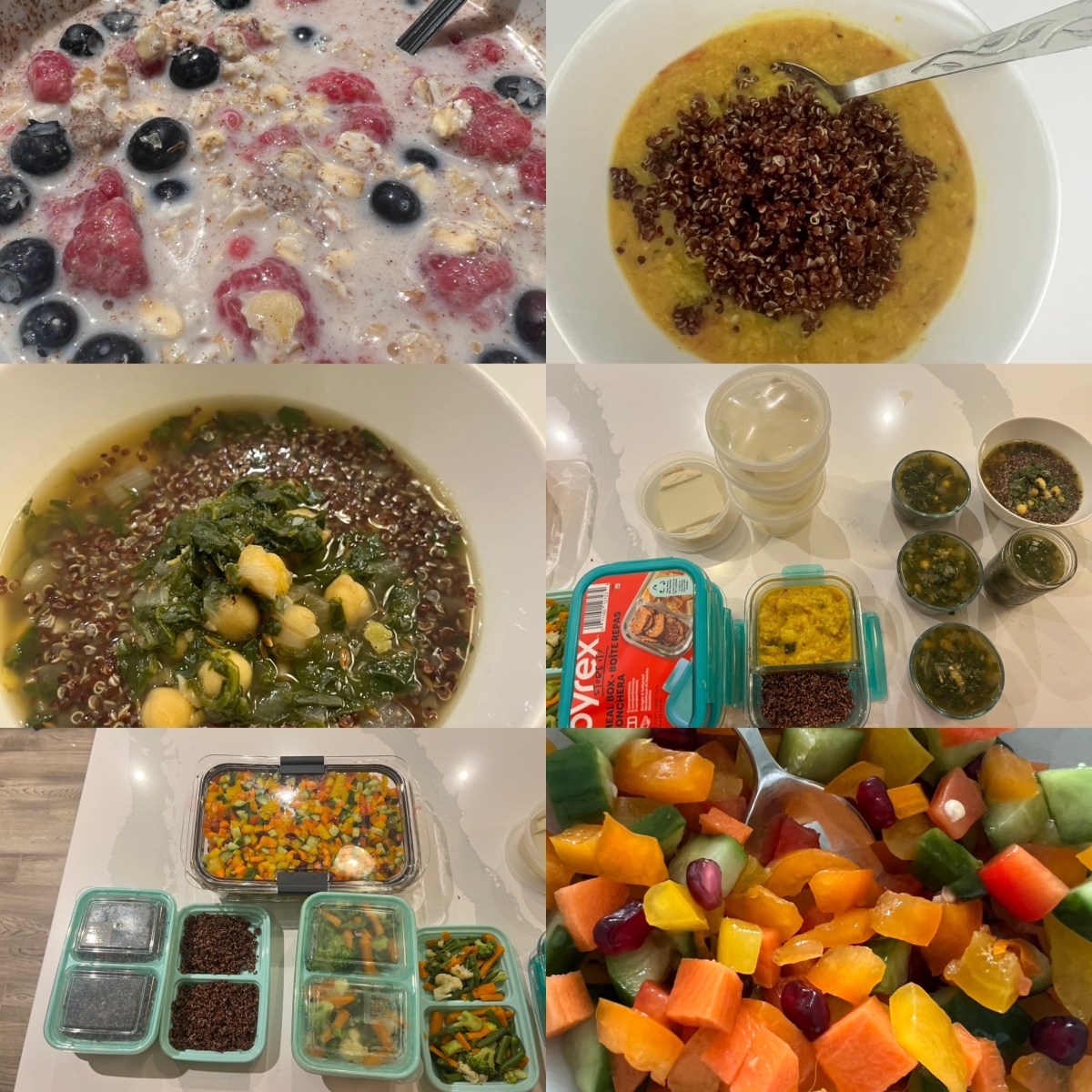
Hot Oatmeal with Flax and Berries (1 serving)
Creamy, satisfying, and packed with fiber and omega-3s. This became my weekend comfort breakfast.
Ingredients
40g rolled oats (dry weight)
200ml unsweetened almond milk
10g ground flaxseed (1 tablespoon)
60g mixed berries
2g cinnamon (1/2 teaspoon)
Instructions
Bring almond milk to gentle boil in small pot
Add oats, stir well, cook 3-4 minutes on medium heat
Stir in flaxseed and cinnamon during last minute
Remove from heat, let sit 1 minute to thicken
Top with berries
Pro tip: Add berries at the end to keep them from getting mushy
Protein per serving: 8.5 grams
▶
Lunch Recipes
Zucchini Moong Dal (4 servings)
This became my absolute favorite! The zucchini adds such a nice texture and the moong dal is incredibly satisfying.
Ingredients
200g yellow moong dal, soaked overnight
300g zucchini, diced into 1/2-inch cubes
100g onion, chopped
100g tomatoes, chopped
600ml water
15ml oil
5g cumin seeds, 2g turmeric, 2g asafoetida, salt to taste
Fresh cilantro for garnish
Instructions
Cook soaked dal with water and turmeric until soft (15-20 minutes)
Heat oil, add cumin seeds, let splutter
Add onions, cook until translucent
Add tomatoes and spices, cook until soft
Add diced zucchini, cook 5 minutes
Mix with cooked dal, simmer 5 minutes
Garnish with cilantro
Storage: Gets even better the next day! Freezes beautifully
Add bell peppers and green chilies, cook 3-4 minutes
Add tomatoes and spices, cook until soft
Add crumbled tofu, cook 5-7 minutes
Garnish with cilantro
Tofu tip: Press tofu well before crumbling for better texture
Protein per serving (150g): 12 grams
▶
Dinner Recipes
Spinach & Chickpea Soup (4 servings)
Light but satisfying, this soup became my go-to dinner when I wanted something comforting but not heavy.
Ingredients
240g fresh spinach, chopped
200g cooked chickpeas
100g onion, chopped
10g garlic, minced
720ml water
15ml olive oil
Spices: 2g cumin, 1g turmeric, salt, pepper to taste
15ml lemon juice
Instructions
Heat oil, sauté onions and garlic until soft
Add water, cumin, turmeric, bring to boil
Add spinach and chickpeas
Simmer 15 minutes
Add lemon juice and season
Storage: Perfect for batch cooking, keeps well for 4-5 days
Protein per serving (250ml): 8 grams
Sweet Potato & Kala Channa Salad (3 servings)
This cold salad was perfect for busy evenings! Sweet, savory, and incredibly filling.
Ingredients
300g sweet potato, cubed and roasted
150g cooked kala channa (black chickpeas)
50g red onion, diced
30g fresh cilantro, chopped
15ml lime juice
10ml olive oil
Spices: 2g cumin, 1g chili powder, salt to taste
Instructions
Roast sweet potato cubes at 400°F for 25 minutes
Cool completely
Mix with cooked kala channa and vegetables
Whisk lime juice, oil, and spices for dressing
Toss with dressing, let sit 15 minutes
Make ahead tip: Tastes even better after marinating overnight
Protein per serving (200g): 8 grams
▶
Side Dishes & Components
Steamed Vegetables Mix (4 servings)
Simple but essential – these added color and nutrients to every meal.
Ingredients
300g broccoli florets
150g carrots, sliced
2g salt, 1g black pepper, 5ml lemon juice
Instructions
Steam vegetables 4-5 minutes until tender-crisp
Season while hot
Storage: Best eaten within 3-4 days for optimal texture
Protein per serving (125g): 1.5 grams
Rainbow Capsicum Salad (1 serving)
So pretty and crunchy! This added the perfect fresh element to heavier dishes.
Ingredients
30g red bell pepper, diced
30g yellow bell pepper, diced
30g green bell pepper, diced
60g cucumber, diced
30g carrot, julienned
30g pomegranate arils
5ml olive oil, 5ml lemon juice, pinch salt
Instructions
Dice all vegetables uniformly
Mix dressing ingredients
Toss just before eating
Fresh tip: Prep vegetables separately, assemble just before eating
Protein per serving: 2 grams
Quinoa Base (4 servings)
My protein-rich grain base that paired perfectly with everything.
Ingredients
150g dry quinoa
360ml water
Pinch of salt
Instructions
Rinse quinoa until water runs clear
Bring water to boil, add quinoa and salt
Reduce heat, simmer covered 15 minutes
Let stand 5 minutes, fluff with fork
Storage: Keeps well for a week, great for meal prep
Protein per serving (85g): 3 grams
▶
Snack Recipes
Personal Note: Week 2 taught me that having protein-rich snacks ready was crucial for avoiding those afternoon energy crashes.
Seasoned Tofu Cubes (3 servings)
I actually started craving these! Perfect little protein bites that satisfied my savory cravings.
I personally prefer raw tofy.
Ingredients
270g super-firm tofu, cubed
Instructions
Cut tofu into 1-inch cubes
Mix your favorite seasonings, toss with tofu (optional)
Let marinate 10 minutes, if you added seasonings.
Storage: Best eaten fresh, but keeps 2-3 days refrigerated
Protein per serving (90g): 9 grams
Greek Yogurt with Flax and Berries (1 serving)
My reliable protein powerhouse that never got boring thanks to different berry combinations.
Ingredients
150g plain Greek yogurt (0% fat)
10g ground flaxseed
60g mixed berries
1g cinnamon
Instructions
Mix yogurt with flaxseed and cinnamon
Top with berries
Variety tip: Try different frozen berry combinations for variety
Protein per serving: 16 grams
Recipe Notes & Week 2 Learnings
Meal Prep Success: The 4-hour Sunday prep made weekdays completely stress-free!
Protein Strategy: Combining plant proteins (dal + quinoa) gave me complete amino acid profiles.
Flavor Discovery: Indian spices transformed simple ingredients into exciting meals.
Energy Levels: The combination of complex carbs and plant proteins kept me satisfied for hours.
Flexibility Win: Having components prepared separately meant I could mix and match based on cravings.
Week 2 was a game-changer! I discovered that plant-based proteins could be just as satisfying as animal proteins, and the Indian flavors made everything feel like comfort food rather than “diet food.”
The zucchini moong dal became my absolute favorite – which recipe are you most excited to try? Let me know how your Week 2 adventures go!
I know it’s been weeks since my last update, and I’ve been putting off writing this reflection. Honestly? I wasn’t in the right frame of mind to share this story. I needed time to process what happened and gain some perspective before I could write about it authentically.
I needed the space between my experience and the sharing.
When Life Happens to Your Perfect Plan
It’s Friday, 5:30 PM, and I’m staring at my meal prep containers that have been sitting untouched for two days. The week that started with such good intentions has completely derailed. Sound familiar?
I had it all planned out. Seven days of perfectly portioned meals, every calorie counted, every gram of protein calculated. But then life happened. Family commitments, unexpected plans and suddenly my beautiful meal prep felt more like a burden than a blessing.
The Slippery Slope
For two whole days, I didn’t touch my planned meals. I told myself it was fine – I’d just eat within my calorie goals and focus on protein. How hard could it be?
Day one went okay. I managed to stay somewhat on track, making decent choices even without my prep.
But day two? That’s when things got interesting. I spent time with family, and we went out for a nice meal. I ate what I wanted and finished with a nice ice-cream. It felt good in the moment – freeing, even.
The Harsh Reality Check
By day three, the scale delivered its verdict: up 3 pounds. Three. Entire. Pounds.
All that progress from the previous weeks? Gone. Just like that.
I won’t lie – I was furious. Frustrated doesn’t even begin to cover it. There was this overwhelming sense of failure, like I had let myself down in the worst possible way.
And then came the most dangerous feeling of all: rebellion. I felt angry at my diet plan. Like it was the enemy. Part of me wanted to challenge it by eating even more, just to prove some ridiculous point. Thankfully, I didn’t act on that impulse, but the feeling was real and intense.
The Heart-to-Heart That Changed Everything
It was during a conversation with my coach that everything clicked into place. I was ready to give up, convinced I was a failure at this whole thing.
But my coach helped me see the bigger picture. He reminded me that this journey – especially the calorie deficit phase – requires commitment and discipline. Not perfection, but consistency.
“Think of it this way,” he said. “Right now, you’re changing your body composition through exercise and nutrition. This phase requires focus because you’re literally rewiring your habits and changing your metabolism. Once you reach your goal and these habits become second nature, you’ll have the freedom to be more flexible.”
The Real Learning
This setback taught me something valuable: the goal isn’t to never have off days. The goal is to not let off days become off weeks or off months.
Those 3 pounds? Mostly water weight from restaurant food and higher sodium. Not the end of the world.
The anger and frustration? Normal responses to feeling like I’d lost control.
The desire to rebel against my own goals? A sign that maybe I needed to build in more flexibility from the start.
Moving Forward
I’m choosing to see this as a learning experience, not a failure. Here’s what I’m taking away:
What I learned: – Meal prep is helpful, but I need backup plans for busy weeks – Family time and food enjoyment matter too – I need to plan for them – My emotions around food are still something I’m working on – Small setbacks don’t erase previous progress
What I’m changing: – Building in one flexible meal per week – Having simple backup options for crazy days – Focusing on getting back on track quickly rather than being perfect – Remembering that this is a journey, not a sprint
The Reality Check
Even though I’ve gotten back on track these past few days, I’ll be honest – the weight is coming off more slowly than I’d like. Maybe it’s my age, maybe it’s how my body responds, maybe it’s a hundred other factors I can’t control.
But here’s what I’ve decided: I’m going to focus on what I can control. How I fuel my body. How my body feels. Staying consistent with my exercise, whatever I can manage that day.
The scale will do what it does. My job is to show up consistently for myself, trust the process, and celebrate the wins that aren’t measured in pounds – like having more energy, sleeping better, and feeling stronger.
For over a year, I had been feeling this desire to feed the birds. Living in a condo without the possibility of having a bird feeder on my balcony, I felt to go to PetSmart and buy bird food and feed birds outdoors. But I didn’t act upon it – my procrastination got in the way.
Finally, last week, I felt at least this year I should do it and act upon it. And I did it. The idea came to me: why not go to the trees in front of our home, to the little park area where there are trees? Why not feed them there?
I bought a bag of bird food – dried corn, seeds, and peanuts – and began my morning routine of feeding the birds under the trees in the park area in front of our home during my walk with my dog, Tuffy. Watching them come and eat filled me with such joy.
God’s Provision for His Little Ones
This morning, I woke up a bit late and made my way to the trees around 10 AM with my bag of bird food. As I was scattering the seeds on the ground, I noticed a lady walking toward the same tree. We smiled at each other, and she asked, “Do you feed the birds?”
“Yes,” I replied, “I just started doing this recently.”
What she told me next revealed the beautiful miracle unfolding. She had been feeding these same birds for the past year. Right there, in the very tree where I had been placing food on the ground, she had three bird feeders hanging – feeders I had somehow never noticed.
With tears in her eyes, she shared that she was moving away at the end of this month. She was heartbroken thinking about the birds who had come to depend on their daily feeding. Who would take care of them? She couldn’t bear the thought of these little creatures going hungry.
And there I was – having just begun this same calling on the exact same tree, just one week ago.
“Don’t worry,” I told her, “This is taken care of. I will continue feeding them.”
In that moment, I saw so clearly how God orchestrates His care for even the smallest of His creatures. The birds would not go unfed. One instrument was preparing to leave, and another had already been called into place. The same work of love, continuing seamlessly through different hands.
As we talked more, Marianna (she graciously allowed me to share her name and our story) showed me how to properly use the bird feeders. We discovered we had so much in common – both of us believers in listening to God through our hearts, both drawn to the same spiritual language.
Marianna and me by the tree
I shared with her how there was a time when I felt deeply connected to the trees, when I would hug one particular tree daily, asking it to be my friend and give me strength – to help me become solid and humble like the tree itself, unassuming and non-presumptuous.
She smiled and said “I have a tree I hug every day too.”
How can such connections be mere coincidence?
Reflections on Divine Orchestration
This whole experience revealed such a beautiful truth to me. It’s not about me or Marianna at all – it’s about God’s tender care for these little birds. They needed to be fed, and He made sure they would be.
One instrument was preparing to leave, and another had already been prepared and placed. The same work of love continuing through different hands. How perfectly He orchestrates!
This experience reinforced what I believe: that God takes care of everything. When we stay in the moment and listen to what our heart is telling us – we become part of His plan. This is what matters most to me: trusting that God handles everything, that He knows everything, and that He is as close as we can imagine, even beyond that.
It’s important to remember and remind ourselves that this is not something we are doing – or to feel great about it. It’s humbling to realize and feel that we are just instruments in God’s hands, just as Marianna was His instrument for the past year. The birds’ needs never go unmet because God sees them, cares for them, and provides for them through willing hearts.
This is the miracle: not the human connection, but the divine provision. God’s seamless care for His creatures, ensuring that the food these birds depend on continues to come, day after day, through whoever He calls to serve. And in this calling, we discover the most intimate relationship of all – with the One who knows everything, who orchestrates everything, who is closer than close.
Thank You, God
Thank you, Marianna, for listening to your Heart and feeding these birds so lovingly, and for helping me see how beautifully God provides for His creation.
And thank you, God, for using us both in Your perfect plan to care for these little ones. Thank you for showing me that even the birds are not forgotten, and that You make sure they are fed through willing hearts.
The miracle isn’t in human connections – it’s in Your seamless, tender care for every living creature. How amazing that You would call me to continue this sweet work of feeding Your birds.
But it’s not just the birds who are taken care of. God’s love is so complete that everyone is taken care of. Marianna and I are both filled with joy, gratitude and trust in You.
Every time we hear God’s voice in our heart and act upon it, we are transformed. When we become His instruments and don’t claim responsibility for ourselves, we are changed in the humblest way. God’s love transforms everyone who is touched by it – it transforms everything connected to it.
Sometimes the most profound truths are revealed in the simplest acts: that God sees, God cares, and God provides – even for the smallest sparrow.
One week down, and I’m genuinely surprised by how good I feel about this whole thing. Having my meals planned and ready made everything else feel easier – I suddenly had more headspace for work, my workouts and just living my life.
Weight Check-In
I’ve been weighing myself every morning right after I wake up and use the bathroom, before eating or drinking anything. That’s when you get the most accurate reading.
I stepped on the scale yesterday morning and I’m down about 3 pounds from last week. But honestly, the number on the scale isn’t even the best part. I could see the weight dropping a little bit each day, which kept me motivated to stick with my plan.
How I Actually Feel
This is what surprised me most – I feel healthier. Not just physically, but mentally too. I have more energy throughout the day, and I feel lighter in a way that goes beyond just the weight loss. The bloating I was dealing with felt better.
There’s something about knowing exactly what I’m going to eat each day that takes so much mental stress away. I’m not constantly thinking about food or worrying about whether I’m making good choices.
What Worked (And What I’m Keeping)
Everyone needs to find at least one meal that feels like a comfort food but still fits their goals. For me, that comfort spot is my masoor dal with toasted bread (I add just a tiny bit of ghee for more flavor on the bread) and a boiled egg on the side.
The egg muffins were honestly a risk I wasn’t sure about – I’ve always felt eggs do not taste good when reheated. But I’m so glad I tried them! They saved me so much time, and I love that I’m getting vegetables right in my breakfast without even thinking about it. They really do taste like masala omelettes, just more convenient.
I also discovered I really love the simple things – crunchy celery and carrots as snacks, Greek yoghurt with berries and my hot oatmeal with walnuts and berries has become something I look forward to in the morning.
These are going to be my “anchor” recipes – the ones I’ll probably include every week because they make me feel satisfied and happy.
Looking Ahead to Week 2
I’m feeling positive and committed to keep this going. I spent some time this week researching new recipes for Week 2 because I want to add more variety while keeping my favorite dishes from this week.
I’m planning to do my grocery shopping today and start cooking tomorrow. I learned a lot about what to freeze and when, so I think I can do even better with keeping things fresh throughout the week.
My Biggest Lesson
My biggest lesson? Taking time to plan and cook for myself is about respecting my body’s needs. I used to feel mentally drained after work and would then focus on cooking for my family first – making sure they were all taken care of. By the time it was my turn, I’d just throw together something simple without thinking about calories or protein.
Even though I was eating less, I wasn’t getting enough protein – the same mistake I made in my previous weight loss attempts. But when I started putting that same planning and care into my own meals, everything shifted. Now I can cook for everyone else with an understanding of better nutrition and not having to think about what I need to make for myself saving me mental stress and helping me focus on other important things.
If You’re Thinking About Starting
Find that one meal that feels like a hug – something that satisfies you and makes you feel good about eating it. Build your plan around including things you actually enjoy, not just things you think you “should” eat.
For some people, it might be a perfectly seasoned soup. For others, maybe it’s a protein smoothie that tastes like dessert. Whatever it is, make sure it’s in your regular rotation. You might discover something unexpected that becomes your favorite, like I did with these egg muffins!
I’m excited to share Week 2 with you all. The recipes, the prep, and hopefully with more good results.
What’s your comfort food that you’d want to include in a healthy meal plan? I’d love to hear what makes you feel satisfied and happy when you eat it.


 lotusheartgrateful.com