The reason for me to write these reflections and share them is my way of reaching with the outer world, perhaps in a way that feels safe for me.
Working from home since Covid has in a way disconnected me from the outside world and socializing. Moving to a new place prior to Covid didn’t help either – the isolation of Covid amplifying the challenge of building new connections. Even before, I have been this reserved, someone who can easily connect deeper one-on-one, rather than in a group. It has come from some challenging trauma around school bullying and people.
I have come a long way taking care of myself – physical fitness, health, mental health, routine practices like meditation, being in nature. Through these practices and therapy, I’ve found peace in solitude, even learned to embrace it deeply. Yet there’s a part of me that longs to be around people – not in large groups, but in meaningful connections.
This morning brought a realization I hadn’t expected: I don’t feel safe around people I don’t know, especially when I need to meet them physically and regularly. This understanding explains why I haven’t joined or have not continued any in-person classes recently – yoga, art, or community groups. Perhaps it’s the fear of getting hurt again, or maybe something deeper I’m still trying to understand. It’s strange because I used to regularly participate in group activities before – volunteering at a hospice, working in homeless kitchens, being a community teacher. But especially since moving and through these Covid years, I’ve felt paralyzed around people. It’s daunting.
While my therapy and meditation practices have helped me heal so much from my depression, find my cheerful self and in fact made me happier than I have ever in my life, there’s a part of me that is still hurting and not open to embrace the goodness of socializing in a way that speaks to me, to feel safer inside beyond the people, environment that I am used to.
Writing this down feels healing somehow. At this moment, I offer a prayer to our Creator to help with continuing my healing journey, to be replaced with Love from Him.
Being aware is the first step, isn’t it? I can feel it – this understanding is already part of the healing. I know I’ll move through this phase too, just as I’ve moved through others before it.
From the peace and quiet that has become my sanctuary through meditation, I could observe with clarity. The stillness allows me to watch my emotions unfold without being consumed by them; just like watching waves from the shore rather than being tossed in them. Recent hurt had left its mark, and yes – I did get pulled into the waves of emotion at first. I felt the disappointment, saw myself slipping into familiar perspectives of feeling dismissed and misunderstood. But something was different this time. Thanks to my meditation practice, I noticed when I was getting sucked into these patterns.
I stood at a crossroads. One path led down the familiar spiral of frustration and sadness – a pattern I knew too well from previous hurts. The other path, less traveled but more promising, offered present-moment peace. The choice became clear: I could either be sucked into pain or choose happiness.
Despite feeling dismissed, misunderstood, and disrespected, I found courage in surrender. Not surrender as defeat, but as acceptance – giving myself permission to let go of what I couldn’t control. This wasn’t about dismissing valuable lessons or ignoring genuine emotions. Instead, it was about choosing to be present rather than dwelling in past hurts.
I realized something powerful about past hurts – they only exist in our memory now. The actual moment of hurt has already passed. What I’m feeling in this present moment isn’t the hurt itself, but my mind’s echo of it. The experience that caused such pain isn’t happening right now; it’s my thoughts about it that keep it alive.
From my place of clarity, I could see that dwelling in past hurts is like watching the same painful movie over and over in my mind. While the original experience was real, my present moment is free from it – unless I choose to replay it. Each moment offers a new beginning, a chance to choose peace over replaying pain.
Sometimes this choice feels hard. These patterns have a pull, trying to drag me into darkness very stealthily. I have found a simple anchor to help myself out: to breathe and ask myself, “Is everything good right now, in this very moment? “ Right here, right now, in this breath, things are actually okay.
My meditation practice helped me understand: the present moment is always free from past hurts. It’s our thoughts about the past that create constant suffering. When I truly grasp this, I can choose to rest in the peace of now rather than reliving what’s already finished.
What I’ve learned is profound yet simple:
I can control my responses, not others’ perceptions
Peace doesn’t require others’ validation
Being gentle with myself isn’t weakness – its wisdom
My happiness needn’t depend on circumstances I can’t change
Most importantly, choosing my mental peace isn’t selfish – its necessary. I don’t have to sacrifice my well-being to maintain harmony or satisfy everyone else’ expectations.
My mental well-being matters. I don’t have to bend myself into uncomfortable shapes to accommodate situations beyond my control. Like a river finding its natural course, I can flow with what feels organic and true to my nature.
I have learned to listen to the voice in my heart that guides me toward what feels best for me. There’s a difference between being accommodating and bending backwards at the cost of my peace. I choose to go with the flow of what feels natural and organic, even if that means some relationships or situations might need to shift.
In this moment of clarity, I feel free. There’s no judgement to give or receive. Life flows through me like a river, and I’ve chosen to stop swimming against its current. I understand that protecting my peace isn’t just a right – it’s a responsibility I have to myself.
Liah had just turned fourteen, and nothing in her world felt right. Her drawings were the only things that made sense anymore; everything else seemed wrong. School was tough, her parents just didn’t understand, and lately, even the sunshine bothered her.
She fell into a vicious cycle: the more she complained, the more unhappy she became, the more she withdrew from others. Making friends became increasingly difficult.
It was almost summer break, and she was looking forward to visiting her grandmother. Her grandmother lived a few hours away in a quaint town. Her grandmother had a gentleness about her that Liah always found comforting.
Liah’s grandmother lived alone in a small house. Her house was simple and minimalistic. Being an avid gardener, she enjoyed growing herb plants in her kitchen. Her backyard was a beautifully tended garden – where she grew everything from roses to potatoes. She also had pet fish in a small outdoor pond. Since Liah was little, their special bond had grown through these quiet moments in the garden, watching and feeding the fish and nurturing the plants.
The first weekend of summer break arrived, and Liah eagerly packed her bags, looking forward to seeing her grandmother. Her parents drove her through the winding country roads and as they pulled up to the familiar white house with its beautiful garden, Liah could see her grandma waiting for her. Liah ran and gave her grandma a big hug. Her parents came home and stayed that night and left early next morning.
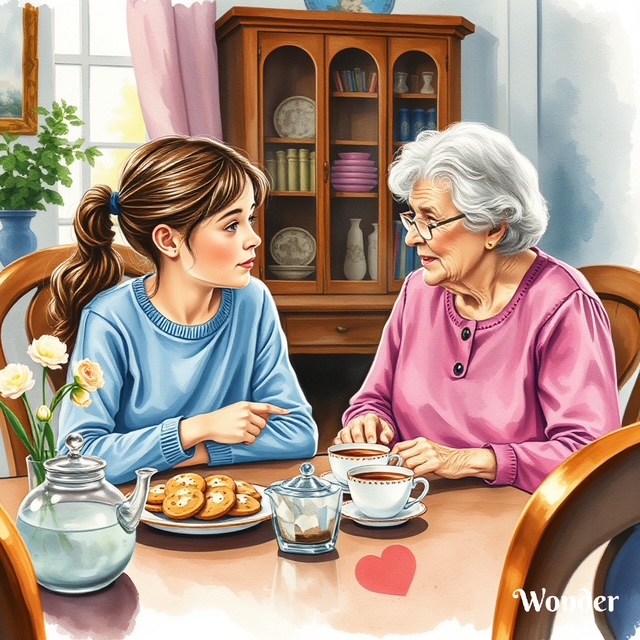
That evening, over cups of chamomile tea and homemade cookies, Liah found herself opening up to her grandmother. They sat in the cozy kitchen, where the fading sun cast warm shadows through the window.
Her grandma listened quietly, her gentle eyes encouraging Liah to continue.
“Everything makes me so angry lately”, she confessed, staring at her tea.
“Mom asks how my day was, and I just… snap at her. Dad tries to help me with homework, and I tell him he doesn’t understand anything.”
Her grandma listened quietly.
“The worst part is”, Liah’s voice shaking slightly, “I know they are trying to help. I can see it on their faces when I yell or slam the door. But at that moment, I can’t stop myself. It’s like… something takes over, and later I feel terrible about it.”
“And then”, she continued, picking a cookie without eating it, “Mom leaves little notes in my lunchbox or Dad offers to take me out to a movie, and I feel worse because I was so mean to them. But the next time something happens, I get angry all over again.”
She looked at her grandma, with tearful eyes.
“What’s wrong with me, grandma? I am unable to make friends too.”
Her grandmother reached across the table and held Liah’s hand.
“Nothing is wrong with you, my dear. You’re fourteen, and these feelings… they are like waves sometimes. I remember those days. Everything was so intense, so overwhelming.”
“You felt this way too?”, asked Liah surprised.
“Oh yes”, her grandmother smiled softly. “And that’s why I want to share something with you… something that helped me when I was your age.”
Her grandmother got up and walked to an old wooden cabinet, pulling out a beautifully painted ceramic bowl.
“This is my gratitude bowl.”, she said, running her fingers along the rim.
“When I was your age, I went through difficult times too. My grandmother gave this to me and asked me to write at least 5 things I was grateful for – no matter how small – and put them in this bowl, and I did. My notes would be about the warmth of sunshine, seeing a dancing butterfly, the smell of freshly baked cookies or a kind word from a friend. It helped me, dear.”
Liah picked up the bowl, turning it in her hands.
“Would you like to try?”, asked her grandmother, placing some fresh paper and pen beside Liah.
“Start with just one thing today. What made you smile today?”
Slowly, Liah began to write:
Opening up to grandma
The taste of freshly baked chocolate chip cookies
The cute fuzzy cat I saw in the garden
Summer break
Being here at Grandma’s
As she dropped each note in the bowl, something began to shift inside her – somehow Liah felt lighter, happier. She was surprised she had a lot of things to be happy about despite feeling sad.
“I already feel better, grandma.”, Liah said with a smile and squeezed her grandma’s hand.
“I will practice this.”
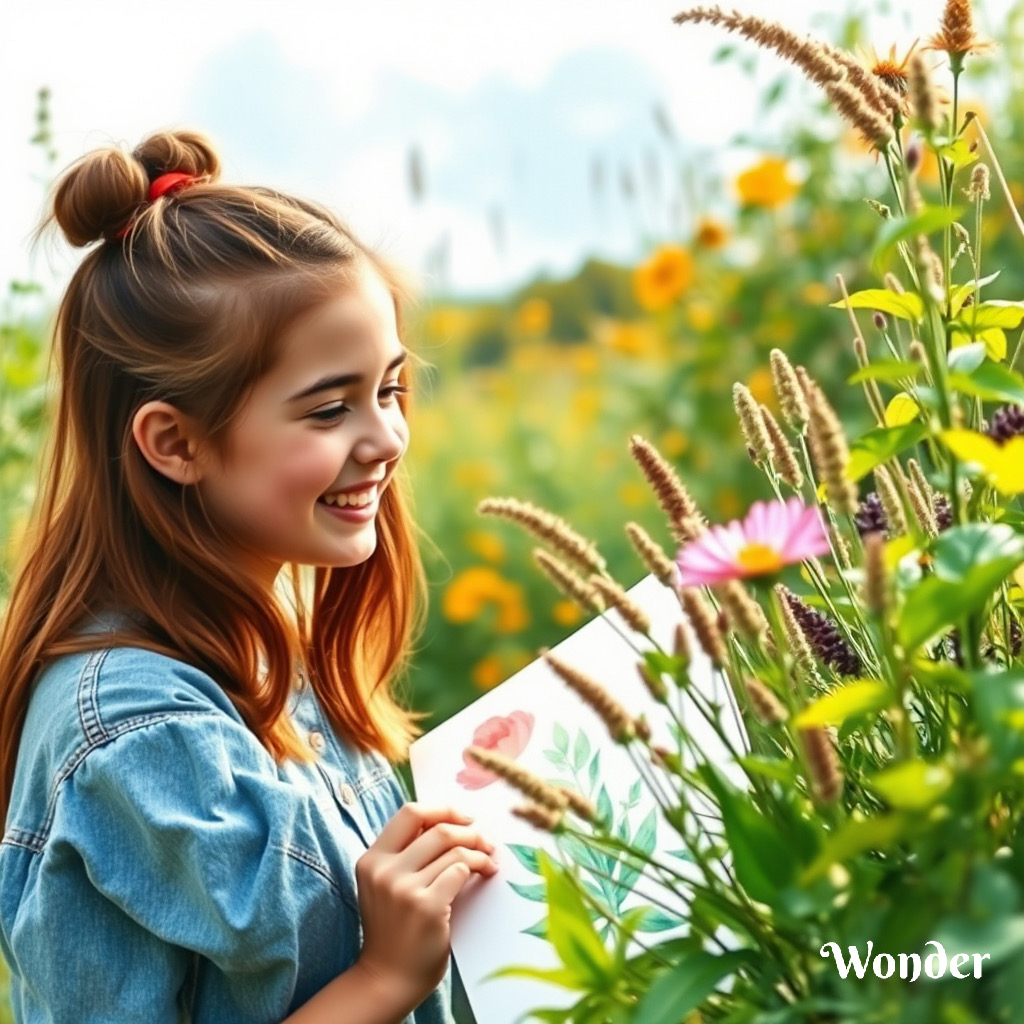
Over the next few weeks, Liah found herself noticing small blessings – the scent of garden roses, a successful drawing, gardening with grandma, watching the orange fish in the pond. With each note she added, she realized something: her days weren’t as empty as she had thought. Good things had always been there – she just hadn’t been looking for them.
When it was time to leave, her grandmother insisted she take the bowl home.
“It’s yours now.”, she said with a warm smile.
Liah hugged her grandmother and promised she will continue the practice.
Liah had placed the gratitude bowl on her desk in her room. She continued to write gratitude notes every day. She began to appreciate little things around her and found there were many things she was grateful for, to feel happy for.
One evening, as her mother placed a cup of hot chocolate beside her, Liah hesitated for a moment, then picked up the gratitude bowl.
“Grandma gave this to me”, she said, smiling at her mother.
“It is helping me a lot, Mom.”
Her mother listened, intrigued, as Liah explained how the simple act of writing down little joys had changed her perspective.
To her surprise, her mother wanted to try it too. That night at dinner, her mother suggested they all share one good thing from their day. At first, it felt just words spoken out loud but soon, it became their favorite part of the evening. A quiet warmth spread their home, unspoken tensions softened, and they began to feel closer in ways they hadn’t before.
Over time, Liah noticed a shift not just in how she felt, but in how others responded to her. She smiled more, and in turn, others smiled back. Conversations felt easier, friendships blossomed naturally, and she felt no longer trapped in the cycle of frustration. The gratitude practice that started as a simple habit had quietly reshaped her world.
Writing Down Gratitude: Why It Works
When we write down things we’re thankful for each day, it helps us in several ways:
First, it makes us pause and notice. Instead of rushing through our day focusing on what’s wrong, we take a moment to spot what’s right – maybe it’s a good meal, a kind word, or just a peaceful moment.
Second, it changes how our brain works. Just like Liah discovered, looking for good things becomes a habit. Even on difficult days, we get better at finding small positives – not to ignore problems, but to remember that good and bad can exist together.
It’s especially helpful when we’re feeling down or stressed. Reading through old gratitude notes reminds us that we’ve had good moments before and will have them again. These written reminders become powerful when our mood tries to tell us everything is wrong.
The Science Behind Gratitude Practice
When we regularly write down what we’re grateful for, our brain actually changes in several important ways:
Brain Chemistry: – Increases dopamine and serotonin – the “feel-good” chemicals – Reduces cortisol – the stress hormone – Activates the hypothalamus, which regulates sleep, appetite, and mood
Neural Pathways: – Creates new neural patterns, helping us spot positive aspects more easily – Strengthens these pathways through repetition, making positivity more automatic – Reduces our natural “negativity bias” (our brain’s tendency to focus on threats and problems)
Mental Health Benefits: – Improves sleep quality by calming racing thoughts – Reduces anxiety by shifting focus from worries to present moments – Helps manage depression by providing evidence of good experiences – Enhances emotional regulation – making it easier to handle stress
Research shows that consistent gratitude practice for just 21 days can: – Improve overall mood – Increase optimism – Enhance decision-making abilities – Boost problem-solving skills – Strengthen resilience during challenges
Just like physical exercise strengthens muscles, regular gratitude practice strengthens our brain’s ability to notice and appreciate positive aspects of life. This doesn’t eliminate problems, but it helps build mental resources to handle difficulties better.
In Liah’s case, her gratitude practice didn’t change her circumstances, but it changed how she experienced them. She became more aware of the love in her life, the small joys she had overlooked, and in doing so, found a sense of peace that had felt out of reach before.
Growing up, I was an overthinker – anxiety following me through various situations, likely shaped by my childhood environment. I would get caught in cycles of self-doubt, constantly revisiting situations and imagining how I could have done things differently.
During my depression phase, these patterns intensified. I experienced outbursts of anger and sadness that felt beyond my control. The emotions became toxic, much like being in unhealthy relationships. I realized that just as I would eventually choose to distance myself from toxic relationships – stepping away from their drama rather than engaging – I needed to learn to do the same with these overwhelming emotional patterns.
What brought clarity was understanding that our True Self isn’t any of these parts within us – the anxiety that spins stories of what could go wrong, the inner critic that constantly judges, the part that flares with anger when feeling unseen, or the shame that whispers we’re not enough. Just as I learned to handle difficult relationships by choosing when to engage, I discovered I could do the same with these inner voices. When self-doubt starts its familiar spiral, when anger rises unexpectedly, when fear tries to take control – I can observe these parts of myself without getting lost in their stories. These all stem from the “I” – the ego. This simple knowing has changed how I navigate my inner world.
Spiritually, I’ve come to see myself as a child of God, imperfect yet deeply loved. When I notice those challenging parts within me – anger, arrogance, greed, pride – I pause, breathe, and ask for help. It’s easier to find peace when I remember I’m within His arms. This understanding has shifted how I view healing – God truly takes care of us, healing not just the surface but the very roots of our pain.
The breakthrough came when I stopped feeling ashamed of my imperfections in prayer. I realized I don’t need to be perfect to seek Him – in fact, it’s my very imperfection that draws me closer. This has been a profound paradigm shift: I don’t have to take myself so seriously because of my imperfections. Instead, I can remain aware and consistently choose love.
I am deeply grateful to my spiritual teacher, Mr. Irmansyah Effendi, whose guidance helped me understand these truths at a deeper spiritual level. Through his Heart practices, I’ve learned to observe and work with these parts of myself in a way that brings genuine peace and understanding.
Perhaps you too have noticed different parts within yourself – voices that judge, worry, or react. Have you ever considered that these parts, which don’t stem from love, might not be the real you? What if you could observe them with the same distance you might observe challenging people in your life? Sometimes just creating that small space between ourselves and these emotions – recognizing that they’re parts we experience but not our true essence – can open up unexpected paths to peace.
Depression crept in during what felt like the darkest phase of my life. Years of carrying unexpressed feelings had taken their toll – childhood hurts, trauma, and patterns I hadn’t even recognized. I had developed ways of coping that I didn’t even realize were coping mechanisms: trying to keep everyone happy to prevent any discord, bending backwards to maintain harmony. Yet paradoxically, I would sometimes experience sudden bursts of anger toward loved ones – reactions to hurt that would erupt because I had no other way to express my pain.
Growing up in a joint family, where multiple generations lived under one roof, I learned early to navigate around tensions. When voices were raised or feelings expressed too freely, punishment followed. These lessons stayed with me, shaping how I moved through relationships, always trying to keep peace at the cost of my own truth.
After my father’s passing, old hurts surfaced in ways I had never experienced. Grief opened doors I had kept tightly shut, and through them came waves of resentment and pain. Life seemed to conspire to bring more difficult experiences – harsh words from others that cut unusually deep. I felt myself breaking.
Ironically, in my darkest moments, I stopped doing the very things that had helped me before. Meditation, which had been my anchor, felt hollow. Talking to understanding friends seemed impossible. I retreated into silence, feeling utterly alone and unrecognizable to myself. The ways I had learned to cope, to find joy, to make sense of life – nothing seemed to work anymore. I felt lost in a deep shame, afraid to be alone with this version of myself I no longer knew. All my efforts to choose happiness felt like they had been just surface-level pretense.
But something in me kept moving. I started to run – not for fitness, but from an instinct to survive. I ran from my fear, my anxiety, my pain, pushing myself as far and as fast as I could. Tears would stream down my face as I ran, and I stopped caring who might see.
During this time, I also began talking therapy. These sessions helped me untangle mental knots I hadn’t even known were there, helping me understand patterns that had been invisible to me before. While therapy helped clear these mental blocks, nature offered something different.
Along my running route, I noticed a tree. It stood tall and kind, and something about its presence spoke to my heart. I began to stop at the bench overlooking this tree during my runs. I would sit there, relaxing my body as I had learned in meditation practice, talking to the tree as a friend. I found myself sharing freely about how I had been feeling, and asked for its help to find positivity and happiness again. Each day before leaving, I would hug and kiss the tree goodbye. These moments made me feel understood, assured, and strong – as if the tree knew exactly what I needed without words.
Gradually, I began to notice it wasn’t just this one tree – it was all of them. The plants, the breeze, the birds – they formed a supportive presence I can hardly put into words. Something deep within me recognized that I was part of this greater whole, all of us held in our Creator’s loving embrace. I wasn’t alone; I had never been alone.
I found myself spending more time outdoors, hiking alone, simply being with nature. My meditation practice returned, deeper now, grounded in this new understanding. Later, at a retreat, my spiritual teacher led us in meditation among the trees, and I understood why nature had felt so healing – when we open our hearts fully to the present moment, we can feel our Creator’s love flowing through everything around us, connecting us all.
Depression, though once so overwhelming, gradually lifted. The combination of therapy helping me understand my mind’s patterns, and nature helping me open my heart, created a path toward healing. Now, finding peace is as simple as sitting on my balcony among my plants, watching the sky, listening to birds. In these quiet moments, with my heart open and present, happiness flows naturally – not for any particular reason, but simply because I can feel our Creator’s love in everything around me.
This lesson remains: we humans aren’t separate entities striving alone, but integral parts of a greater whole, all held in our Creator’s loving embrace. In nature’s presence, I found not just healing, but a way back to that endless love that had been there all along.
For years, I struggled with depression and a deep sense of loneliness. I attributed my discomfort in large groups to my traumatic childhood, believing this was the sole reason I felt so disconnected when others seemed energized by company. Others would comment on my reserved nature, making me question if something was wrong with me.
I had always been someone who could spend hours simply gazing at nature. While others found it odd, I found complete peace in these quiet moments with trees, birds, and the sky. I confused this natural inclination for solitude with depression, thinking perhaps I just wasn’t interested enough in being sociable. Yet paradoxically, I felt deeply lonely – a contradiction that tore at me. How could I both cherish solitude and yearn for connection?
Living with depression was like carrying a heavy burden – the pain, the confusion about who I was, the thoughts that wouldn’t leave me alone. To escape all of this, I often filled my moments with noise – television shows playing continuously, many podcasts one after another. Anything to avoid sitting with the silence and my own thoughts.
Then came a time when something shifted through my meditation practices and the guidance of my Spiritual Teacher. I chose to step away from these distractions and simply be with myself and our Creator, moving through household tasks in quiet presence.
In this gentle time alone, I discovered something beautiful.
There’s a depth in silence with our Creator that nothing else can match. As the usual busyness fell away, a new clarity emerged. The mental fog that often clouds our days lifted, and my heart found its way more naturally to prayer and presence.
Sadness visited too, in a way I hadn’t experienced before. But this time, I stayed with it differently – sharing openly with our Creator. My prayers became deeper, more heartfelt, asking for help with forgiveness, both to forgive and be forgiven.
Through these prayers and silence, I began to understand something profound – the recognition that living like a hermit, even while surrounded by family, can be a blessing when lived in devotion. In this quiet space, I found myself speaking less and listening more. The usual pull toward reactions softened, making it easier to turn toward divine love instead.
In these moments, I felt myself again – perhaps for the first time in lifetimes. It was different from anything I’ve known in this life. This feeling goes beyond belonging to a group or finding people who understand you.
I’ve finally accepted something about myself: I am someone who finds deeper connection in quieter ways. This love for solitude isn’t something to fix or change – it’s simply who I am. What matters isn’t the number of connections, but the ability to be fully myself, even if it’s with just one kindred spirit.







 lotusheartgrateful.com